Can You Go To Whitehaven Beach Without A Tour?
Yes, you can reach Whitehaven Beach without a tour, but there is no public ferry. Here is how the water taxi, camping transfer and private boat routes work, what they cost, and when a day trip is still the smarter buy.
Can You Go To Whitehaven Beach Without A Tour?
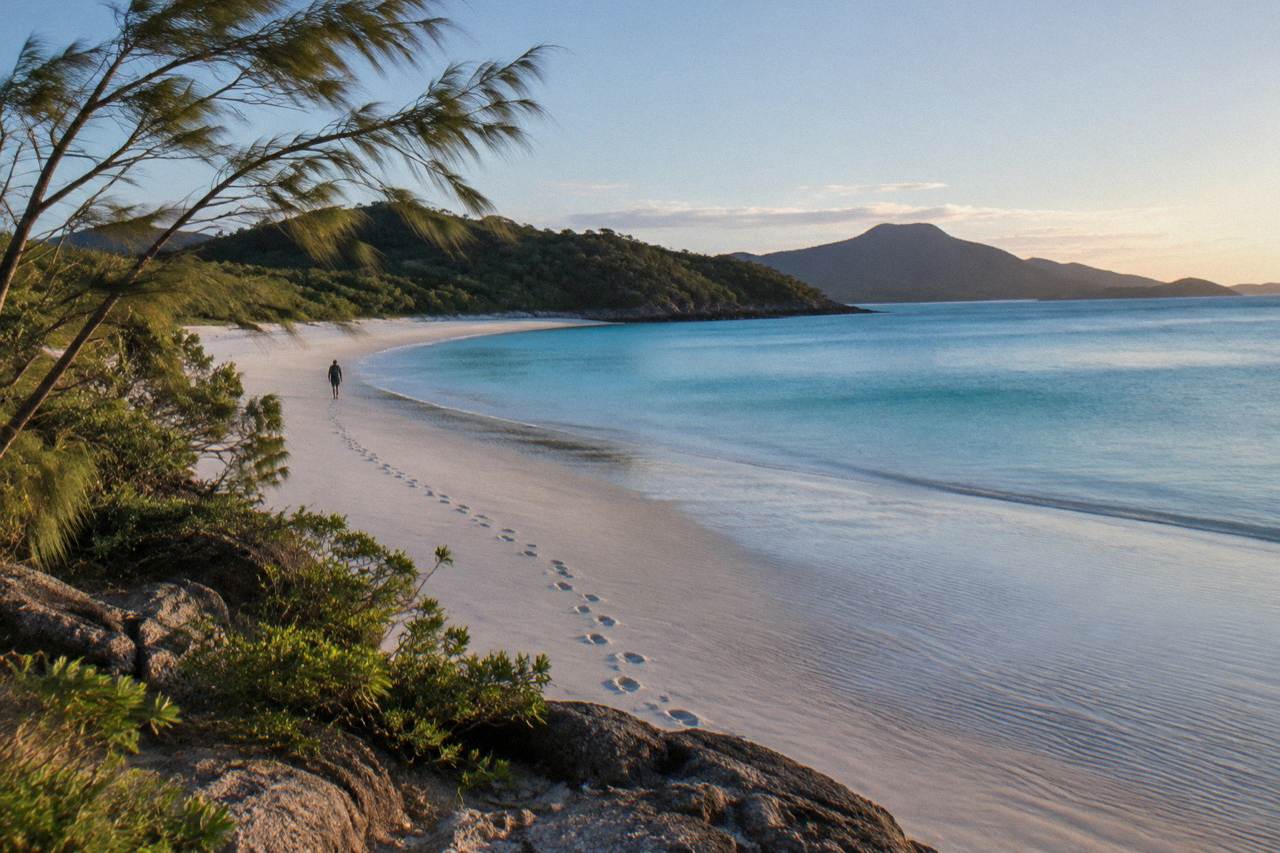
Yes, you can stand on Whitehaven Beach without holding a tour ticket, but no scheduled public ferry will take you there. Every independent route involves a booked transfer, your own vessel, or a camping permit, and the cheapest of them costs more than the cheapest tour. Whitehaven sits on Whitsunday Island inside Whitsunday Islands National Park, reachable only by water or air. Queensland Parks is blunt about that on its own pages: boat access only, all tides.
That last line deserves emphasis, because it is the one fact that reshapes most people's planning. Airlie Beach has ferries, plenty of them, running to Hamilton Island and Daydream Island every day. None of them call at Whitehaven. Cruise Whitsundays, the mainland passenger operator, lists Whitehaven only as a tour product, from A$139 per person for its morning or afternoon cruise on the operator's own published fare, and A$255 for its Whitehaven and Hill Inlet Chill and Grill day. The operator's homepage fares are its own pricing; our site's listings for the equivalent products sit at from A$124 per person for the half-day base fare.
So the question becomes: if you want to avoid a packaged tour, what are the actual mechanisms for getting your feet on that sand? There are three honest answers. A scheduled camping transfer run by Scamper, the Whitsunday Island Camping Connection service, which drops campers and, subject to availability, day visitors at set beach points. A private charter or bareboat, where you are the skipper or you pay someone who is. And a scenic flight with a beach landing, which is its own category of spend. We compared the listings and the official park pages, and the picture is consistent: independence is possible, but it is rarely cheaper than the A$124 base tour fare, and it always carries more planning weight.
Before choosing a route, it helps to understand what you are actually travelling to. Whitehaven Beach is about 7 km of silica sand along the eastern shore of Whitsunday Island, and the famous swirl of colour at its northern end is Hill Inlet, where tidal water moves through the sand in shifting patterns. Queensland Parks describes the inlet water as tidal, with currents that can be strong and the level able to rise rapidly, on an unpatrolled beach. That single sentence matters for swimmers, and it matters double for anyone visiting without a crewed boat nearby. Our companion page, can you swim at Whitehaven Beach, covers the water safety question in full.
How Do You Get To Whitehaven Beach On Your Own?
The realistic independent options are the Scamper camping transfer from Shute Harbour, a private boat charter or bareboat yacht, a kayak expedition, or a scenic flight with a beach landing. Each needs booking ahead, and none is a turn-up-and-go ferry. Scamper, operated by Whitsunday Island Camping Connection, is the closest thing to independent public transport the Whitsundays has, running scheduled departures to camping beaches across the islands.
Scamper's published adult one-way fares run in bands of A$65, A$85, A$135 and A$160 per person each way depending on the drop-off point, with child fares from A$27.50 each way, and a A$2.50 jetty surcharge on departures applies from 1 November 2026. Once you add the return leg on even the cheapest band, the transfer bill alone already sits above the A$124 tour fare, and that is before you have eaten anything. The trade is real though: Scamper drops you with your gear, and you own your day, your sunset and your night if you hold a camping permit. The service is built around campers first, so day-visitor seats depend on space and schedule, and the operator's own pages carry the current detail.
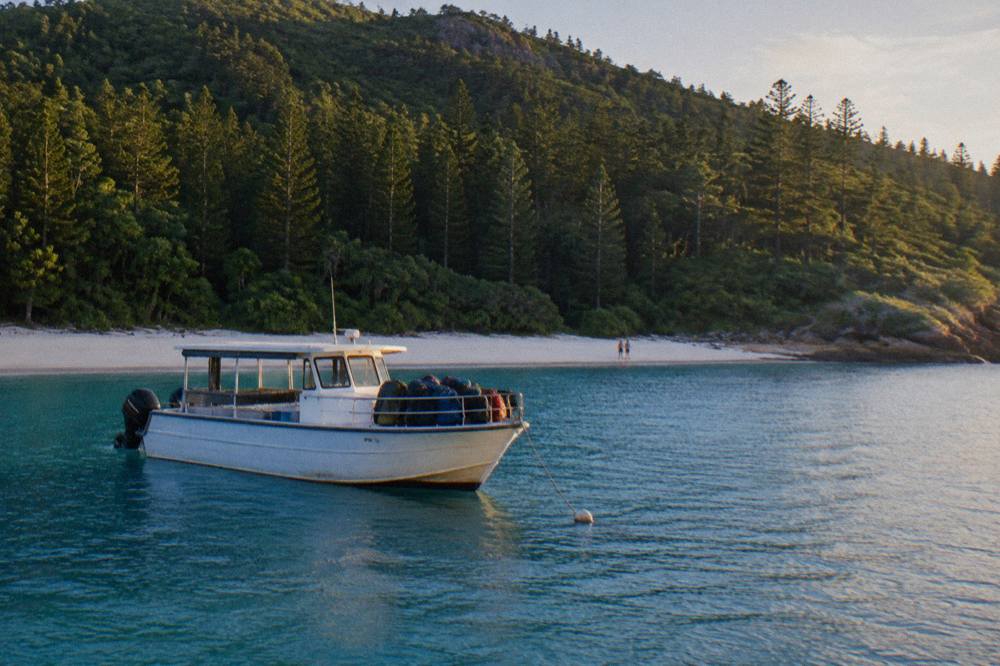
Chartering flips the economics the other way. A private vessel with a skipper is the most expensive route per person, priced by the boat rather than the seat, and a bareboat yacht charter from operators such as Whitsunday Rent a Yacht requires no boat licence but does require at least two adult crew, a multi-hour briefing and a commitment to staying inside the set Whitsunday charter limits, which do not extend to the outer reef. Kayaking to Whitsunday Island from the mainland is not a realistic day option; the crossing is serious open water. The scenic flight route exists too: Hamilton Island Air sells a Heart Reef and Whitehaven stopover with roughly 50 minutes on the beach, published on the operator's site at A$925 per person, which answers the independence question in the most expensive way imaginable.
There is one more honest wrinkle. If your reason for avoiding a tour is crowds, note that the independent routes deliver you to the same beach the tours use, just at different hours. The tour boats cluster mid-morning to mid-afternoon. A camper arriving by Scamper at the southern end, or a bareboat anchored for the evening, gets the sand after the fleet leaves. That, not price, is the genuine argument for doing it yourself.
What Does The Camping Route Actually Involve?
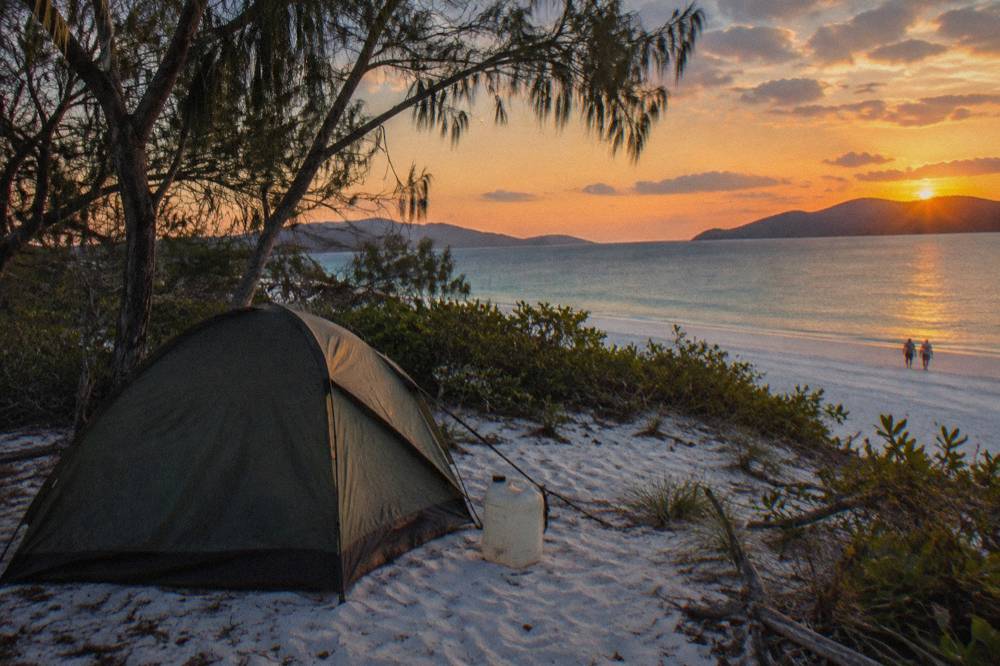
Camping at Whitehaven Beach costs A$7.75 per person per night, or A$31.00 per family per night, in a campground of 10 defined sites capped at 36 people, boat access only, permits booked online before arrival, and no fires or generators permitted at any time. Queensland Parks runs the booking through the statewide camping system, and the permit must be secured before you arrive; there is no pay-on-the-beach option, and rangers do check.
The campground itself is walk-in, with open fires and generators both prohibited, no mobile coverage, and hybrid toilets plus a sheltered picnic table as the extent of the facilities. Queensland Parks advises campers to carry their own fresh water, at least five litres per person per day, a figure that shapes how much your pack weighs on the Scamper run. Check-in is after 2pm and check-out by 11am. The walk-in character is part of the appeal: this is one of the very few ways to see Whitehaven's 7 km of silica sand nearly empty, at dawn and dusk, when the day-use crowd is absent.
The Hill Inlet lookout is the piece most independent visitors underestimate. From Tongue Bay the lookout track is a 1.3 km return walk, moderate grade, about 40 minutes, with twin lookouts over the inlet, as Queensland Parks publishes on its journey page. But Tongue Bay is not where the campground sits. Reaching the lookout under your own steam means either a beach walk north along the sand, or a boat move, and the inlet's tidal currents govern what is passable. Queensland Parks also lists alerts for tracks and lookouts, and the honest instruction is to check the alerts page before any walk. Day visitors arriving without a Ngaro Track booking can still use the Whitehaven lookout and headland tracks, the Solway circuit and the Chance Bay tracks, and the beach track to Hill Inlet from Tongue Bay; the Ngaro Track itself, the 32 km multi-day walk, is a separate booked product.
Money-wise, here is how the camping stack adds up against the alternatives:
| Route to Whitehaven | What you pay | Key figures | Notes |
|---|---|---|---|
| Scamper transfer plus camping | Transfer plus permit | A$65 to A$160 each way adult; A$7.75 pp per night camping | Built for campers; day seats subject to space |
| Cheapest listed half-day tour | One ticket | From A$124 per person | Cruise Whitsundays half-day, no pickup stated |
| Full-day Whitehaven tours | One ticket | From A$239 to A$265 per person | Includes meals and often snorkel gear |
| Bareboat charter | By the vessel | No licence needed, two adult crew minimum | Multi-day commitment, set charter limits |
| Scenic flight with beach stop | Per seat | A$925 per person on the operator's page | Hamilton Island Air stopover product |
One charge that catches every route equally is the Environmental Management Charge, the reef tax collected through tourism operations in the Marine Park: A$8.50 per full-day passenger and A$4.25 per part-day passenger, per the Reef Authority's published charges. Whether it is bundled into your fare depends on the operator: none of our Whitehaven listings state it either way, so check the booking page before assuming.
Can You Take Your Own Boat To Whitehaven?
Yes, private vessels may anchor at Whitehaven Beach at any tide, but there are no public moorings at Whitehaven itself; the nearest are in Tongue Bay or at Chalkies Beach, and they work on a first-come, first-served basis. That detail, straight from the Queensland Parks camping page for the site, decides a lot of itineraries, because anchoring a yacht in shifting sand over shallow reef requires care that a mooring removes.
For sailors, the practical pattern is to pick up a mooring in Tongue Bay, dinghy or wade ashore, and walk the 1.3 km lookout track to the twin Hill Inlet platforms. The parks page notes anchoring at Tongue Bay and Hill Inlet is best mid to high tide. Bareboat charterers operate within the Whitsunday charter limits, which exclude the outer reef, so Whitehaven is comfortably in range from Shute Harbour or Hamilton Island checkouts. The Reef Authority's rules for public moorings are simple and strict: one vessel per mooring, time limits that usually run 2, 4 or 24 hours, and overnight stays from 15:00 to 09:00.
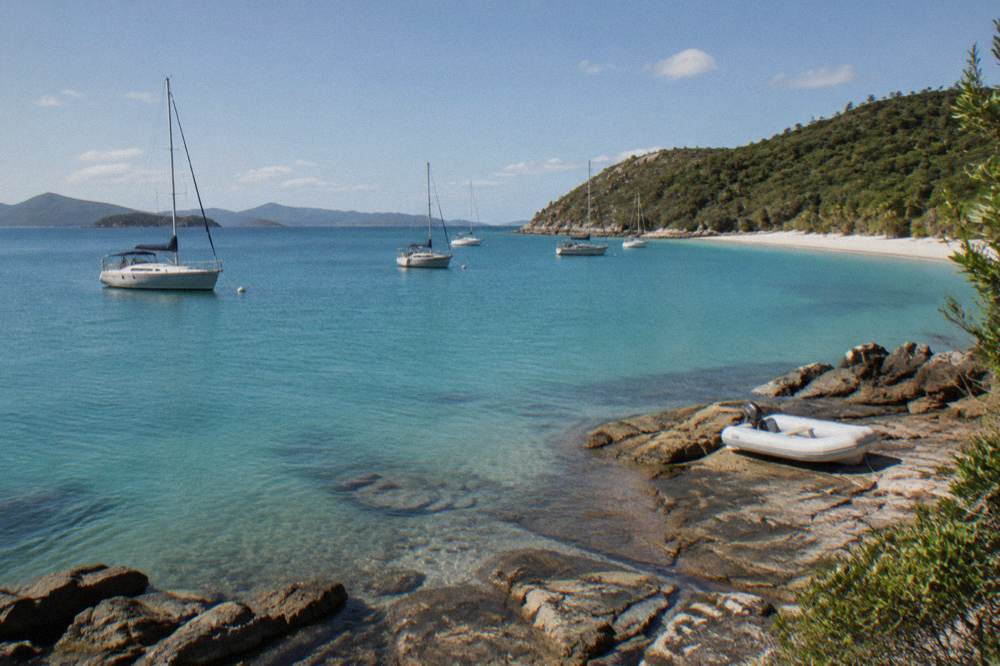
Two safety notes follow the boat in. Cid Harbour, a popular overnight anchorage on Whitsunday Island's western side, carries a standing Queensland Parks warning: do not swim there. And the marine stinger question applies to every swimmer off every boat, with stinger suits advised November to May and suits provided on commercial tour boats in that window; a private boat is your own supply chain. Neither is a reason to stay aboard, just a reason to pack and plan like a local.
The mooring picture in summary:
| Anchorage or access point | Moorings | Anchoring | Practical note |
|---|---|---|---|
| Whitehaven Beach day-use area | None | Permitted, all tides | Open 24 hours, picnic tables, non-flush toilets |
| Tongue Bay | Public moorings available | Best mid to high tide | Nearest mooring access to Hill Inlet lookout |
| Chalkies Beach | Public moorings available | Not stated | Alternative overnight or day stop |
| Hill Inlet | None | Mid to high tide only | Tidal currents can be strong and rise rapidly |
What Rules Apply Once You Are On The Sand?
Whitehaven's day-use area is open 24 hours a day, with boat, canoe and kayak access, picnic tables and non-flush toilets, but no lifeguards, no mobile reception and no domestic animals, because the whole national park islands estate prohibits them along with open fires and ash-producing stoves. Queensland Parks publishes the day-use conditions plainly, and the two that bite hardest are the absence of phone signal and the absence of any patrol. Independent visitors carry their own risk management in a way tour passengers do not.
The island rules are standard national park fare but worth listing because there is no shop, no tap and no ranger station on the beach. Open fires and ash-producing stoves are banned; gas or fuel stoves only. Campsites sit at least 50 m from the water's edge on crocodile advice, even on beaches that feel a world away from estuaries. Domestic animals are not permitted on the islands or the intertidal lands next to them. And the water itself is unpatrolled, tidal and, in the inlet, capable of rising quickly, per the parks' own safety wording. Visitors who want the full planning picture for the wider region will find our Airlie Beach to Whitehaven Beach route guide covers the practical geography in more depth.
For campers, the permit system is the gate. Book and pay before arrival through the Queensland Parks camping booking page, display the tag, and note the statewide booking horizon runs twelve months out, with parks recommending at least six weeks ahead for popular sites. Whitehaven's 36-person cap across its 10 sites makes it exactly the kind of site that fills for peak dry-season weekends.
How Does Doing It Yourself Compare With The Cheapest Tours?
On pure price, the cheapest tour wins: from A$124 per person for the half-day Whitehaven cruise, against a Scamper return transfer on even the cheapest published band before any camping or food costs, and well above A$200 for most charter options. The independent routes win on time, solitude and flexibility. The decision is about what you are buying, not which number is smaller.
The tour side of the ledger is deeper than one fare. The Cruise Whitsundays half-day product, listed on this site at 4.2 from 1,765 reviews at from A$124 per person, is the same operator whose Whitehaven page carries its own fares, morning or afternoon cruise from A$139 on the operator's site; our listing's base fare is the lower number to beat. The mid-tier full days run from A$239 to A$265: the ZigZag eco-cruise with two snorkel stops from A$239, the Ocean Rafting speedboat trips at A$249, the Red Cat catamaran with buffet at A$250, and the SeaLink 8-hour lookout cruise at A$265. All of those include a listed meal and most include snorkel gear, which the independent routes do not.
Against that, the Scamper camper pays for a return transfer at the published one-way bands plus A$7.75 per night, carries all food and water, and in exchange keeps the beach after 4pm and before 9am, hours no day tour can sell. A bareboat group of four or more splits a charter across the group and gains the whole island chain, Whitehaven included, for a week. The scenic flight buyer spends A$925 per person for under an hour on the sand and a view nothing else in this article offers. These are different products wearing the same beach.
There is also a comfort question the price table hides. Every full-day tour in the A$239 to A$265 band includes a listed meal, most list free cancellation, and several list pickup. The independent routes include none of that by definition. For a traveller whose holiday time is measured in two or three days, the hours saved by a tour are worth more than the dollars saved by a permit.
Who Should Still Book A Tour?
Book a tour if you have one or two days in Airlie Beach, want the Hill Inlet lookout included without planning a walk and a tide window, or want snorkel gear, lunch and stinger suits handled; go independent if you have three or more days, want the island overnight, or are already sailing the chain. That is the whole decision, compressed.
The featured pick on this site for the classic day is the Red Cat catamaran cruise, 4.9 from 3,166 reviews, from A$250 per person for 8 hours with pickup, lunch, free cancellation and snorkel gear all listed. It pairs Whitehaven with the Hill Inlet lookout and a snorkel stop, which covers the three things most independent itineraries struggle to join in one day. The Ocean Rafting speedboat version, 4.9 from 5,008 reviews across its listings at from A$249 per person, is the faster, smaller-group alternative; its listing excludes pregnant guests and people with back problems, which the card states plainly. Our day trips compared guide breaks the full field down boat by boat.
The honest summary, from the Whitsunday Island Tours perspective after comparing every route: independence at Whitehaven is not a myth, it is a trade. You trade money for time, or time for money, and the camping route trades both for a night on silica sand that almost nobody else buys. What independence never is here is simpler. Every route needs a booking, a plan and a weather window, because the sea between Airlie and Whitsunday Island answers to no timetable of yours.
Common Questions About Visiting Whitehaven Beach Independently
Can You Go to Whitehaven Beach Without a Tour?
Yes, but not by public ferry. You need a Scamper camping transfer (adult one-way bands from A$65 to A$160), a private or bareboat vessel, or a scenic flight with a beach stop. The cheapest tour fare, from A$124 per person for the half-day cruise, is still below the cost of a return transfer on even the cheapest band.
Is There A Ferry From Airlie Beach To Whitehaven Beach?
No. Scheduled ferries from Port of Airlie and Shute Harbour run to Hamilton Island and Daydream Island, not to Whitsunday Island. Whitehaven is served only by tours, camping transfers, private boats and aircraft.
Can You Camp At Whitehaven Beach?
Yes. The campground has 10 defined sites, a maximum of 36 people, and permits cost A$7.75 per person per night or A$31.00 per family per night, booked online before arrival. Access is by boat only, fires and generators are prohibited, and there is no mobile coverage.
Can You Walk To The Hill Inlet Lookout Without A Tour?
Yes. From Tongue Bay the lookout track is 1.3 km return, moderate grade, about 40 minutes, and day visitors can use it plus the Whitehaven headland tracks without a Ngaro Track booking. Getting to Tongue Bay itself still requires a boat. Queensland Parks lists alerts for tracks and lookouts, so check before you walk.
Do You Need A Permit For A Day Visit To Whitehaven?
No day-use landing permit exists for Whitehaven; Queensland Parks requires a camping permit only for overnight stays. If you arrive on a commercial tour, the Environmental Management Charge of A$8.50 full day or A$4.25 part day applies through the operator, though listings do not state whether it is included in the fare, so check the booking page.
Can You Anchor A Private Boat At Whitehaven Beach?
Yes, anchoring is permitted at all tides, but there are no public moorings at Whitehaven itself. The nearest public moorings are in Tongue Bay or at Chalkies Beach, first-come, first-served, one vessel per mooring, with time limits that usually run 2, 4 or 24 hours.