Can You Swim At Whitehaven Beach?
Yes, you can swim at Whitehaven Beach, but it is unpatrolled, has no stinger nets and tidal currents run at Hill Inlet. Here is what Queensland Parks and the operators advise.
Can You Swim At Whitehaven Beach?
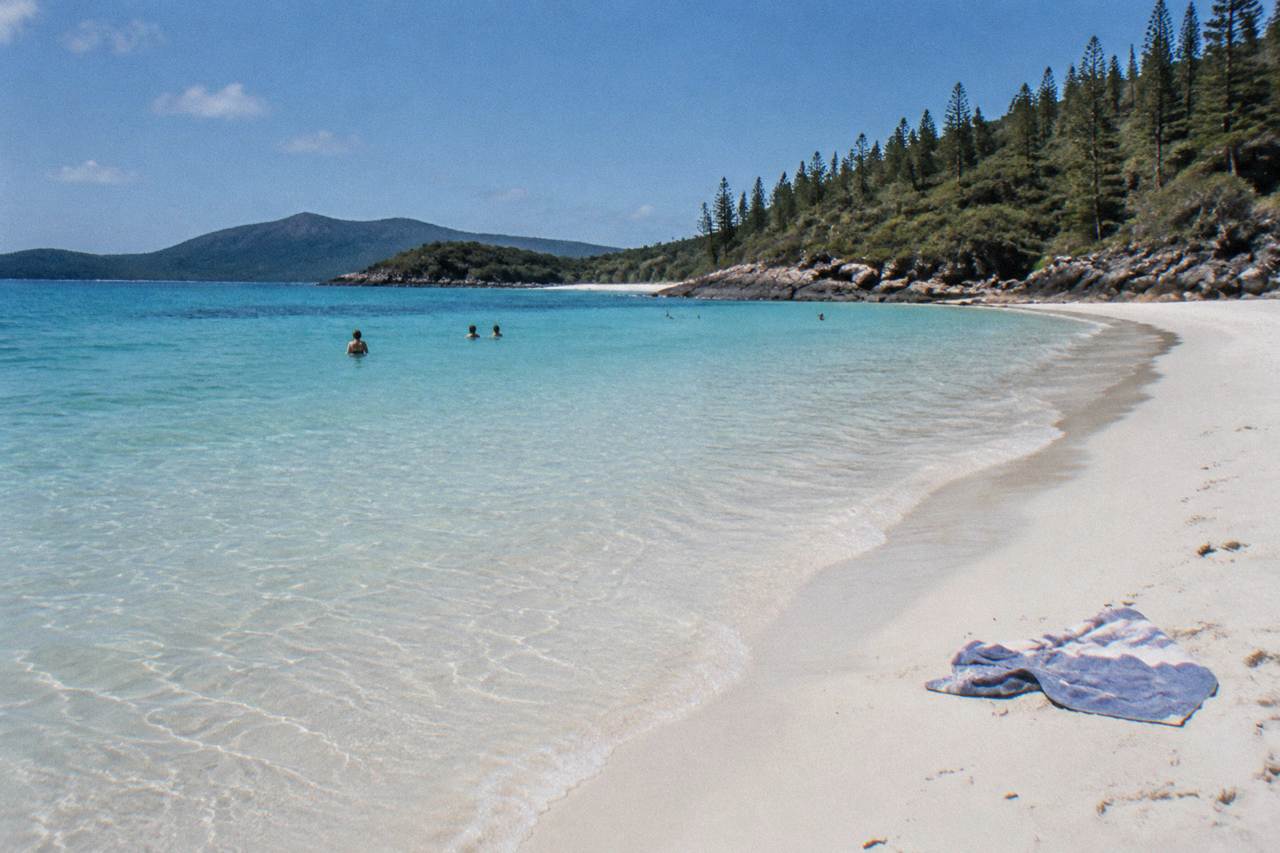
Yes, swimming is permitted at Whitehaven Beach, and on most days the water along the main stretch of silica sand is calm and inviting. The catch is that nobody patrols it: there are no lifeguards, no flags, no stinger nets and no fresh water on the island, and Queensland Parks states that marine stingers, sharks and crocodiles can be present in these waters all year.
That is the honest version. The beach itself is one of the most forgiving swimming environments in the Whitsundays: a long, gradually shelving stretch of sand on the eastern side of Whitsunday Island, facing mostly south, where the swell is usually small and the water shallow for a long way out. Queensland Parks describes Whitehaven as roughly seven kilometres of silica sand, and the day-use area at its southern end is open 24 hours, with picnic tables, non-flush toilets and boat access at all tides. Almost every commercial tour that visits builds in beach time, and almost every guest swims. If the shoreline looks strangely familiar, our answer to what movie was actually filmed on Whitehaven Beach separates the rumours from the facts.
The complications are seasonal and location specific rather than constant. Marine stinger risk is higher from November to May, and Queensland's official advice for that window is to swim in enclosures where provided or wear a full body lycra suit, and Whitehaven has no enclosure. At the northern end, Hill Inlet is tidal: Queensland Parks warns the water is tidal, the current can be strong and the level can rise rapidly. And because the beach is a national park island shore, dogs are not permitted and camping is the only overnight option, which matters if you were imagining an evening swim from a resort deck.
The practical answer for most travellers is simple: swim from the main beach in the marked company of a tour group, wear the suit the crew hands you between November and May, treat Hill Inlet as a place to look at and wade carefully rather than swim laps, and save long relaxed swims for the Airlie Beach Lagoon, which is free, patrolled and stinger free year round. For a full comparison of the boats that get you there, see the Whitehaven Beach day trip comparison.
The three most-booked options from this site's roster, for context:
What Are The Swimming Risks At Whitehaven Beach?
The four risks Queensland Parks itself names are marine stingers, sharks, crocodiles and the absence of lifeguards, plus strong tidal currents specifically at Hill Inlet. None of these is a reason to stay out of the water on a normal day trip, and none can be ruled out on any given day either. The official wording is that these animals can be in the sea all year, which is why the advice is about managing exposure, not avoiding the beach.
The Whitsunday Islands visiting safely page sets the frame: the islands are isolated, most have no fresh water, there is no mobile reception at Whitehaven Beach or Tongue Point, and there are no lifeguards. Stingers, sharks and crocodiles get a single unsentimental mention as year round possibilities. It also repeats the local rule about Cid Harbour, on the western side of Whitsunday Island, which is a known shark attack site where swimming is advised against. Cid Harbour is a boat anchorage, not a tour swimming stop, so day visitors are unlikely to end up there, but it explains why skippers choose the beaches they choose.
Risk at Whitehaven is really a matrix of when and where rather than whether. The same calm, shallow, south facing main beach that is benign in August carries a stinger advisory from November to May. The same inlet that photographs so well from the lookout has a current that Queensland Parks flags as strong enough to name. And a beach with no reception and no patrol rewards swimmers who stay near their group.
| Risk | Official position | Season or place it applies | What manages it |
|---|---|---|---|
| Marine stingers | Present all year, risk higher November to May | Whole region, no net at Whitehaven | Lycra suit, provided free on commercial tour boats in season |
| Sharks | Can be present year round; Cid Harbour specifically flagged | Cid Harbour worst; elsewhere low but nonzero | Swim with a group, avoid dusk anchorage swims |
| Crocodiles | Can be present in the sea all year | Estuaries and mainland coasts mainly | Camp 50 m from water, swim in groups |
| Hill Inlet current | Tidal water, current can be strong, level rises rapidly | Northern end, around the inlet | Wade, do not swim the inlet; watch children |
| No patrol | Unpatrolled beach, no lifeguards, no reception | Everywhere on the island | Group swimming, tour crew supervision |
A note on what the tours add: commercial operators run these waters daily and their crews make the call on where and when guests swim. Red Cat Adventures states on its own advice page that stinger suits are provided at no additional cost on all its boat tours and that it recommends and provides suits year round, because jellyfish can be present any day. Ocean Rafting similarly recommends suit hire in the warmer months, arranged at check-in. Neither promise converts into a guarantee of safety, but it does mean the suit is on the boat whether you thought ahead or not.
When Is Stinger Season And Do You Need A Suit?
Stinger season in the Whitsundays runs November to May, when the risk of dangerous marine stingers is higher, though Queensland's official position is that they can be present in the water all year. A full body lycra stinger suit is advised for that window, and Tourism Whitsundays states suits are provided free on all commercial tour boats and at island resorts during November to May. So on a booked tour, the suit arrives with the boat.
The Queensland Government dangerous marine creatures page is the source of the season language: stingers may be present year round, risk is higher November through May, swim in nets where provided, consider a full body lycra suit, and know the first aid, which is vinegar and calling 000. The reason Whitehaven needs the suit route rather than the net route is infrastructure: stinger nets exist at some mainland beaches around Airlie Beach and Cannonvale in season, but there is no public stinger net enclosure on the national park island beaches. Protection there is the suit the operator supplies.
What that means month by month is easier to plan than people expect. June to October is the lower risk window, and plenty of swimmers go without suits then, though operators like Red Cat still offer them. November to May, the suit is the standard, and on boats like the Red Cat catamaran or the Ocean Rafting speedboat it is part of the kit rather than an extra you source yourself. Independent travellers, kayakers and campers need to bring their own, which is one of several reasons the camping pages on the parks site read so much stricter than the tour pages.
There is a fee quirk worth knowing while you are budgeting. Trips in the Great Barrier Reef Marine Park carry an Environmental Management Charge, currently A$8.50 per full day passenger and A$4.25 per part day passenger, set to rise to A$9.00 and A$4.50 from 1 April 2027. The roster listings for the Whitehaven day trips do not state whether the charge is included in the fare, so treat the listing price as the fare and check the booking page for how the EMC is collected.
Are There Sharks Or Crocodiles At Whitehaven Beach?
Sharks: yes, they share these waters, and Queensland Parks lists them among the animals that can be present in the sea all year, with Cid Harbour specifically flagged as a known shark attack site where swimming is advised against. Crocodiles: also listed as possible year round, though they are associated with estuaries and mainland coasts far more than the clear island beaches tours visit. Neither is a reason to cancel a swim at the main beach with a group.
The crocodile question deserves a straight answer because it surprises people. The visiting safely page advises campers to pitch at least 50 metres from the water's edge, which tells you the parks service treats crocodiles as a real management issue in this region, not a hypothetical. In practice, Whitehaven Beach is an open ocean beach on the eastern side of an island, a long way from the river mouths and muddy estuaries crocodiles prefer. Sightings there are rare enough that tours do not build advice around them, but "rare" is not "never", which is exactly why the official wording stays at "can be present all year".
Sharks are the same story with a sharper local edge. The Cid Harbour warning on the western side of Whitsunday Island dates from serious incidents and applies to a boat anchorage, not a tour beach. Day trips to Whitehaven, Hill Inlet and the fringing reefs do not swim in Cid Harbour. The habit that matters is the one the crews model anyway: swim where the boat swims, in daylight, in numbers.
For context on how ordinary a well chosen swim here is, the most reviewed Whitehaven trip on this site's roster, the Ocean Rafting full day raft trip, rated 4.9 from 5,008 reviews, runs snorkel and beach stops as its core product. Its listing excludes pregnant guests and people with back problems, a speedboat limitation worth knowing at booking, but its swimming stops are routine, suited, supervised and repeated daily.
Is Hill Inlet Safe To Swim In?
Hill Inlet is beautiful and deceptively powerful: Queensland Parks warns that the water is tidal, the current can be strong, and the level can rise rapidly, and the beach and inlet are unpatrolled. Wading and paddling at the edge is what most visitors do and it is generally manageable; swimming across the inlet or letting children roam unsupervised is not wise, and at mid to high tide the currents deserve real respect.
The inlet at the northern end of Whitehaven is the swirl of white and turquoise sand that the lookout photographs are famous for. Getting that view is its own small walk: the Hill Inlet lookout track is a 1.3 kilometre return walk, moderate grade, about 40 minutes, reached from Tongue Bay, with twin lookouts at Tongue Point. Anchoring at Tongue Bay and Hill Inlet is possible from mid to high tide, and the nearest public moorings to Whitehaven itself are in Tongue Bay, which is why nearly every Hill Inlet tour arrives from there.
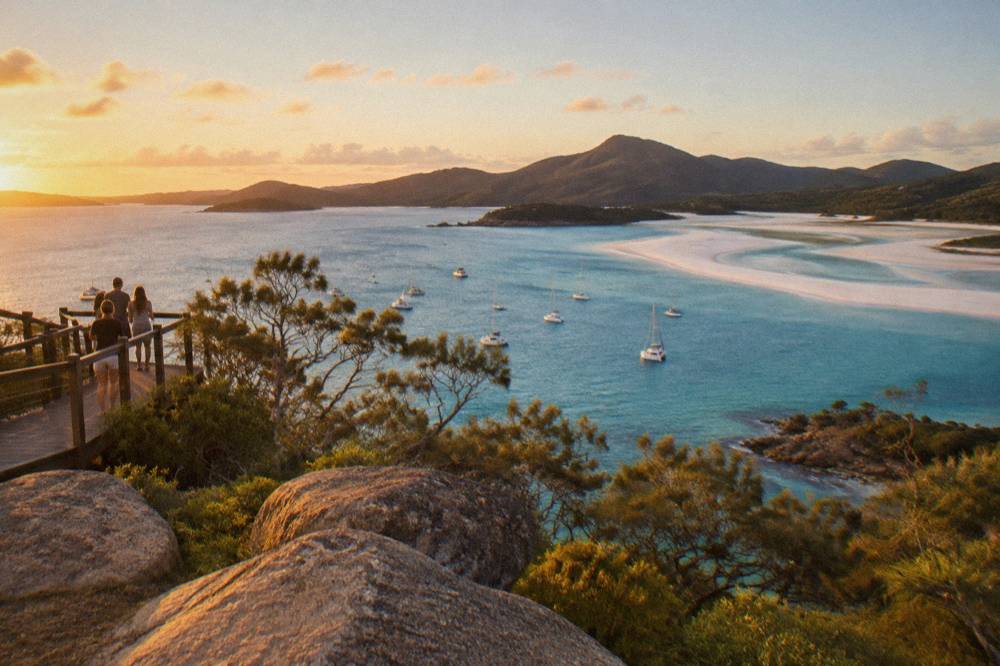
Down at water level the dynamics change. The sandbanks shift with every tide, channels open and close, and water that was shin deep on the way out can be thigh deep on the way back. The Queensland Parks wording about rapid level rise is not boilerplate; it is the specific hazard of a tidal inlet. The pattern tour crews follow works well for independent visitors too: look from the lookout, walk the sand, wade near the group, and swim your real swim on the main beach where the water is open and the current is not working against you.
One planning note if the lookout is the reason you are going: Queensland Parks lists alerts for its tracks and lookouts, and infrastructure work or weather can close sections of boardwalk from time to time, so check the park alerts page before you lock a date. The lookout walk itself has no wheelchair accessible facilities, and there is no mobile reception at Tongue Point, so sort meeting points with your crew before you walk off.
Are There Lifeguards Or Flags At Whitehaven Beach?
No. Whitehaven Beach is unpatrolled: no lifeguards, no red and yellow flags, no surf rescue club, and no mobile reception at the beach or at Tongue Point. Supervision on this beach comes from the people you arrived with, which in practice means the crew of your tour boat, and that is the single biggest safety argument for visiting Whitehaven on a booked trip rather than completely independently.
This is the line in the official advice that changes behaviour the most once people absorb it. On a patrolled mainland beach, the flags concentrate swimmers where a lifeguard watches. At Whitehaven, the equivalent concentration happens around the tour boats: a skipper who knows the day's tide, a crew member on the beach with the group, suits on the sand, and a count of heads before departure. Independent visitors, and especially the campers who stay overnight, carry all of that responsibility themselves.
For campers the parks service adds a layer of rules that underline the isolation. Camping at Whitehaven is A$7.75 per person per night or A$31.00 per family per night, booked and paid before arrival through the statewide booking service. The campground has 10 defined sites including a group area, a maximum of 36 people, boat access only, check in after 2pm and check out by 11am, open fires prohibited and generators not permitted. There is no mobile coverage and no shop. None of that makes camping dangerous; it makes it a genuinely self sufficient choice, and swimming decisions there should be conservative ones.
Where Can You Swim Safely Near Airlie Beach Instead?
The Airlie Beach Lagoon is the region's purpose built answer: a free, patrolled, self chlorinated saltwater lagoon on the foreshore that is stinger free and open year round. Tourism Whitsundays describes it as exactly that, free, patrolled and stinger free, and it sits a short walk from the town's restaurants, with a toddler pool and a children's pool alongside the main swimming lagoon.
The lagoon exists because the mainland beaches around Airlie share the same stinger season as the islands, and mainland stinger nets go in only at some beaches, and only for the November to May window. A lagoon removes the variable entirely. For families with small children, nervous swimmers, or anyone visiting in the peak stinger months who wants one uncomplicated swim day, it is the honest recommendation, and it costs nothing.
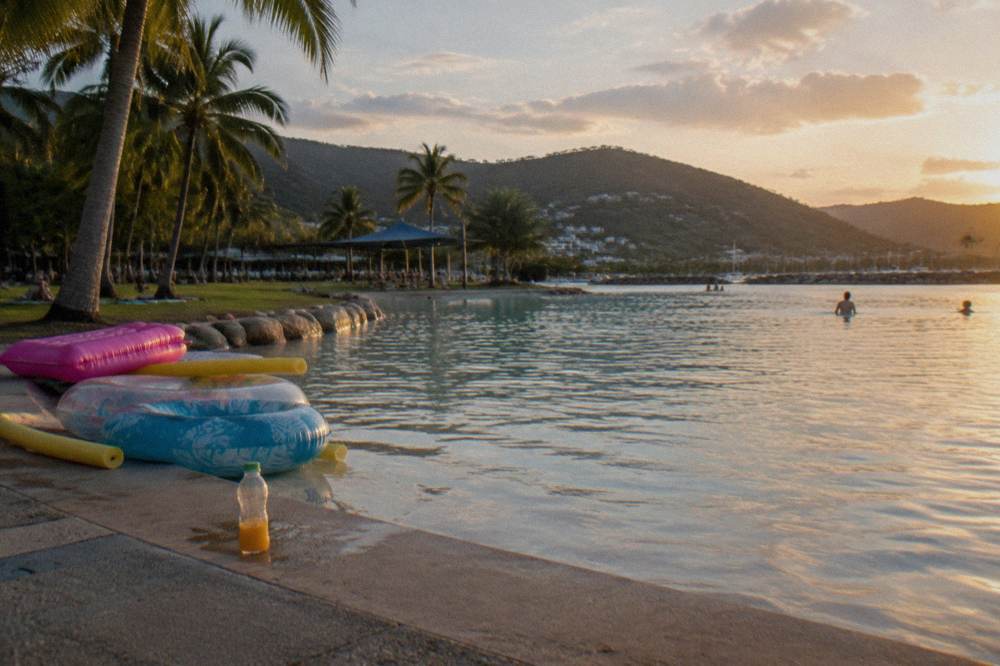
That does not mean skipping Whitehaven. It means splitting the trip sensibly. Do the island day with a suited swim from the main beach and a careful wade at the inlet, then use the lagoon for the long, lazy, unsuited swims the islands cannot safely offer in season. The free things to do in Airlie Beach guide covers the lagoon and the other no cost options around town, and the swimming in the Whitsundays season guide goes deeper on suits and season timing.
Which Tours Include Swimming And Snorkelling Stops?
Nearly every Whitehaven day trip on the roster builds in both beach time and a snorkel stop, with stinger suits and snorkel gear included on the top rated options. Standouts include the Red Cat catamaran (4.9 from 3,166 reviews, from A$250 per person), the Ocean Rafting speedboat (4.9 from 5,008 reviews, from A$249), and the budget Cruise Whitsundays half day from A$124.
The differences between them are mostly about how the day is shaped. Red Cat runs a large catamaran out of Coral Sea Marina, with pickup, free cancellation, meal and snorkel gear all listed on the listing, and it is the featured pick on this site because the review pool is deep and the format suits nearly everyone; check its live listing for current departures. Ocean Rafting's smaller speedboats get to more places faster and anchor closer, which guests love, with the standing caveat that the listing excludes pregnant guests and people with back problems. The Cruise Whitsundays fare from Port of Airlie is the price floor for a Whitehaven day and the most basic product: pickup, meal and gear are not stated on that listing, so pack and budget as if nothing is provided.
Snorkelling deserves its own word of expectation setting. The Whitsundays fringing reefs are beautiful and accessible, and coral and fish are commonly reported at the standard stops, but this is not the outer Great Barrier Reef, and nobody should book a Whitehaven trip expecting hard coral like the pontoon trips to Hardy Reef. Those are different products at different prices, covered in the Great Barrier Reef trips from Airlie Beach guide. Whitehaven's headline is the sand and the inlet; the snorkel is a genuinely good bonus.
What Should You Know Before You Swim?
Take the suit when it is offered, swim the main beach rather than the inlet, stay near your group, and keep children in sight on a beach with no patrol and no reception. Add reef safe sun protection, water, and shoes that can handle hot silica sand, which reflects heat hard in the middle of the day. None of this is complicated, and all of it is cheaper learned before the boat leaves.
A short checklist format works for the practical layer. The sand at Whitehaven is famously bright, and bare feet in the midday hour are a real hazard. There is no fresh water at the day-use area beyond what you bring, and the parks camping page advises carrying at least five litres per person per day if you are staying over. Dogs are not permitted on the national park islands. And the cheapest entry point, the Cruise Whitsundays half day cruise from Port of Airlie at from A$124 per person, is exactly the kind of product where you supply your own everything, so the checklist matters most on that fare.
| Tour (roster) | Price from | Rating and reviews | Swim and snorkel inclusions stated on the listing |
|---|---|---|---|
| Red Cat catamaran, Hill Inlet and snorkel | A$250 pp | 4.9 from 3,166 reviews | Meal, snorkel gear, pickup, free cancellation listed |
| Ocean Rafting speedboat full day | A$249 pp | 4.9 from 5,008 reviews | Meal, snorkel gear, pickup, free cancellation listed; excludes pregnancy and back problems |
| Cruise Whitsundays half day | A$124 pp | 4.2 from 1,765 reviews | Pickup, meal and gear not stated; budget fare |
| ZigZag eco cruise, two snorkels | A$239 pp | 4.9 from 1,109 reviews | Meal and snorkel gear listed; pickup not stated |
The choice between them is a choice of style as much as price, and Whitsunday Island Tours keeps the full roster side by side so you can weigh the trade offs rather than guess at them. Whichever boat you pick, the swimming itself will be the easy part: suited in the warm months, unsuited and blissful in the dry season, on one of the finest stretches of sand in the country.
Common Questions About Swimming At Whitehaven Beach
Can You Swim at Whitehaven Beach?
Yes. Swimming is permitted and popular along the main beach, but it is unpatrolled with no lifeguards, no flags and no stinger nets, so swim with your group and follow the crew's guidance on a tour, and wear the stinger suit provided from November to May.
Are there stingers at Whitehaven Beach?
Marine stingers can be present in Whitsunday waters all year, with higher risk from November to May. There is no stinger net at Whitehaven; commercial tour boats provide lycra suits free of charge during the higher risk season.
Can you swim in Hill Inlet?
Wading is common, but swimming the inlet is not advised. Queensland Parks warns the water is tidal, the current can be strong and the level can rise rapidly. Swim on the open main beach instead.
Are there lifeguards at Whitehaven Beach?
No. The beach is unpatrolled, with no lifeguards, no flags and no mobile reception at the beach or Tongue Point. Supervision comes from your tour crew or your own group.
What is the safest place to swim near Airlie Beach?
The Airlie Beach Lagoon, a free, patrolled, stinger free saltwater lagoon open year round on the Airlie Beach foreshore, with a toddler pool and a children's pool alongside the main lagoon.
Do Whitehaven tours provide stinger suits?
On the listings that state inclusions, yes: the Red Cat and Ocean Rafting day trips list snorkel gear, and Tourism Whitsundays states suits are provided free on all commercial tour boats from November to May. Check your specific listing before booking.