Why Can't I Swim At Airlie Beach?
The honest answer on why the beach at Airlie Beach is not the swimming spot people expect: tides, mud, stingers and crocodile awareness, plus the lagoon and the tours that get you into clear water.
Why Can't I Swim At Airlie Beach?
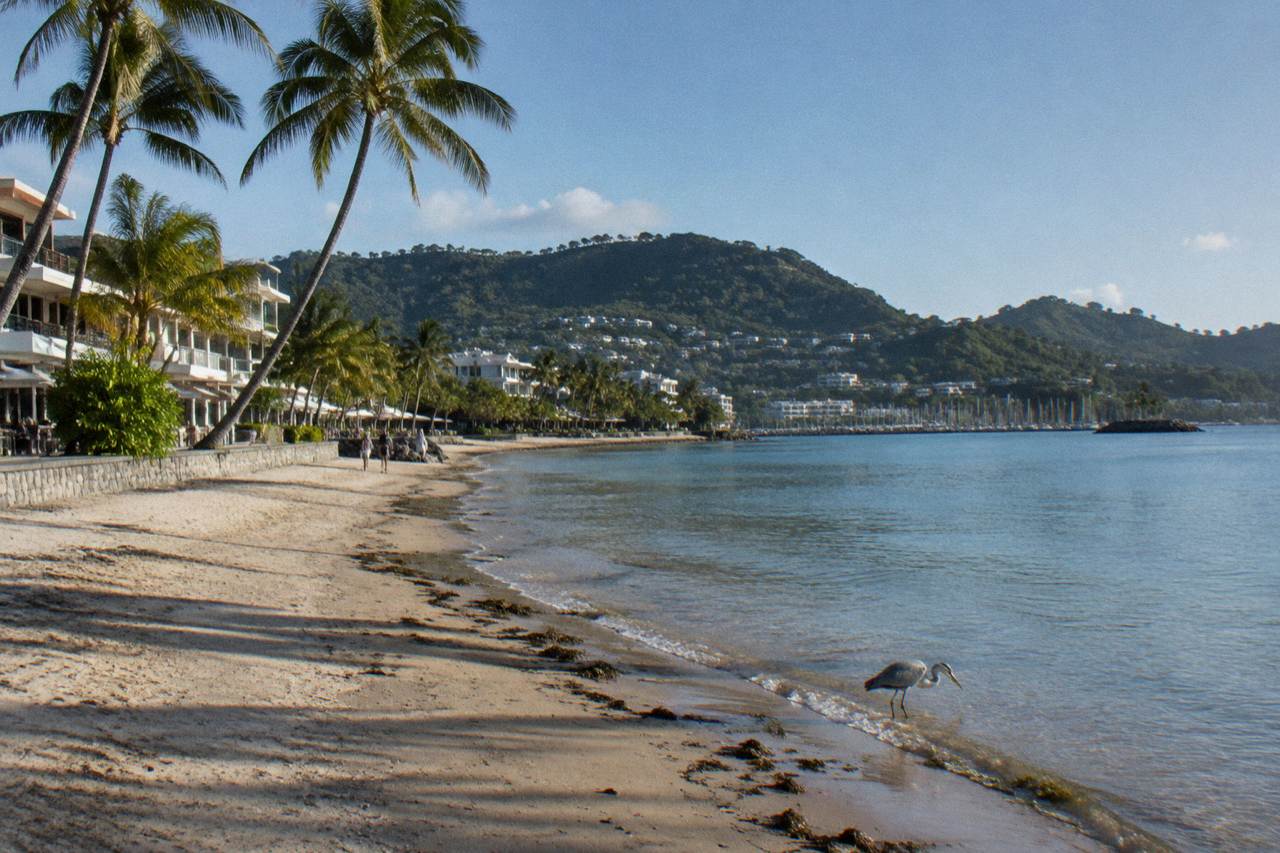
The short answer is that Airlie Beach's waterfront is a tidal mud flat, not an open-ocean swimming beach, and the tropical water carries marine stinger risk from November to May. The town solved both problems by building the Airlie Beach Lagoon, a free, patrolled, stinger-free saltwater pool on the foreshore that is open year-round, and most visitors swim there or take a boat out to the islands.
The question catches almost every first-time visitor. Airlie Beach is the mainland gateway to the Whitsunday Islands, a postcard archipelago of white sand and turquoise water, so people arrive expecting a swimmable beach at their doorstep. The waterfront they actually find is a narrow strip of sand that disappears at low tide, revealing mud flats that run hundreds of metres out into the bay.
The beach is not closed and there is no rule against entering the water. People do walk in at high tide, and on a calm evening the top of the tide can look genuinely inviting. It is simply not the clear-water swim the brochures two hours east by boat promise, and Queensland's own safety guidance for tropical waters, which covers stingers, sharks and crocodiles present all year, gives most readers pause before a long swim off an unpatrolled town beach.
That combination, geography plus marine safety, is the whole story. The rest of this article takes each part in turn and then points to the water you can actually swim in: the lagoon, the island beaches reached by the Red Cat catamaran or the Cruise Whitsundays half day, and the Reefworld pontoon out on the Great Barrier Reef.
Is It The Stingers?
Partly, yes. Queensland Government guidance states marine stingers, including box jellyfish and Irukandji, can be present in tropical waters all year, with risk higher from November to May. Airlie Beach's bay is not netted like some city beaches, and Tourism Whitsundays confirms stinger nets are only installed at some beaches in the region during the season.
The higher-risk window is the southern summer. The Queensland Government's dangerous marine creatures page advises swimming in stinger nets where they are provided, wearing a full-body lycra suit, and treating stings with vinegar while calling 000. Surf Life Saving Queensland uses the same November to May window, and Tourism Whitsundays' own visitor FAQ repeats it: stingers may be present year-round, risk is higher November to May.
What that means practically for Airlie Beach is layered:
- A swim off the town beach in June carries lower stinger risk than the same swim in January, but no month is a guaranteed stinger-free month, and no official source will give you one.
- Stinger suits are provided free on commercial tour boats and at island resorts from November to May, so the snorkelling trips and reef pontoons handle the risk for you.
- The beaches with nets in the region are places like Boathaven Beach and Cannonvale Beach, typically netted November to May, and even those nets block larger box jellyfish rather than the tiny Irukandji.
The stinger question sits inside a bigger safety picture for the region's water. Queensland's guidance notes sharks and crocodiles can be in tropical seas all year, and Queensland Parks warns swimmers about Cid Harbour in the islands specifically. None of this means the coast is dangerous to visit. It means the swimming happens in managed places: netted beaches, the lagoon, and tour boats where suits and crew are part of the product.
First aid is worth knowing even if you never plan to need it. The Queensland advice is to pour vinegar on the sting site for at least 30 seconds, call 000 for emergency help, and keep the affected person still, since movement can worsen an Irukandji reaction. Public vinegar stations stand at some patrolled beaches in the region during the season. On tour boats, the crew carries and knows all of this, which is a quiet part of what a ticket buys.
The stinger season is covered in more depth in the site's Whitsundays stinger season guide, including what suits do and how operators handle them.
What About The Tides And The Mud?
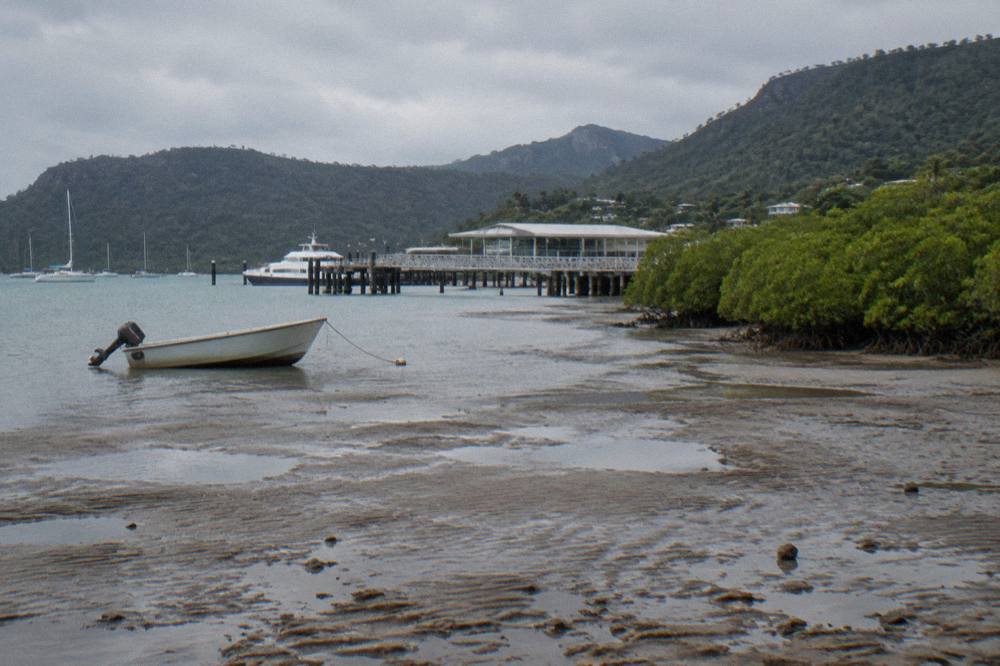
The bigger everyday reason is simpler: the beach in front of Airlie Beach is a shallow tidal bay. At low tide the water retreats across hundreds of metres of mud flat, and even at high tide the water is rarely the clear island blue people picture. It is a working coastal bay, not a swimming beach, and the tide decides what is under your feet.
Boathaven Bay, the curve of water the town wraps around, fills and empties with tides of several metres. At the top of the tide there is swimmable-looking water over the sand near the shore. A few hours later the same spot is a mudflat dotted with beached stingrays and stranded jellyfish, and the water line is a long, shoe-ruining walk away.
Mangroves fringe parts of the shoreline, and mangrove ecosystems mean silt, crabs and shifting channels rather than open-ocean sand. The sand strip near the lagoon gets used for sunbathing, picnics and the Saturday markets rather than laps. Locals treat the foreshore as the town's front garden: a place to walk, eat and watch the light change across the bay, with the swimming done a hundred metres inland at the lagoon.
This is worth setting against what the islands look like. Whitehaven Beach, about 7 km of silica sand on Whitsunday Island, is reached by boat in roughly an hour on the fast day trips. The same tide that empties Boathaven Bay barely dents it, because it faces open water across a national park coastline. The contrast is why every operator in town, from the Ocean Rafting speedboat to the SeaLink catamaran out of Shute Harbour, sells the crossing as the main event and treats the mainland beach as a waiting room.
Ready to swap the mudflat for silica sand instead? Most day trips on this site's roster list free cancellation, so you can lock in a date before the forecast settles and adjust later if it turns.
Where Do Locals Swim Instead?
The Airlie Beach Lagoon is the answer built into the town: a free, patrolled, saltwater lagoon on the foreshore, chlorinated and stinger-free, open year-round. It is a 4,300 square metre pool holding 4.5 million litres, with a toddler wading pool, a children's pool and a larger pool with lap lanes.
The lagoon sits between the Main Street shops and the beach, close enough that a towel and a book are the whole kit. Whitsunday Regional Council runs it as a public aquatic facility, lifeguards patrol it, and entry is free. For a family arriving in January, peak stinger season, it is the difference between a swim and a hot afternoon: no suit, no nets, no tide to read.
The design does the geography's work in reverse. Where the bay drains, the lagoon holds; where the sea carries stingers, the chlorinated saltwater lagoon does not; where the beach has no lifeguards, the lagoon has patrolled hours. Council lists lifeguard coverage from early morning into the evening, with hours that shift between the winter and summer halves of the year. Toddlers get their own wading pool, children get a pool to chest height, and swimmers get lap lanes, which is why the morning regulars treat it as the town's pool rather than a tourist attraction.
Beyond the lagoon, the realistic swimming options break into a short list:
| Option | What it is | Stinger situation | Cost |
|---|---|---|---|
| Airlie Beach Lagoon | Free patrolled saltwater pool on the foreshore | Chlorinated and stinger-free | Free |
| Netted regional beaches, e.g. Boathaven Beach | Council stinger nets typically installed November to May | Nets block larger box jellyfish, not Irukandji | Free |
| Island beaches on tours, e.g. Whitehaven Beach | Boat-access national park beaches | Operator-supplied stinger suits on commercial trips | From A$124 per person for the cheapest Whitehaven day trip |
| Reef pontoon, e.g. Reefworld at Hardy Reef | Permanently moored platform with enclosed water access | Suits provided, crew supervised | From A$329 per person |
The lagoon's details, including pool depths and facilities, are covered in the site's Airlie Beach Lagoon guide. For free things to do around town more broadly, from the Bicentennial Walkway to the Saturday foreshore markets, the free things to do guide keeps the honest line this site holds everywhere: the islands themselves always need a boat ticket.
A note on the tides and the weather, because they shape a lagoon day less than a beach day but a boat day more. The Bureau of Meteorology's cyclone season for the Australian region runs 1 November to 30 April, and the bureau's climate pages note an average of about ten tropical cyclones a season across the whole Australian region, not a local forecast. In January 2026 Cyclone Koji crossed the central Queensland coast and the bureau's records show the strongest winds were measured in the Whitsundays, with Hamilton Island and Hardy Reef both logging 117 km/h gusts. Trips rebook or refund when that happens; the lagoon closes briefly and reopens. If you are travelling in the wet months, flexibility matters more than the month you pick.
Can You Still Swim On The Islands?
Yes, and this is the part worth knowing: the same stinger guidance that makes the town beach unappealing is handled for you on commercial island trips. Stinger suits are provided free on tour boats and at island resorts from November to May, and on many boats year-round, so Whitehaven Beach and the fringing reefs are swimmable on any booked day trip.
Red Cat Adventures, one of the biggest operators in the harbour, states suits are supplied at no additional cost on all its boat tours and recommends them year-round. The listing for the Red Cat Whitehaven and Hill Inlet cruise, 4.9 from 3,166 reviews and from A$250 per person, lists snorkel gear, lunch, pickup and free cancellation, and it runs to the beach and lookout that give the region its reputation. Once your tour is booked, the natural next question is whether that swirling white sand has ever appeared on screen, and the truth about Whitehaven Beach's movie connection answers it plainly.
Whitehaven itself is an unpatrolled national park beach with no stinger net, so the suit-and-crew model is the swimming solution there, not infrastructure. Queensland Parks describes the beach as about 7 km of silica sand with a day-use area open 24 hours, boat access, picnic tables and non-flush toilets, and no lifeguards. Visitors swim; they do it in suits in season, on trips that carry them.
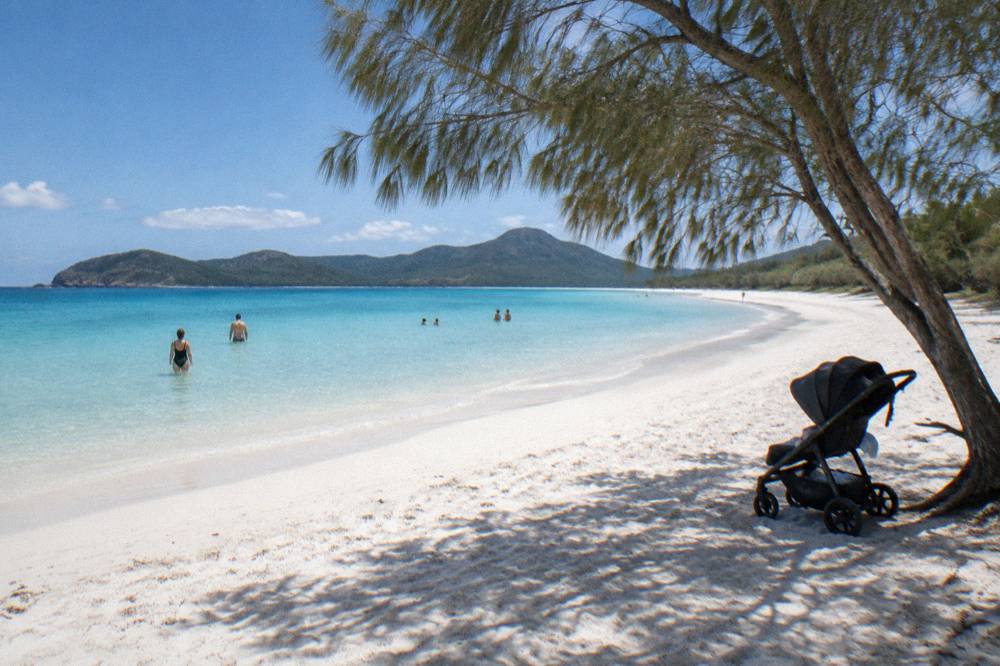
The Hill Inlet end of Whitehaven deserves one extra caution from Queensland Parks: the inlet water is tidal, currents can be strong, and the water level can rise rapidly, on an unpatrolled beach. The lookouts above it, a 1.3 km return walk of about 40 minutes, are the safe way to take it in, and every major day trip builds time there into the itinerary.
For snorkelling specifically, the fringing reefs around the islands and the outer reef pontoon are where the clear water lives. The site's Whitsundays snorkelling guide covers where, when and what to expect without promising conditions nobody can promise.
Which Tours Get You Into Clear Water?
The cheapest listed ticket from Airlie Beach to Whitehaven Beach is the Cruise Whitsundays half day at from A$124 per person, 4.2 from 1,765 reviews. From there the price ladder climbs through the Red Cat catamaran at from A$250 and out to the Reefworld day trip at from A$329, each trading up duration, inclusions or reef access.
Choosing between them is mostly choosing what kind of water day you want. A quick comparison of the three this article keeps returning to:
| Trip | Format | Duration | Rating and reviews | From price | Listed inclusions |
|---|---|---|---|---|---|
| Cruise Whitsundays half day | Half-day cruise from Port of Airlie | 7 hours | 4.2 from 1,765 reviews | A$124 per person | Free cancellation listed; pickup, meal and gear not stated |
| Red Cat Whitehaven and Hill Inlet | Catamaran cruise from Coral Sea Marina | 8 hours | 4.9 from 3,166 reviews | A$250 per person | Pickup, meal, snorkel gear, free cancellation |
| Cruise Whitsundays Reefworld day | Reef pontoon trip from Port of Airlie | 10 hours | 4.2 from 601 reviews | A$329 per person | Meal, snorkel gear; free cancellation not stated |
The half day is the budget fare: it gets you across to the sand and back for less than half the price of the pontoon, with the trade-offs the listing states plainly, since pickup, meal and gear are not stated as included. Bring your own towel, water and lunch money and it remains the cheapest way to stand on Whitehaven silica before dinner. The Red Cat trip is the full-service middle: catamaran comfort, lunch, snorkel stops and the Hill Inlet lookout, and its review pool of 3,166 with a 4.9 average is one of the deepest on the whole roster of 30 listings this site tracks. The pontoon day is the reef commitment, ten hours out to Hardy Reef with snorkel gear and a meal, for visitors who want coral and fish rather than sand.
One reef-wide cost note: the Great Barrier Reef Marine Park Authority charges an Environmental Management Charge on commercial reef trips, currently A$8.50 per full-day passenger and A$4.25 per part-day passenger, rising to A$9.00 and A$4.50 from 1 April 2027. No listing on this site's roster states whether it is included in the fare, so check the booking page for how each operator collects it. Some fold it into the advertised price at checkout, others add it as a line item; either way it is a Marine Park charge, not an operator upsell.
Speed is the other axis. The Ocean Rafting ribs, 4.9 from 5,008 reviews on their most-listed trip at from A$249 per person, cross to the islands fastest and include snorkelling, but their listing excludes pregnant guests and people with back problems, so they suit a narrower passenger list than the catamarans. If you are weighing the whole field rather than three, the Whitsundays day trips compared guide lays out the full roster side by side, and Whitsunday Island Tours keeps the comparison current across all 30 listings.
Sailing is the third flavour, and it answers the swim question differently again: slower, quieter, and swimming off the back of the boat in a protected bay rather than from a beach. Day sails on the roster run from A$219 per person for the Red Cat sail and snorkel trip up to A$295 for a classic yacht day, and the overnight options from OzSail and Prosail turn the same protected-anchorages logic into a two-day trip. None of them can promise sightings or conditions, and this site does not either; what they promise is water deep enough and clear enough that the question of this article never comes up.
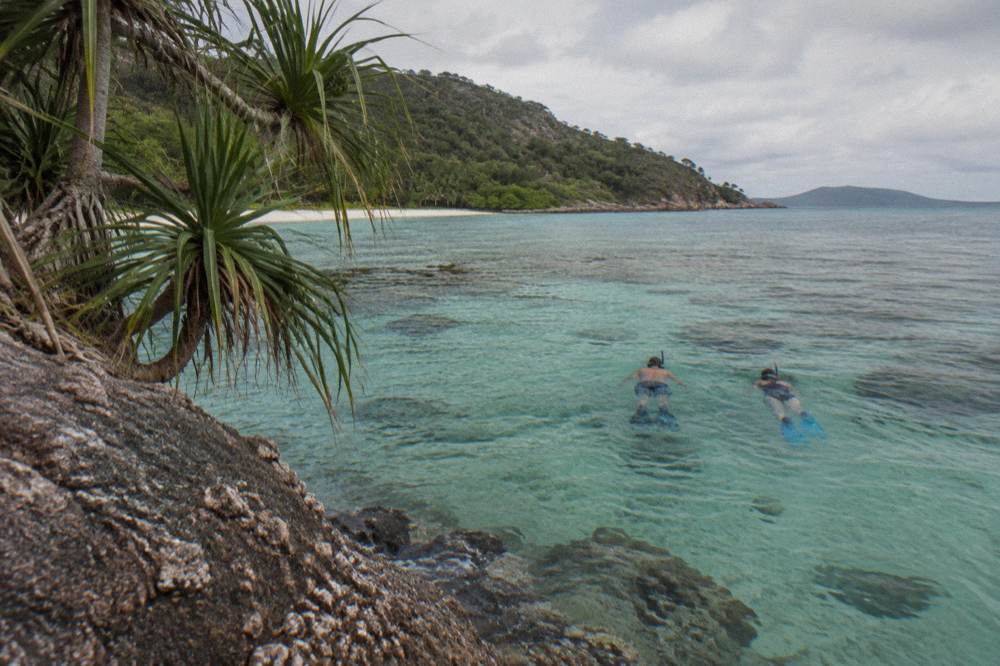
The reef day earns its solo card above for a simple reason: it is the one that answers the swim question most completely. The pontoon sits on Hardy Reef, 39 nautical miles from the mainland, with snorkel gear, stinger suits and an underwater observatory, four hours on the reef itself. The operator states stinger suits are provided year-round on its reef products. When the question is "where can I actually get in the water around here", the outer reef is the fullest answer.
For a reader whose whole question started with "the beach here is not what I expected", the honest summary is that the water you came for is one boat ride away, and the operators price it from A$124 up. Book the trip, swim the lagoon in the morning, and let the tide do what it likes with the mud.
Common Questions About Swimming At Airlie Beach
Why Can't I Swim at Airlie Beach?
The town beach fronts a shallow tidal bay that empties onto mud flats at low tide, and the tropical water carries marine stinger risk that is higher November to May, with stingers, sharks and crocodiles possible all year. The town's answer is the free, patrolled, stinger-free Airlie Beach Lagoon, and the clear-water swimming happens on island and reef day trips.
Is Airlie Beach Lagoon free?
Yes. The lagoon is a council-run public saltwater pool on the foreshore, open year-round, patrolled by lifeguards, chlorinated and stinger-free. No entry fee applies.
Are there stingers at Airlie Beach in winter?
Stingers can be present all year, so no month is officially stinger-free, but risk is lower from June to October and higher from November to May. Operators provide stinger suits on tours during the season, and many, including Red Cat Adventures, supply them year-round.
Can you swim at Whitehaven Beach?
Yes, on a tour. Whitehaven is an unpatrolled national park beach with no stinger net, so swimming happens in operator-supplied suits in season. Queensland Parks also cautions that Hill Inlet's tidal currents can be strong and the water can rise rapidly. Day trips from Airlie Beach start at from A$124 per person.
Where is the cheapest way to get to swimmable island water?
The Cruise Whitsundays half day to Whitehaven Beach is the cheapest listed option at from A$124 per person. It lists free cancellation but does not state pickup, meal or gear, so bring your own towels and water and check the booking page.
When is cyclone season in the Whitsundays?
The Bureau of Meteorology's official Australian cyclone season runs 1 November to 30 April. Across the whole Australian region the average is about ten cyclones a season, but that is not a local forecast, and trips cancel or rebook when severe weather arrives.