What Is So Special About The Whitsundays?
The Whitsundays combine 74 islands, brilliant silica sand, fringing reef and Australia's most accessible sailing in one protected stretch of the Great Barrier Reef. Here is what actually makes the region special, with real prices and trip options.
The Whitsundays are a cluster of 74 islands off the Queensland coast, most of them uninhabited national park, sitting inside the protected waters of the Great Barrier Reef Marine Park. What makes the region special is the combination: a beach of almost pure white silica at Whitehaven, fringing coral reef reachable by short boat rides from Airlie Beach, a sailing culture built on the largest bareboat charter fleet in the southern hemisphere, and humpback whales that pass through every winter. You can swim, sail, fly over Heart Reef or sleep on the water, all from one small mainland town. Before you pack your swimsuit, the guide to swimming safely in the Great Barrier Reef explains stinger season and which Whitsundays tours get you into the water without worry.
The Red Cat catamaran day trip, the Ocean Rafting speedboat and the Cruise Whitsundays half day each deliver a different slice of that combination, and this article walks through each of the reasons the region earns its reputation, with the real figures behind it.
What Is So Special About The Whitsundays?
The Whitsundays are special because they put 74 mostly uninhabited islands, a 7 km stretch of near-pure silica sand, swimmable fringing reef and a world-class sailing ground inside one compact, sheltered Marine Park, all reachable on day trips from Airlie Beach costing from A$124 per person. No other part of the Great Barrier Reef offers this mix so close to a mainland base. The islands are continental, not coral cays, so they carry real vegetation, walking tracks and lookouts rather than bare sand spits. Queensland Parks describes Whitehaven Beach as roughly 7 km of silica sand, which is the geological signature of the region and the single most photographed beach in the Whitsundays.
The shelter matters as much as the scenery. The islands sit behind an outer reef line, so the waters between them are comparatively protected, which is precisely why the sailing industry grew here. Day sails, overnight trips, bareboat charters and fast powerboats all operate in the same stretch of water, giving visitors a spread of price points and styles that few island destinations anywhere can match. Our Whitsunday Island Tours comparison covers the full roster, from a 2-hour sunset sail at A$85 to a 2-night sailing trip at A$600.
Three signature experiences define a first visit: a Whitehaven Beach and Hill Inlet day trip, at least one snorkel on the fringing reef, and a view of the islands from the water under sail. The trips below cover all three.
Why Is Whitehaven Beach's Sand Different?
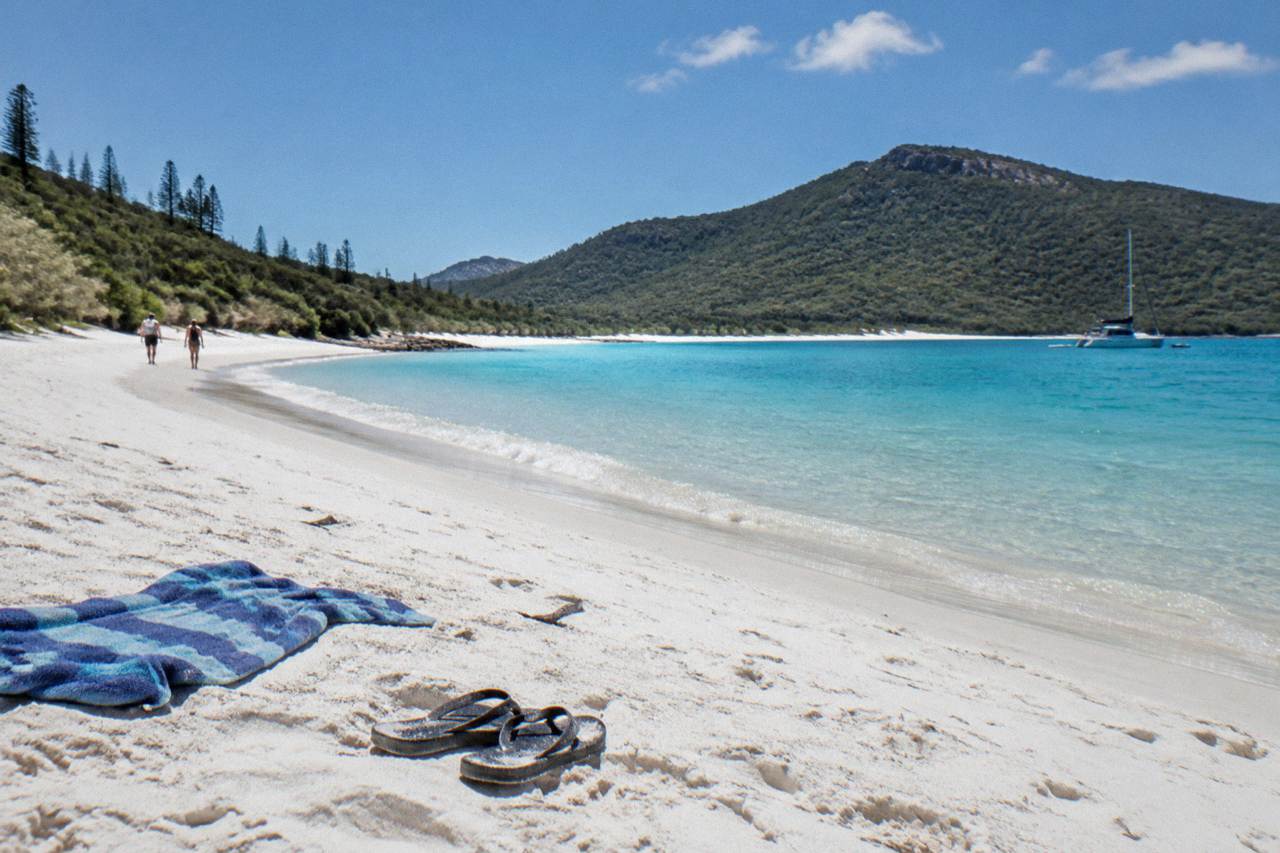
Whitehaven Beach's sand is almost pure silica, giving it brilliant white colour, fine grain and a texture that stays cool underfoot even in tropical sun, and Queensland Parks lists the beach at about 7 km long along Whitsunday Island's eastern shore. Most tropical beaches are made of broken coral and shell fragments, which look creamier and heat up by midday. Silica sand here is washed and sorted over thousands of years, so the beach glows white against the turquoise water and the tidal swirl of Hill Inlet at its northern end.
The Hill Inlet lookout above the inlet is where the postcard images come from. The walking track is 1.3 km return, takes about 40 minutes and is graded moderate, with twin lookouts at Tongue Point. Almost every Whitehaven day trip from Airlie Beach includes time at the beach itself, and most full-day tours add the lookout, which is reached by boat to Tongue Bay and a short walk. The Red Cat catamaran cruise, 4.9 from 3,166 reviews at from A$250 per person, and the Ocean Rafting speedboat trip, 4.9 from 5,008 reviews at from A$249 per person, both build the lookout into the day. The Ocean Rafting listing excludes pregnant guests and people with back problems because of the ride, so check that before booking the speedboat format.
Tides reshape the inlet constantly, which is why no two visits photograph the same way. Queensland Parks notes that the water in Hill Inlet is tidal, currents can be strong and the level can rise quickly, and the beach and inlet are unpatrolled, so swimming happens at your own judgement or with a tour group nearby. For the full picture on the lookout walk, tides and access, see the Hill Inlet lookout guide.
What Makes Sailing Here Unlike Anywhere Else?
The Whitsundays hold the largest bareboat charter fleet in the southern hemisphere, and the same protected waters carry everything from 2-hour sunset sails to 3-day maxi yacht adventures, so sailing is not a niche activity here but the main way people experience the islands. Operators such as Whitsunday Rent a Yacht allow hiring without a boat licence or formal sailing qualification, after a briefing of 3 to 4 hours on the vessel and the cruising area, with at least two adult crew. Charter limits keep bareboats inside the island group rather than out on the outer reef, which concentrates the fleet in exactly the sheltered waters that make the region special.
For visitors who would rather let a crew do the work, the range is wide. The Lady Enid classic sailing yacht day trip runs 9 to 11 hours at from A$295 per person, the Providence day sail with snorkelling runs about 9 hours at from A$220 per person, and the OzSail 2-night shared-yacht trip with meals included starts at A$600 per person. Overnight formats differ meaningfully: some are 2 days and 2 nights aboard a maxi yacht, others 2 days and 1 night, and the inclusions vary, so the overnight sailing comparison is worth a read before committing.
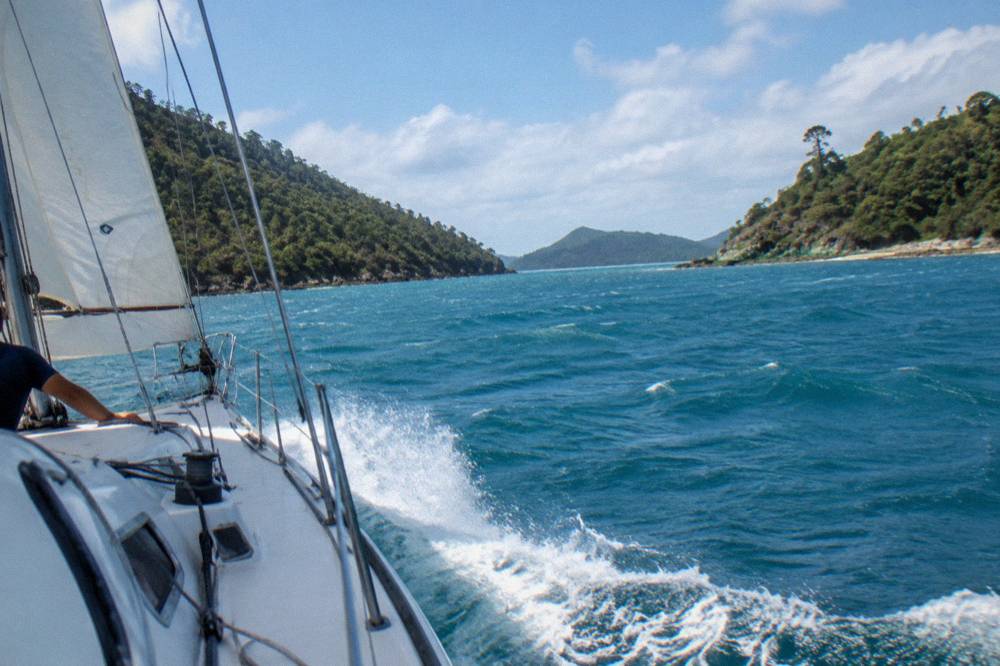
If a full day under sail sounds like too much commitment, the sunset sail from Coral Sea Marina runs 2 hours at from A$85 per person and shows off the same waters in miniature. Whitsunday Sailing Club also hosts twilight races on Wednesday afternoons that anyone can watch free from the Airlie Beach foreshore, one of the small local touches that makes the town feel like a working sailing port rather than a resort strip.
Why Is The Reef On Your Doorstep?
The Whitsundays sit inside the Great Barrier Reef Marine Park with fringing coral reef growing directly around the islands, so snorkelling is possible on short island day trips from A$220 per person, while the outer reef at Hardy Reef is a 10-hour pontoon day trip from A$329 per person. Fringing reef means coral grows along the island shorelines rather than only on distant offshore ribbon reefs, so a Whitehaven day trip with a snorkel stop often gives you coral, fish and beach in one ticket. The ZigZag eco cruise, 4.9 from 1,109 reviews at from A$239 per person, even fits two snorkel stops into its day. If you would rather explore on foot at low tide, the guide to a Daydream Island day trip covers the ferry across, the resort pools and the reef walk.
Outer reef access runs through the Cruise Whitsundays pontoon at Hardy Reef, 39 nautical miles from the mainland, where the day product includes about 4 hours on site with snorkel gear, stinger suits, an underwater observatory and a semi-submersible. The Reefworld pontoon day trip is 4.6 from 375 reviews at from A$329 per person. From Hamilton Island, the full-day reef snorkel trip, 4.4 from 211 reviews at from A$330 per person, covers similar water from a different departure point. Reef health in the central region, which includes the Whitsundays, is tracked by the Australian Institute of Marine Science, whose latest annual survey put average hard coral cover in the central reef at 31.6 percent, above the long-term average of 20 percent.
Every passenger in the Marine Park pays the Environmental Management Charge, A$8.50 for a full day and A$4.25 for part day, collected through the operators. Most listings do not state whether the charge is included in the fare, so check the booking page for that line. For deeper detail on sites and seasons, see the Whitsundays snorkelling guide.
When Is The Whitsundays At Their Best?
June to October brings dry mild days and humpback whales, with Tourism Whitsundays describing August as peak whale numbers and September as the driest, calmest month, while January to March is wettest with big afternoon storms, so the special season for most travellers is the southern winter. Humpbacks use Whitsunday waters from roughly June to October, and most of the islands sit inside the Whitsunday Whale Protection Area, where vessels must keep at least 300 metres clear of whales, triple the limit elsewhere in the Marine Park. Sightings are commonly reported from ferries, sailing trips and reef crossings rather than from dedicated whale boats.
The shoulder logic is simple. September and October average around three rain days each on Hamilton Island, with day temperatures near 25 to 27 degrees, light winds and thinner crowds after the school holidays. November to March is warmer, greener and wetter, with the wettest months, January and February, averaging 13 and 14 rain days respectively, though Tourism Whitsundays notes the rain typically arrives as afternoon build-up storms rather than all-day grey. Whatever the month, check the best time to visit guide for the month-by-month detail.
Two seasonal realities temper the calendar. Marine stingers can be present in the water all year, with risk higher from November to May, and stinger suits are provided free on commercial tour boats in that window, so the season affects comfort rather than access. And the Australian tropical cyclone season officially runs from 1 November to 30 April, which is why flexible cancellation matters on summer bookings. The Bureau of Meteorology notes that El Nino conditions were firmly established across the tropical Pacific in late 2026, a reminder that seasonal averages shift year to year and a live forecast is worth checking in the week before any trip.
What Does It Cost To Experience The Whitsundays?
Across the 30 bookable listings on this site, prices run from A$85 per person for a 2-hour sunset sail to A$699 for a 2-day, 2-night maxi sailing trip, with the most common Whitehaven day trips clustering between A$239 and A$265 including lunch and snorkel gear. The budget end is genuinely cheap by reef-trip standards: the Cruise Whitsundays half-day Whitehaven cruise starts at A$124 per person, and a guided jet ski tour runs 2.5 hours at from A$129 per person. At the top end, scenic flights over Heart Reef start at A$299 for 70 minutes, and sleeping on the reef at Reefworld starts at A$698 for the 2-day Reef Sleep product.
| Experience type | Cheapest listing | Typical range | What usually changes the price |
|---|---|---|---|
| Whitehaven day trip | A$124 pp (half-day cruise) | A$239 to A$265 | Boat speed, lookout time, lunch, snorkel stops |
| Day sail | A$85 pp (sunset sail, 2 hours) | A$219 to A$295 | Duration, yacht type, meals |
| Overnight sailing | A$495 pp (2 days, 1 night) | A$495 to A$699 | Nights aboard, meals, yacht style |
| Reef day trip | A$329 pp (pontoon) | A$329 to A$333 | Departure port, inclusions |
| Scenic flight | A$299 pp (70 minutes) | A$299 to A$565 | Duration, window guarantee, combo with boat |
Beyond the ticket, the add-ons are modest. The Environmental Management Charge adds A$8.50 per full day as described above, and camping on the islands costs A$7.75 per person per night if you build your own trip around a permit. Accommodation in Airlie Beach spans backpacker to resort, which keeps the overall cost of a Whitsundays stay flexible in a way Hamilton Island, with its resort pricing, generally is not. Getting to the islands without a tour also has a known price: the Cruise Whitsundays Resort Connections ferry to Hamilton Island costs A$74.50 adult one way, and the Daydream Island crossing A$49.50 adult one way, useful figures if you plan to base yourself on an island rather than the mainland. The is Whitsundays expensive breakdown covers the full budget picture.
Can You Sleep On The Islands Or On The Water?
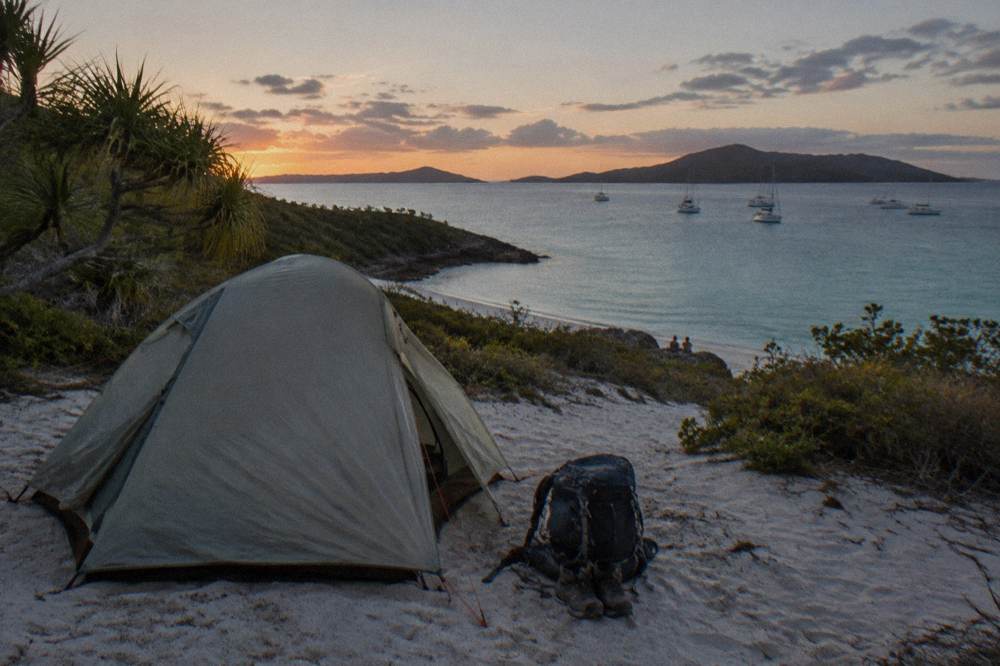
Yes, and that is a large part of what makes the region special: you can camp on a national park island for A$7.75 per person per night, sleep aboard a shared yacht from A$495 per person, or spend a night moored on the outer reef at the Reefworld pontoon from A$698 per person. The Whitehaven Beach campground has 10 defined sites with a maximum of 36 people, is boat access only, prohibits open fires and generators, and must be booked online in advance through the statewide Queensland Parks booking service. There is no mobile coverage at Whitehaven, which is either the point or the problem depending on your view.
The OzSail 2-night trip, 4.7 from 574 reviews at from A$600 per person with meals included, is the middle path: a shared yacht, a crew, and two nights of sunsets in quiet bays without carrying your own gear. Prosail's maxi yacht versions run faster boats in the same waters, 4.7 from 97 reviews and 4.9 from 203 reviews on its two listings, both at from A$699 per person. For walkers, the new 32 km Ngaro Track between Whitehaven Beach and Hill Inlet opened for bookings with hiker camps along the route, though Queensland Parks notes closures can occur for extreme weather, and the official alerts page should be checked before any walk.
Which Signature Trip Should You Pick First?
Pick a Whitehaven Beach and Hill Inlet day trip first, because it bundles the silica beach, the lookout and a snorkel stop in one ticket from A$239 per person, then add either an overnight sail or a scenic flight depending on whether your interest is water or air. The Red Cat catamaran cruise, 4.9 from 3,166 reviews at from A$250 per person with pickup, lunch, snorkel gear and free cancellation listed, is one of the most reviewed full-day options on the site and the natural first pick. The ZigZag eco cruise at from A$239 per person suits travellers who want two snorkel stops, and the SeaLink 8-hour cruise at from A$265 per person suits those who prefer a larger catamaran.
| Signature experience | Best listing | Rating and reviews | From price | Duration |
|---|---|---|---|---|
| Whitehaven, Hill Inlet and snorkel | Red Cat catamaran cruise | 4.9 from 3,166 reviews | A$250 pp | 8 hours |
| Overnight sailing with meals | OzSail 2-night shared yacht | 4.7 from 574 reviews | A$600 pp | 3 days, 2 nights |
| Outer reef day from Hamilton Island | Full-day reef snorkel trip | 4.4 from 211 reviews | A$330 pp | 8 hours |
| Heart Reef from the air | Whitsundays scenic flight | 4.8 from 2,355 reviews | A$299 pp | 70 minutes |
Second trips split by temperament. If the day on the water hooked you, the overnight sailing format turns the same islands into a slower, quieter experience with sunset and dawn in the bays. If you want the image nobody on a boat can get, the scenic flights over Heart Reef and Whitehaven run from A$299 per person, and the fly-and-raft combo packages the flight with a boat day at from A$565 per person. Whatever the mix, the three picks below are the proven starting points.
Common Questions About The Whitsundays
How many islands are in the Whitsundays?
There are 74 islands, most of them uninhabited and protected within Whitsunday Islands National Park. Only a handful, including Hamilton Island and Daydream Island, carry resorts, which is why so much of the region is reachable only by boat, sail or aircraft.
Can you swim in the Whitsundays?
Yes, with care. Marine stingers can be present all year and risk is higher from November to May, when stinger suits are provided free on commercial tour boats and at island resorts. Swim with a tour group in season, use stinger nets where installed on mainland beaches, or use the free, patrolled Airlie Beach Lagoon, which is stinger-free year-round.
Do you need a licence to sail in the Whitsundays?
No. Bareboat charter operators in the region hire to customers without a boat licence or formal sailing qualification, after a 3 to 4 hour briefing on the vessel and the cruising area, provided there are at least two adult crew. Charters are limited to the island group, not the outer reef.
When can you see whales in the Whitsundays?
Humpback whales move through Whitsunday waters between roughly June and October, with numbers peaking in August. Sightings are commonly reported from ferries, sailing trips and reef crossings, and vessels must stay at least 300 metres clear of whales inside the Whitsunday Whale Protection Area.
What is the cheapest way to see Whitehaven Beach?
The Cruise Whitsundays half-day Whitehaven cruise starts at A$124 per person and is the cheapest listed way onto the beach. It is a base fare without a stated meal, pickup or snorkel gear, so most travellers comparing full-day options land between A$239 and A$265 with lunch and snorkelling included.
What is so special about the Whitsundays?
The Whitsundays combine 74 mostly uninhabited islands, roughly 7 km of near-pure silica sand at Whitehaven Beach, fringing reef you can snorkel from a day trip, the southern hemisphere's largest bareboat charter fleet and annual humpback whales, all inside one protected stretch of the Great Barrier Reef within easy reach of Airlie Beach.