Whitsundays Snorkelling: Best Spots And Trips
The Whitsundays offer two very different kinds of snorkelling: the fringing reefs that grow right along the island shorelines, and the outer Great Barrier Reef reached by boat or seaplane. Knowing which one a trip visits, and what the operator supplies, is the whole decision.
Short answer
Most Whitsundays snorkelling happens on fringing reefs around Hook, Hayman and Whitsunday islands, reached on day trips from Airlie Beach from A$219 per person. Outer-reef trips to the Hardy Reef pontoon run from A$329. Stinger suits are advised November to May and supplied free on commercial tour boats in that window.
The Whitsundays sit inside the Great Barrier Reef World Heritage Area, but the snorkelling here splits into two distinct experiences that first-time visitors often confuse. The islands themselves are ringed by fringing reef, coral gardens that grow in the shallow, sheltered water directly off the beaches and headlands, and most day trips from Airlie Beach snorkel there. The outer reef, including the hard coral around Hardy Reef, lies roughly 39 nautical miles offshore and is reached on dedicated full-day trips or scenic flights. A reader researching snorkelling is really choosing between those two, and then choosing which boat delivers it.
This guide compares both in plain terms. It covers the stinger suit rules that apply for much of the year, what operators actually supply on board, which listings include snorkelling as part of a bigger day, and what the water conditions are doing beneath it all.
Fringing Reef Or Outer Reef: What Is The Difference?
The Whitsundays' fringing reefs grow directly against the islands in shallow, sheltered water reached in minutes by boat, while the outer reef sits about 39 nautical miles offshore and needs a dedicated full-day trip or a scenic flight. Fringing reef snorkelling is calmer, cheaper and usually paired with a Whitehaven Beach stop. Outer reef sites hold the more developed hard coral.
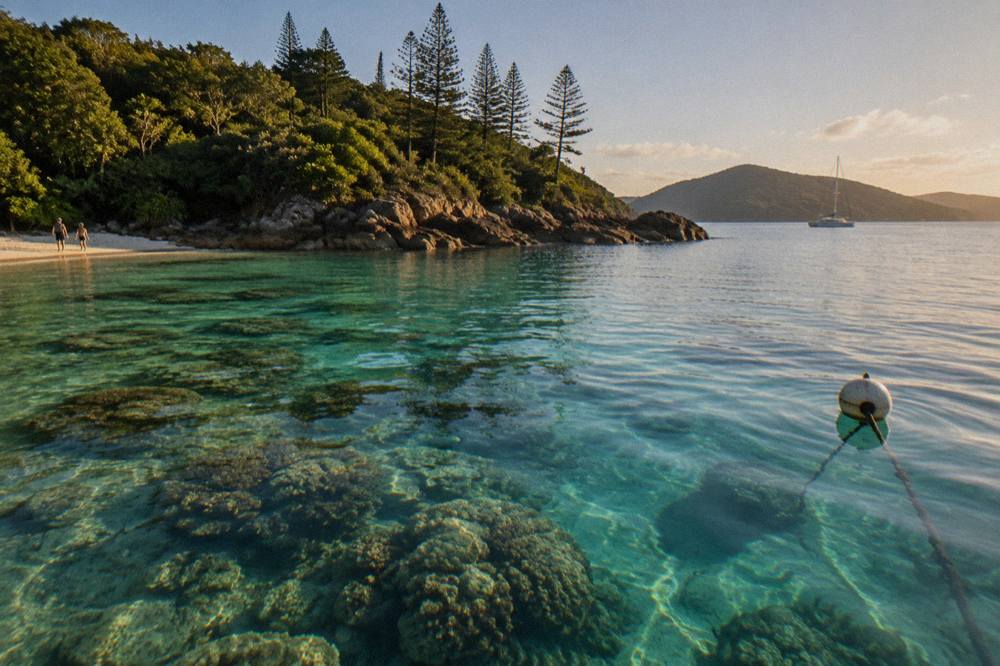
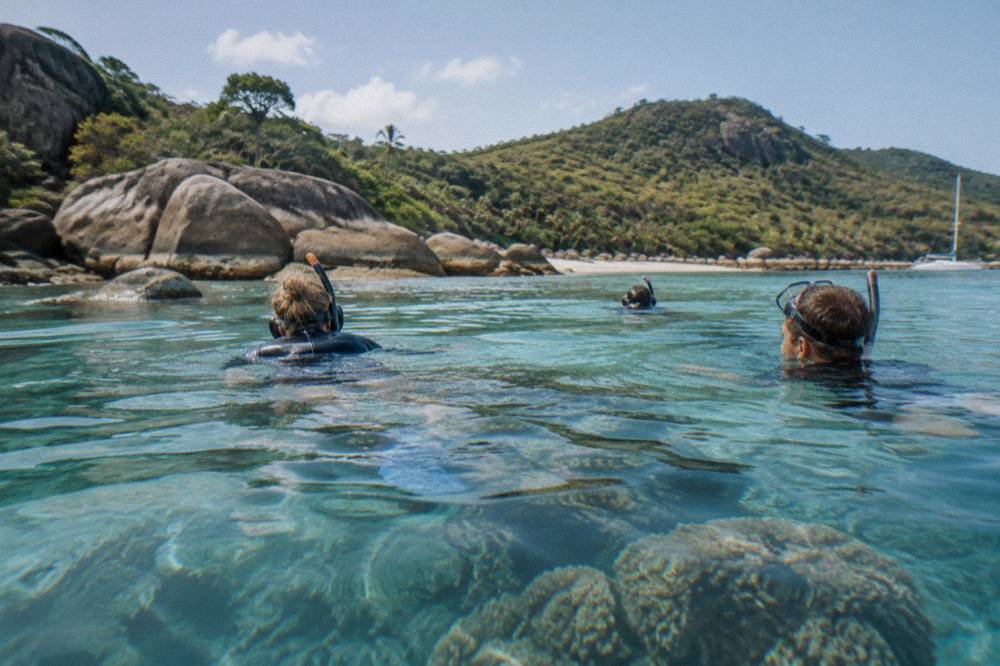
Fringing reef is the default Whitsundays experience. Because the coral sits close to shore in relatively protected bays, the water is generally gentler, the snorkel sites are a short ride from wherever the boat anchors, and trips can combine a swim with time on Whitehaven Beach or a walk to the Hill Inlet lookout. That is the formula behind most of the high-volume day trips out of Airlie Beach: a fast boat or catamaran runs out to a bay off Hook Island or the northern end of Whitsunday Island, drops snorkellers over the reef for an hour, then moves on to the beach.
The outer reef is a different proposition. Cruise Whitsundays describes its Hardy Reef pontoon as 39 nautical miles from the mainland, with around four hours on site for day guests. The trade-off is time and price: outer-reef trips list from A$329 per person against from A$239 for the cheaper fringing-reef day trips on this site's roster, and the boat ride is longer in each direction. What you get for that is coral structure that the fringing reefs around the islands, which cope with more sediment and freshwater runoff, rarely match.
There is a third option that mixes both: the combo products. A reef-and-Whitehaven day trip such as the Viper combo listing (4.6 from 346 reviews, from A$333 per person) packs an outer-reef snorkel and the beach into a single 8-hour day, and the fly-and-raft packages bolt a scenic flight over Heart Reef onto a speedboat day. Those suit visitors with only one or two days in Airlie Beach.
Which Island Is The Best For Snorkeling?
For most visitors the practical answer is Hook Island: its sheltered northern bays hold the most-used fringing reef snorkel sites, and nearly every Airlie Beach day trip that includes snorkelling stops somewhere along it or along the neighbouring Whitsunday Island coastline. Hamilton Island matters mainly as a departure point for its own reef trips.
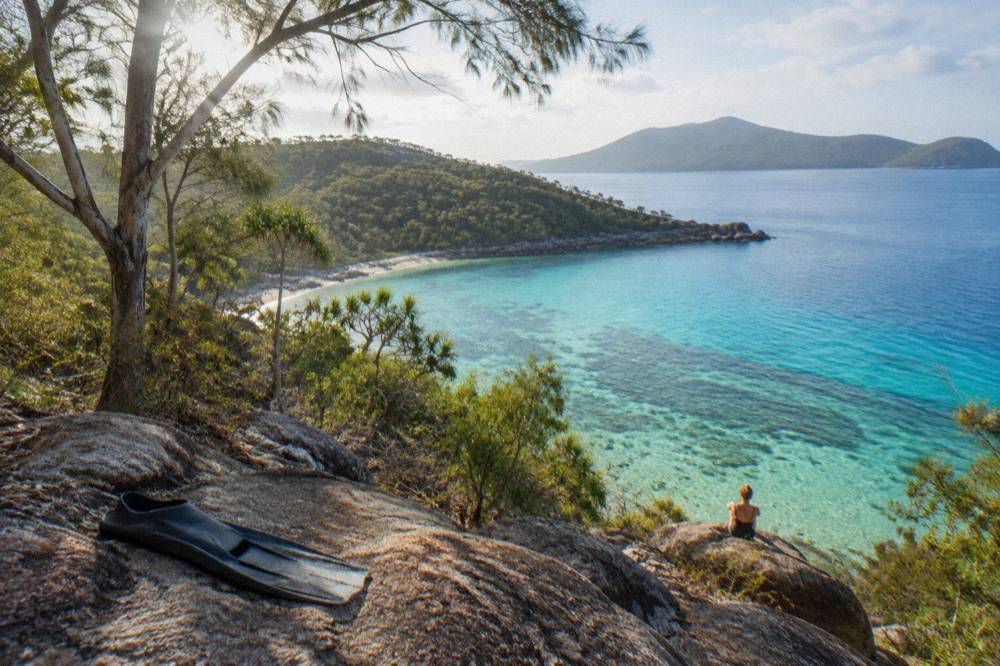
Hook Island's bays, including the Nara Inlet area and the coves along its northern shore, are the workhorse snorkel grounds of the fleet. The ZigZag eco cruise listing (4.9 from 1,109 reviews, from A$239 per person) advertises two snorkel stops on its 8-hour day, which tells you the format: several short, sheltered swims rather than one long offshore session. The Red Cat catamaran trips work the same water with a single longer stop paired with Whitehaven Beach and Hill Inlet.
Whitsunday Island itself contributes the Whitehaven end of the deal. The sand is the draw there rather than the coral, but the Chance Bay and Chalkies Beach area, directly opposite Whitehaven on the northern shore, is a legitimate fringing reef swim that several operators use when conditions allow. Queensland Parks lists public moorings at Chalkies Beach and Tongue Bay, which is a good hint about where the boats anchor.
Hamilton Island runs its own products. The full-day reef snorkelling trip from Hamilton Island Marina (4.4 from 211 reviews, from A$330 per person) takes island-based guests out to the reef without the mainland transfer, a genuine convenience if you are staying there rather than in Airlie Beach. There is a fuller treatment of the island-by-island question in our piece on which Whitsunday island is best for snorkelling.
The honest caveat is that conditions pick the site, not you. Skippers move between bays for wind, tide and swell, and no operator promises a specific snorkel location on a given day. What you are really booking is a boat, a crew and a style of day.
Do You Need A Stinger Suit To Snorkel Here?
Marine stingers can be present in Whitsundays water all year, with risk higher from November to May, so a full-length lycra stinger suit is advised in that window and is supplied free on commercial tour boats and at island resorts through it. Most operators make suits available, and some, including Red Cat Adventures, provide them year-round.
The Queensland Government's marine stinger guidance is blunt: stingers may be present year-round in tropical Queensland, risk is higher November to May, and prevention means swimming in nets where provided and wearing a full-body lycra suit. Tourism Whitsundays adds the practical detail that matters to a snorkeller: stinger suits are provided free on all commercial tour boats and at island resorts from November to May. Some tours supply them, others hire them, so the booking page is worth a check.
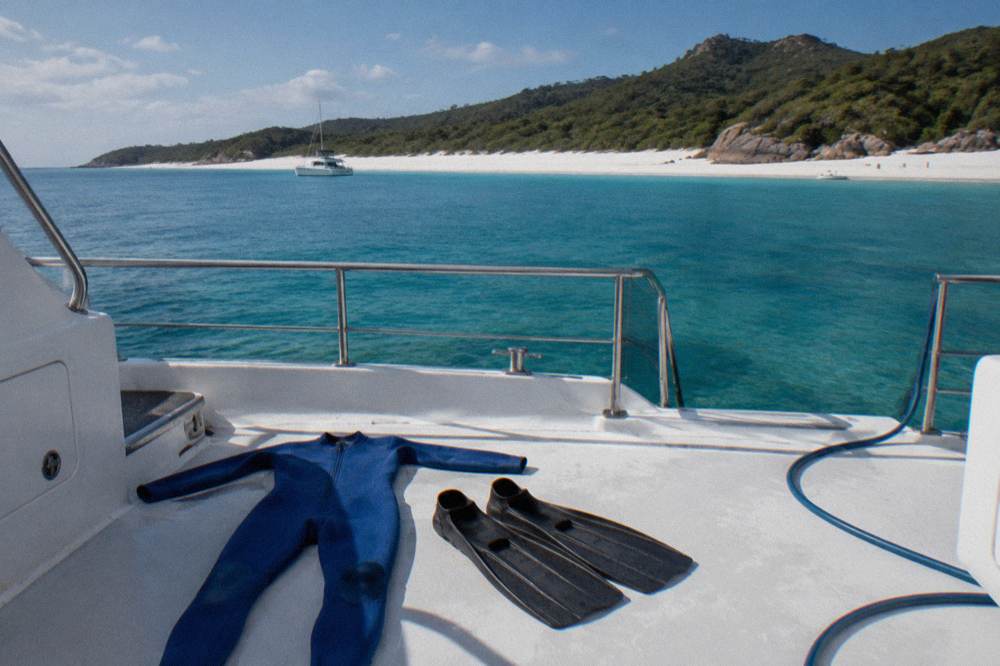
Operator policies differ in emphasis. Red Cat Adventures states it provides suits at no additional cost on all its boat tours and recommends them year-round, since jellyfish can be present any day. Ocean Rafting's own FAQ describes the season as usually running late October to April or May and highly recommends hiring a suit in that window, with hire arranged at check-in; it also hires wetsuits in the winter months for warmth rather than sting protection. Neither policy is a promise about the water, only about the suit.
| Operator | Suit policy as the operator states it | When it applies |
|---|---|---|
| Red Cat Adventures | Suits provided at no additional cost on all boat tours; recommended year-round | All year |
| Ocean Rafting | Suit hire highly recommended, arranged at check-in; wetsuits for hire in winter | Usually late October to April or May |
| Tourism Whitsundays (regional guidance) | Full-length lycra suits provided free on commercial tour boats and at island resorts | November to May |
| Cruise Whitsundays (Hardy Reef) | Stinger suits provided on day tours at the pontoon | Year-round |
Two more things belong in the same breath. First aid guidance is vinegar and call triple zero for a suspected sting, which is why the boats carry both. And if you want a swim without a suit at all, the Airlie Beach Lagoon is the free, patrolled, stinger-free option on the mainland, a saltwater pool open year-round; there is more on that in our Airlie Beach Lagoon guide.
A word on water temperature, since it shapes what you wear even without stingers: Tourism Whitsundays gives a range of 22 degrees in winter to 29 degrees in summer. That is swimmable year-round in a suit, and brisk but manageable in July in a shorty.
What Gear Do Snorkelling Trips Include?
On the trips in this site's roster, snorkel gear, meaning mask, snorkel and fins, is listed as included on the majority of day trips that feature snorkelling, alongside lunch on most full-day boats. Suits are supplied in season as covered above. The listings that do not state gear or meals are the cheap base fares, so read the inclusions line before comparing prices.
The pattern across the roster is consistent enough to generalise safely. The Red Cat high-speed catamaran cruise (4.9 from 3,166 reviews, from A$250 per person) lists pickup, free cancellation, a meal and snorkel gear. The Ocean Rafting full-day listing (4.9 from 5,008 reviews, from A$249 per person) lists the same set. The ZigZag eco cruise, the Big Fury fast boat (4.7 from 671 reviews, from A$240) and the Red Cat eco cruise with buffet (4.8 from 3,235 reviews, from A$250) all list meal plus gear. On the outer reef, both Cruise Whitsundays Reefworld listings include gear and a meal, and the operator states its day trips provide stinger suits year-round at Hardy Reef.
Where the roster thins out is the budget end. The two Cruise Whitsundays half-day Whitehaven listings at from A$124 do not state gear, meal or pickup on their listing pages, and the sunset sail and jet ski products are not snorkel trips at all. That is not a criticism, it is a base fare, but a reader comparing A$124 against A$250 needs to know the cheaper fare buys the beach and the ride, not a reef swim with lunch.
Worth bringing yourself regardless: a towel, reef-safe sunscreen applied before boarding, a dry bag for the boat ride, and motion sickness remedies if open water is new to you. Prescription mask availability varies by operator, so ask ahead rather than assuming. For anyone weighing scuba against snorkelling, our Whitsundays diving guide lays out what exists and what does not.
Which Tours From Airlie Beach Include Snorkelling?
Six of the Whitehaven day trips on this site's roster list snorkel gear as included, from A$239 per person, and all of them pair the snorkel stop with Whitehaven Beach, Hill Inlet or both. Two outer-reef products from A$329 and one Hamilton Island departure at from A$330 round out the snorkel-focused options.
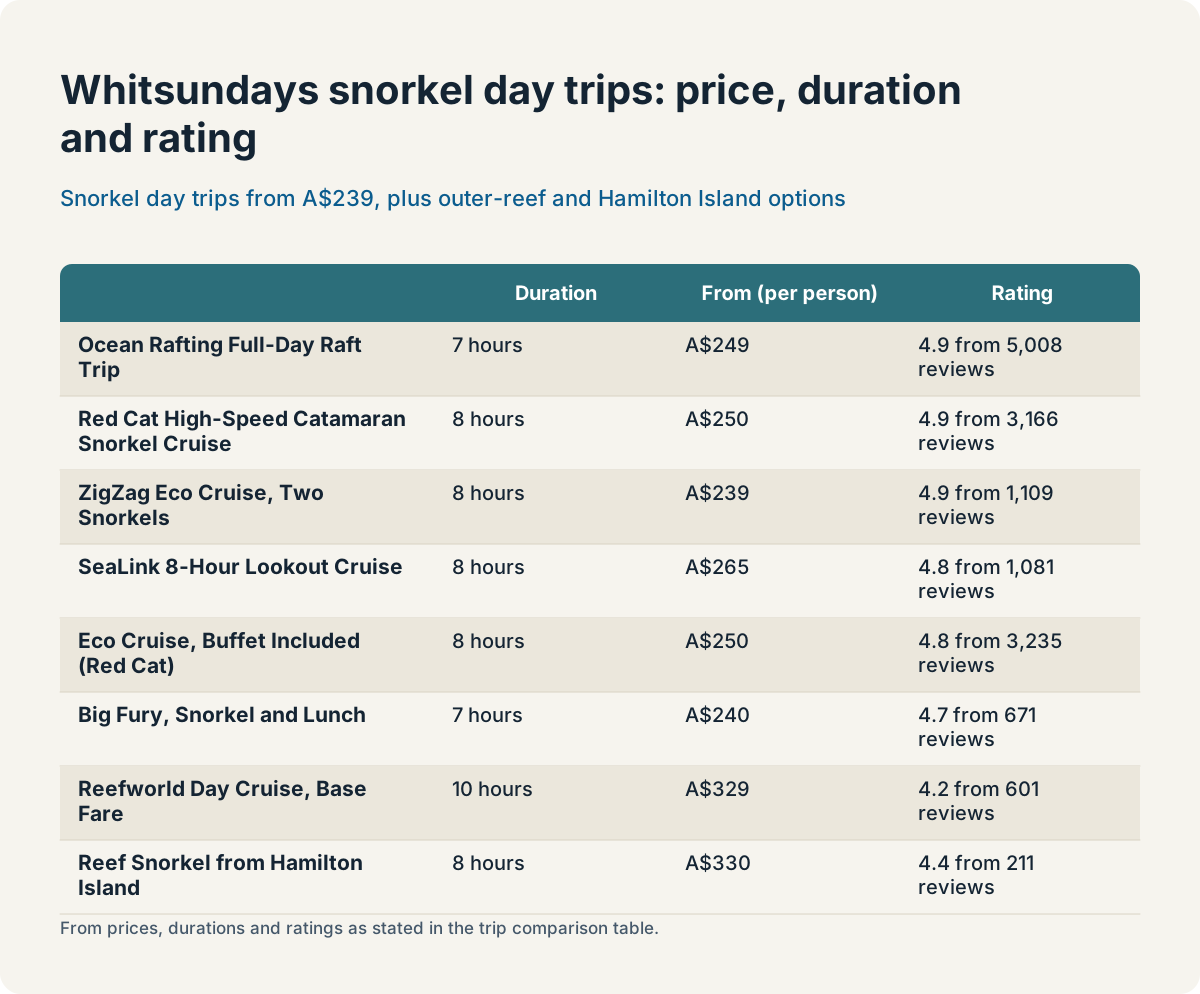
The table below compares the listings that actually put a mask in the water. Prices and ratings are per person, from the roster as listed.
| Trip (card name) | Style | Duration | Rating | From (per person) | Gear and meal listed |
|---|---|---|---|---|---|
| Ocean Rafting Full-Day Raft Trip | Speedboat, small groups | 7 hours | 4.9 from 5,008 reviews | A$249 | Both listed |
| Red Cat High-Speed Catamaran Snorkel Cruise | Catamaran | 8 hours | 4.9 from 3,166 reviews | A$250 | Both listed |
| ZigZag Eco Cruise, Two Snorkels | Eco cruise | 8 hours | 4.9 from 1,109 reviews | A$239 | Both listed |
| SeaLink 8-Hour Lookout Cruise | Large catamaran | 8 hours | 4.8 from 1,081 reviews | A$265 | Meal listed, gear not stated |
| Eco Cruise, Buffet Included (Red Cat) | Catamaran | 8 hours | 4.8 from 3,235 reviews | A$250 | Both listed |
| Big Fury, Snorkel and Lunch | Fast boat | 7 hours | 4.7 from 671 reviews | A$240 | Both listed |
| Reefworld Day Cruise, Base Fare | Outer-reef pontoon | 10 hours | 4.2 from 601 reviews | A$329 | Both listed |
| Reef Snorkel from Hamilton Island | Reef day trip | 8 hours | 4.4 from 211 reviews | A$330 | Gear not stated, meal not stated |
Choosing between them is mostly choosing a boat style. The Ocean Rafting speedboats are the fastest and most physical ride, and their listing excludes pregnant guests and people with back problems, so that constraint belongs next to any recommendation of them. The Red Cat catamarans are the steadier platform, and the featured pick on this site, the Red Cat Whitehaven and Hill Inlet snorkelling cruise, is the roster's balance of rating depth and inclusions. The ZigZag product is the one to look at if two snorkel stops matter more to you than a Hill Inlet lookout walk, and it undercuts the field at from A$239.
For the outer reef, the Reefworld day cruise gives you about four hours on the Hardy Reef pontoon with an underwater observatory and semi-sub as backup for anyone who does not fancy the water at all, which is a real consideration for mixed groups. And if you want the whole question narrowed to a single recommendation, our best Whitsundays tour piece works through that argument directly.
One more format worth naming: the day sails. The Providence sail (4.3 from 812 reviews, from A$220 per person) lists snorkel gear, the Lady Enid classic yacht (4.7 from 213 reviews, from A$295) lists gear and a meal, and the Red Cat sail and snorkel day (4.8 from 755 reviews, from A$219) is the cheapest of the three with lunch included. Sailing trips reach the same water more slowly and with more of the day spent under canvas. That trade-off suits some travellers perfectly. Everything else covered here is indexed on Whitsunday Island Tours.
Is Snorkelling Here Suitable For Beginners?
Yes, in the right conditions: fringing reef snorkelling happens in sheltered bays off the back of a boat, often in water shallow enough to stand in spirit if not in practice, and crews brief and supervise every swim. The outer-reef pontoon adds an underwater observatory and semi-sub, so non-swimmers still see the reef. Confident swimming helps everywhere.
Beginners should bias toward the bigger, steadier platforms. A large catamaran or a pontoon day gives you wide decks, gear help and usually a guided swim; the Ocean Rafting speedboats, for all their review counts, are a wet, bumpy ride out and a shorter, more energetic water session. On any trip, tell the crew your swim level honestly: guided snorkel safaris exist on several products, and the Cruise Whitsundays pontoon includes a complimentary guided snorkel safari on its Reefworld overnight product and lists an optional paid safari on the day trips.
Safety framing belongs here too. Queensland Parks states plainly that Whitehaven Beach and the inlet are unpatrolled, that Hill Inlet's water is tidal with currents that can be strong, and that stingers, sharks and crocodiles can be in the sea all year. None of that is a reason to stay ashore; it is a reason to snorkel from a commercial trip with a crew, a suit and a lookout rather than swimming alone off a national park beach. The Whitsundays stinger season guide covers the seasonal detail.
How Much Does A Whitsundays Snorkelling Trip Cost?
Snorkelling-inclusive day trips on this roster run from A$219 for a day sail to A$250 for the main Whitehaven catamarans, with the outer-reef pontoon day at from A$329 and the Hamilton Island reef trip at from A$330. Budget half-day fares at from A$124 do not state snorkel gear. Add the Environmental Management Charge where a listing does not state it is included.
The Great Barrier Reef Marine Park Authority charges tour operators an Environmental Management Charge of A$8.50 per full-day passenger and A$4.25 per part-day passenger; from 1 April 2027 those amounts rise to A$9.00 and A$4.50. The charge is normally collected through the ticket price, but none of the roster listings state whether it is included, so treat it as a possible small add-on at checkout and check the booking page.
| Budget | What it buys | Example listings |
|---|---|---|
| From A$124 | Half-day Whitehaven cruise, base fare, gear not stated | Cruise Whitsundays half-day listings |
| A$219 to A$250 | Full-day fringing reef snorkel, Whitehaven, Hill Inlet, lunch | Red Cat sail and snorkel A$219; ZigZag A$239; Big Fury A$240; Ocean Rafting A$249; Red Cat catamaran A$250 |
| A$260 to A$350 | Larger cruises and outer-reef days | SeaLink A$265; Lady Enid sail A$295; Reefworld day A$329; Hamilton Island reef A$330; reef and Whitehaven combo A$333 |
| A$500 and up | Flight-and-boat combos and overnight formats | Fly-and-raft package A$565; overnight sails from A$495 |
Value is mostly about what the fare removes from your day. The A$250 catamarans include pickup, lunch and gear, which knocks out three separate purchases and a shuttle worry; the A$124 half-day leaves all of that with you. For a longer read on the whole cost picture, including accommodation and ferries, see is the Whitsundays expensive.
Can You Snorkel The Whitsundays Without A Tour?
Only in a limited sense: there is no drive-to fringing reef from the mainland, and the island reefs need a boat, a ferry or a kayak to reach, so independent snorkelling in the Whitsundays means the rare sheltered mainland spot or a self-organised watercraft. For the reef itself, a tour ticket is effectively the entry fee, from A$124 at the floor of the Whitehaven listings.
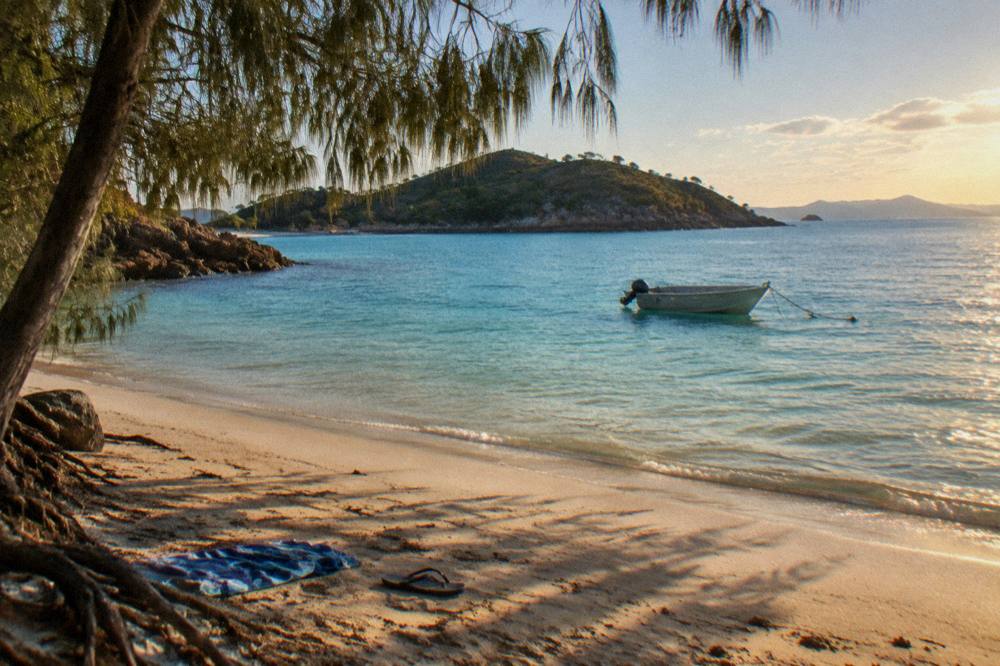
The geography is the reason. Airlie Beach's own beaches sit on siltier mainland water rather than coral, which is exactly why the town built the lagoon. The nearest worthwhile reef snorkelling is on and around the islands, and Queensland Parks reaches those shores by boat. Bareboat charter is a genuine alternative for qualified or briefed crews, and Whitsunday Rent a Yacht states no licence is required, with a three to four hour briefing and charter limits within the islands rather than the outer reef. Campers can also snorkel off national park beaches, with the Whitehaven campground at A$7.75 per person per night and camping transfers booked separately, though parks advice about tides, stingers and unpatrolled water applies with extra force when no crew is watching.
For most readers the honest summary is that the boat is the product. The full argument, including the ferry-only and kayak angles, is in can you go to Whitehaven Beach without a tour; the free-and-cheap mainland options are rounded up in free things to do in Airlie Beach and the Whitsundays.
One planning note for stinger-season independent swimmers: mainland stinger nets are only in place at some beaches from November to May, and Whitehaven has no net enclosure at all, so an operator-supplied suit is the practical protection on the islands. Sources for the season guidance are the Queensland Government marine stinger page and the Reef Authority's Environmental Management Charge page, with reef condition reporting from the AIMS long-term monitoring summary.
Common Questions About Whitsundays Snorkelling
Which island is the best for snorkeling?
Hook Island's sheltered bays are the most-used fringing reef snorkel sites and appear on most Airlie Beach day trips, with Whitsunday Island's Chalkies Beach area a close second. Hamilton Island is best treated as a departure base for its own reef trips. Skippers choose the exact bay on the day for wind and tide.
What island has the best snorkeling?
For fringing reef reached on a day trip, Hook Island. For developed hard coral, no island shoreline competes with the outer reef at Hardy Reef, reached on pontoon trips from A$329 per person rather than from an island beach.
What is the best island to go snorkeling in?
If the question means a single island to stay on and snorkel from, Hamilton Island has the most departures, including a full-day reef trip from A$330 per person. If it means the best water, book a boat to Hook Island's bays or the outer reef from Airlie Beach.
Do I need a stinger suit to snorkel in the Whitsundays?
A full-length lycra suit is advised from November to May and supplied free on commercial tour boats in that window; some operators, including Red Cat Adventures, provide suits year-round. Stingers can be present in any month, so most crews recommend a suit regardless of season.
Is snorkelling included on Whitehaven Beach tours?
On most full-day Whitehaven trips, yes: the roster's Red Cat, Ocean Rafting, Big Fury and ZigZag listings all include snorkel gear, and most include lunch. The half-day base fares from A$124 do not state gear, so check the listing before booking if a reef swim is the point of the day.
Can beginners snorkel the Whitsundays?
Yes. Fringing reef swims happen in sheltered bays with crew supervision, and the outer-reef pontoon adds an underwater observatory and semi-sub for anyone who prefers to stay dry. Choose a catamaran or pontoon trip over a speedboat for a steadier first experience.