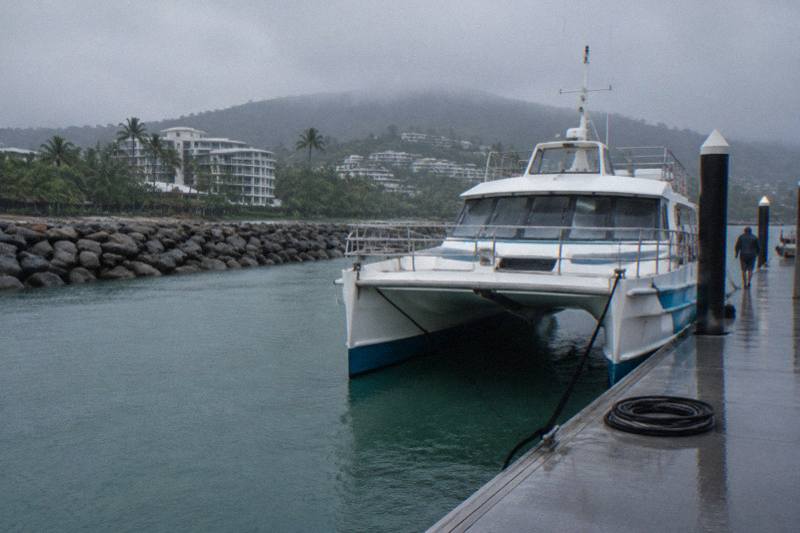
Can You Still Swim In The Great Barrier Reef?
Yes, you can still swim in the Great Barrier Reef. This guide covers stinger season, reef health, stinger suits and the Whitsundays tours that put you in the water safely.
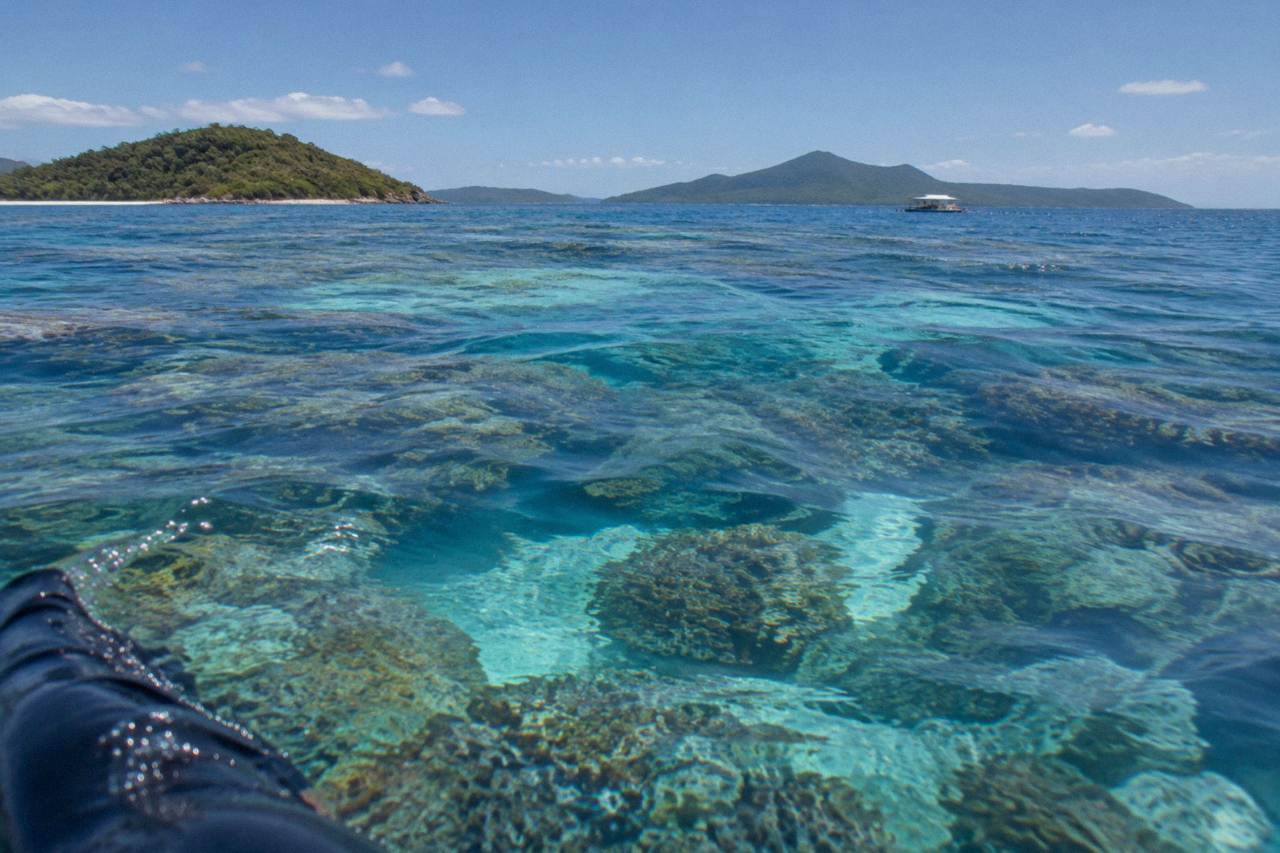
The question gets asked more often than almost any other about Far North Queensland, and it is usually asked with a faint worry behind it. Somewhere between the documentaries about coral bleaching and the headlines about marine stingers, a lot of travellers have landed on the idea that swimming on the Great Barrier Reef might be off limits, or unwise, or a shadow of what it was. The short version: people swim on the reef every day of the year, including right now, and the Whitsundays is one of the busiest places they do it from. The longer version involves two separate things people often blur together, reef health and personal safety, and each has its own honest answer.
This article works through both. It covers what stinger season actually means, what the official guidance says about suits and swimming, what reef monitoring found in 2026, and which Whitsundays tours put you in reef water with the right gear. Everything here comes from official sources, from the Reef Authority and Queensland Parks to the Bureau of Meteorology, plus the verified tour listings on this site. Where something is not stated on an official page, it is left out.
Can You Still Swim In The Great Barrier Reef?
Yes, you can still swim in the Great Barrier Reef, and it remains one of the most common things visitors do from the Whitsundays. Commercial tours run to reef snorkel sites year round, stinger suits are supplied on tour boats during the higher-risk November to May window, and the regions coral cover has held steady or improved slightly in the latest monitoring season.
Snorkelling on the reef is not a relic or a restricted activity. Cruise Whitsundays runs a permanently moored pontoon at Hardy Reef, roughly 39 nautical miles offshore, where day guests get around four hours on site with snorkel gear, stinger suits and an underwater observatory. Red Cat Adventures, Ocean Rafting and the other Whitsundays day operators run snorkel stops on fringing reefs around the islands. None of this has stopped. If anything, the recent monitoring news is mildly encouraging rather than grim.
The worry usually comes from two directions. The first is reef health: the 2024 and 2025 summers brought mass bleaching events to parts of the Great Barrier Reef, and those stories are true. The second is safety: box jellyfish and Irukandji are a real part of tropical Queensland waters, and any honest article has to treat them that way rather than waving them off. Neither worry adds up to "do not swim". Both add up to "swim informed", which mostly means wearing the suit your tour provides in the months it matters and listening to the crew who work these waters daily.
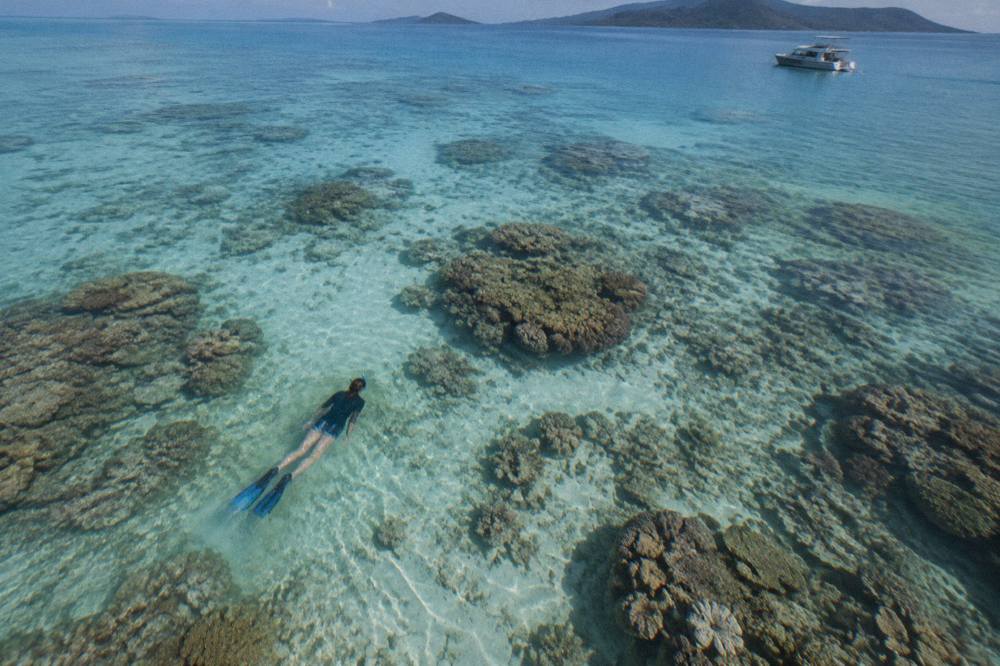
For a reader weighing an actual booking, three listings on this site cover the most common ways into reef water from Airlie Beach: the pontoon day trip, the budget Whitehaven half day, and the high-speed catamaran that pairs Whitehaven with a snorkel stop.
The pontoon product, the Great Barrier Reef Full Day Adventure, is the one that exists specifically to answer this question. You can read more about it in the great barrier reef trips guide, and Check availability if the dates matter to you. It is also worth being clear about what "swimming in the reef" means in practice: most people mean floating in a mask and fins above coral in three to six metres of water, not distance swimming. That is exactly what these tours are built for.
What Is Stinger Season And When Does It Run?
Stinger season runs November to May, when the risk from marine stingers is higher, but Queensland Health guidance is clear that stingers can be present in tropical waters all year. The standard protections are swimming inside stinger nets where they are provided, wearing a full-body lycra suit, and on commercial tours, using the suits the operator supplies during the season.
The Queensland Government's dangerous marine creatures page states the position plainly: marine stingers may be present year-round in tropical Queensland, but risk is higher during the marine stinger season, November to May. Prevention advice is to swim in nets where provided and consider a full-body lycra suit. First aid guidance for a sting is vinegar and calling 000. That is the official baseline, and it has not changed in substance for years, which is itself useful to know: this is a managed, understood risk, not a new crisis.
What it means for the Whitsundays specifically is worth a couple of details. Tourism Whitsundays, the regional tourism body, states that full-length lycra stinger suits are provided free on all commercial tour boats and at island resorts from November to May. Whitehaven Beach and the fringing reef sites around the islands have no stinger net enclosures; they are national park waters, and the protection model there is the operator-supplied suit, not a net. Nets are a mainland beach thing, and even those, per the official guidance, block larger box jellyfish rather than Irukandji. The suit is the real barrier.
Is a stinger suit mandatory?
No law forces a snorkeller to wear one, and policies vary slightly between operators. What is consistent across the official guidance and the operator pages this site has verified is the recommendation. Red Cat Adventures, for example, states that it provides suits at no additional cost on all boat tours and recommends them year-round, because jellyfish can be present on any given day. Ocean Rafting's own FAQ recommends hiring a suit in the warmer months and arranges hire at check-in. A reasonable summary for a traveller: treat the suit as included in the price of swimming in the Whitsundays between November and May, and treat an operator offering one outside that window as being cautious rather than alarmist.
| Question | Official position | What it means on the water |
|---|---|---|
| When is stinger season? | Higher risk November to May; present all year | Suits advised November to May, worth asking about anytime |
| Are nets available? | Only at some beaches, in season | Mainland beaches only; island reef sites rely on suits |
| Are suits provided on tours? | Yes, free on commercial boats and at resorts in season | Included by Whitsundays operators, some year-round |
| First aid for a sting | Vinegar, then call 000 | Vinegar stations are placed at patrolled locations |
The deeper background on seasons, months and what each part of the year feels like is covered in the site's Whitsundays stinger season guide, which goes into the month-by-month detail if you are picking travel dates around it.
Is It Safe To Swim On A Whitsundays Tour?
Yes, swimming on a commercial Whitsundays tour is a routine, well-managed activity. Tours supply snorkel gear and stinger suits in season, crews brief guests on the sites before entry, and the fringing reefs visited by day trips are sheltered island waters rather than open ocean. The main behavioural rules are to swim where the crew directs and to wear the suit when it is offered.
There is a temptation to answer this question with statistics that do not exist on any official page, so this article will not do that. No verified count of jellyfish stings or incidents in the Whitsundays over recent months was found on Queensland Health, Surf Life Saving Queensland, council or operator pages, and No recent sting counts are published, so the official prevention advice matters more than any number. What can be said is structural: commercial tour boats in the Whitsundays operate under Marine Park permits, carry suits, and run the same snorkel sites week after week with trained crews. That is the system working as designed.
The tours themselves make the safety picture concrete rather than abstract. The Red Cat high-speed catamaran cruise, 4.9 from 3,166 reviews at from A$250 per person, lists pickup, a meal, free cancellation and snorkel gear among its inclusions, and Red Cat as an operator supplies stinger suits on all its boat tours. The Ocean Rafting speedboat trips cover the same territory in smaller groups, though their listing excludes pregnant guests and people with back problems, a detail worth knowing before booking. The Cruise Whitsundays half day, from A$124, is the budget entry point for island water time without the snorkel focus.
One genuinely useful planning fact sits behind all of this: the Environmental Management Charge. Every full-day passenger in the Marine Park pays A$8.50, part-day passengers A$4.25, collected through the operator, and from 1 April 2027 those amounts rise to A$9.00 and A$4.50. The Reef Authority's charges page sets out the detail. Roster listings generally do not state whether the charge is inside the ticket price, so check the booking page for that line item.
What Does Reef Health Actually Look Like In 2026?
The 2025 to 2026 monitoring season brought mildly encouraging news for the regions reefs. Average hard coral cover in the Central Great Barrier Reef, which includes the Whitsundays, moved from 28.6 percent to 31.6 percent, a change the Australian Institute of Marine Science describes as within its margin of error but above the long-term average of 20 percent. There was no repeat of the mass bleaching of 2024 and 2025.
This is the part of the question that deserves precision, because vague gloom and vague cheer are both useless to a traveller. The AIMS Long-Term Monitoring summary for 2025 to 2026 surveyed 121 reefs between August 2025 and June 2026. Across the whole reef-wide sample, 16 percent of surveyed reefs declined in coral cover, 56 percent showed no net change, and 28 percent increased. A late-summer monsoon cooled waters early in 2026 and is credited with limiting bleaching severity. Tropical Cyclone Koji crossed the Central region in January 2026 and caused minor coral losses on several Central reefs, and Hamilton Island recorded a 117 km/h gust during it, but the season overall did not deliver a mass bleaching repeat.
For the Whitsundays specifically, the honest caveat is that AIMS reports regional averages, not a scorecard for Hardy Reef or any named Whitsunday snorkel site. The Reef Authority's own August 2026 health update surveyed ten Central region reefs and found one with medium coral bleaching and three with low coral damage, with August sea temperatures close to long-term averages. Translated for a snorkeller: the coral you float over in the Whitsundays is a mix, some of it vibrant, some of it recovering, some of it under pressure, and none of it fairly summarised by a single doom headline or a single postcard.
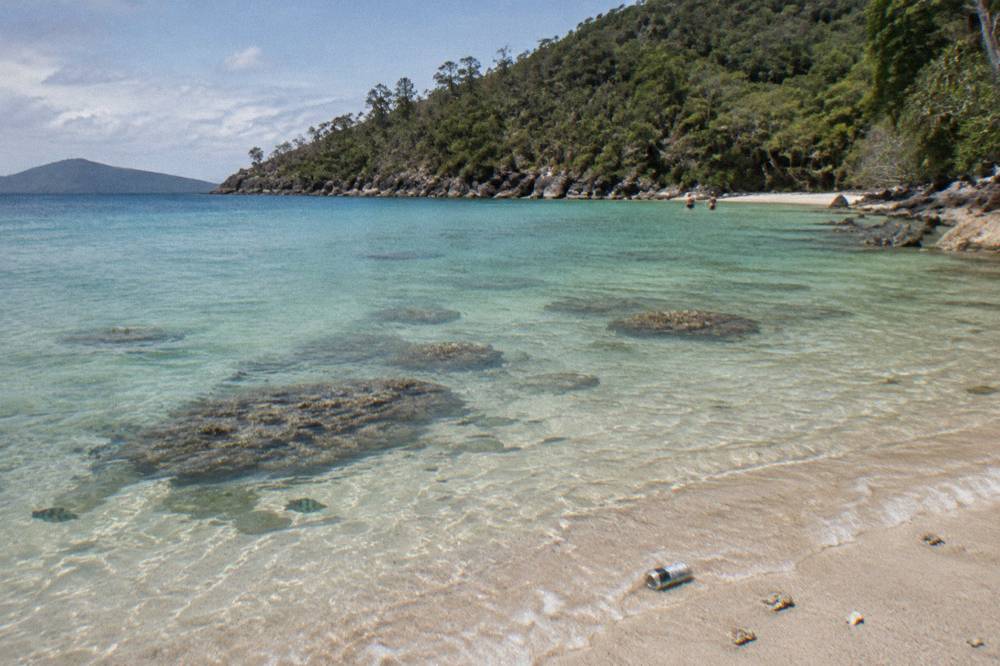
What this means practically is that reef swimming in 2026 is still very much worth doing, with eyes open. Snorkellers commonly report plenty of fish and healthy coral patches alongside areas showing damage, which is exactly what the monitoring data would predict. If seeing the reef is the priority, the Reef Authority's reef health updates are published regularly and are the primary source worth reading.
| Indicator | 2025 to 2026 finding | Source |
|---|---|---|
| Central region hard coral cover | 28.6 percent to 31.6 percent, within margin of error | AIMS long-term monitoring |
| Long-term average cover | 20 percent | AIMS long-term monitoring |
| Reefs surveyed (reef-wide) | 121, August 2025 to June 2026 | AIMS long-term monitoring |
| Reefs increasing in cover | 28 percent of those surveyed | AIMS long-term monitoring |
| Central region bleaching (August) | 1 of 10 surveyed reefs medium, 3 low damage | Reef Authority health update |
Where Do You Actually Get In The Water From The Whitsundays?
Two kinds of reef swimming sit within a day trip of Airlie Beach: fringing reefs around the Whitsunday Islands, reached by the Whitehaven and sailing day trips, and the outer reef at Hardy Reef, reached by the pontoon cruise in about ten hours round trip. Both involve swimming, and they suit different travellers.
The fringing reef experience is the islands one. Trips like the Red Cat cruise, the ZigZag eco cruise at from A$239, and the Ocean Rafting speedboats stop at sheltered reef sites off Hook, Border or Langford islands, often paired with Whitehaven Beach and the Hill Inlet lookout. The water is generally shallower and calmer, the coral sits in bays, and the day is as much about the beach as the snorkel. These are the trips most first-time visitors take, and the ones most reviews describe with the word "highlight". Other pages covering the same trip are gathered on Whitsunday Island Tours.
The outer reef experience is the pontoon one. Cruise Whitsundays' Great Barrier Reef Full Day Adventure, from A$329, runs ten hours from Port of Airlie to Hardy Reef, where the pontoon sits permanently moored with an underwater observatory, a semi-submersible and included snorkelling, with the operator supplying stinger suits year-round. For a reader whose whole question is whether reef swimming still exists and is still good, this is the most direct answer: a purpose-built platform over outer reef coral, with gear, suits and crew. The same operator's Reefsleep product, from A$698 for two days, puts you on that pontoon overnight, which is about as close to living on the reef as a non-diver can get.
A middle path exists too. The reef and Whitehaven combo trip, from A$333, squeezes an outer reef snorkel and the beach into a single eight-hour day out of Coral Sea Marina. It trades leisure for coverage, and reviews suggest it works best for visitors with only one day to spend. If you are weighing a visit against other priorities, how many days are enough for the Whitsundays is the companion piece worth reading before committing.
What About Cyclones And Weather?
The official Australian tropical cyclone season runs from 1 November to 30 April, and the Bureau of Meteorology advises checking forecasts before boating anywhere in it. Outside those months the Whitsundays is at its calmest, with September described by the regional tourism body as the driest, lightest-wind month of the year. For a fuller picture of the trickier stretches of the year, our guide to the times you should avoid the Whitsundays covers stinger season, the wet months and the heaviest crowds in detail.
Cyclone Koji in January 2026 is the freshest reminder that this is a real seasonal factor: it crossed the coast near Ayr and Bowen as a tropical low, brought a 117 km/h gust to Hamilton Island, knocked out power and damaged some boats in the Mackay and Whitsundays region. Tours resumed and the season continued; the practical takeaway is not avoidance but flexibility. Free cancellation, which most roster listings include, is worth more than it looks during summer, and the Bureau's cyclone season page is the authoritative place to watch when a system forms.
The seasonal rhythm matters for swimming comfort as much as safety. Tourism Whitsundays puts water temperature at 22C in winter and 29C in summer, which is why wetsuit hire shows up on winter trip listings and stinger suits on summer ones. June to August brings dry, mild days and humpback whales moving through the region's protected waters; January and February bring the most rain days, typically as afternoon storms rather than all-day grey. None of that closes the reef to swimmers. It just changes what you wear in the water and how firmly you should hold a summer booking.
What If You Would Rather Not Swim At All?
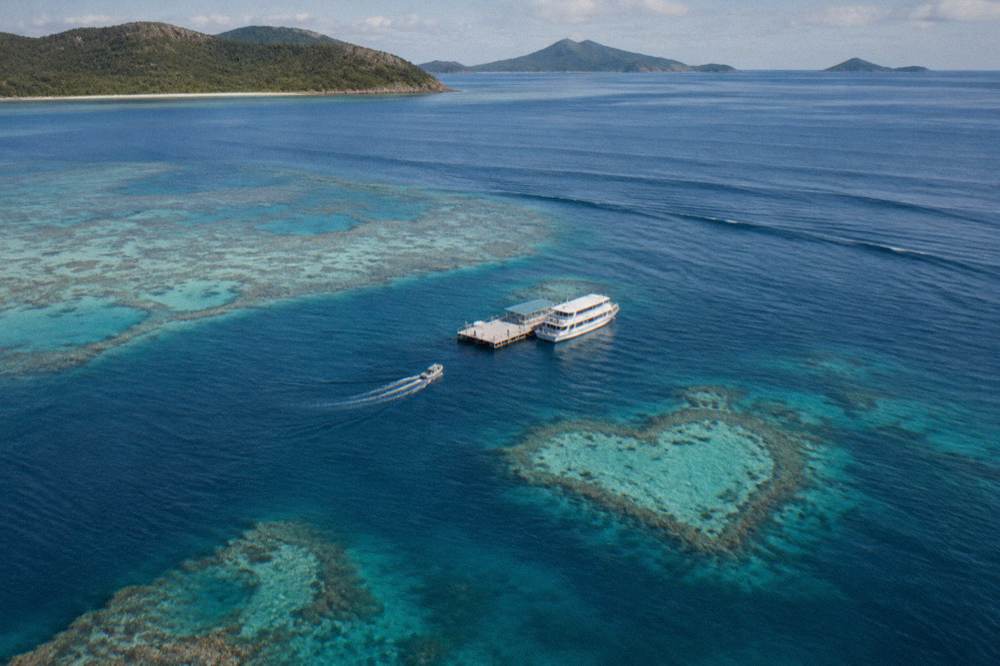
You do not have to swim to see the reef. The pontoon day trips include an underwater observatory and semi-submersible rides, a glass-bottom boat runs from Shute Harbour, and scenic flights show Heart Reef and the island reefs from the air. Every one of these works in exactly the same conditions the snorkellers enjoy.
This is a fair question to ask alongside the swimming one, and the Whitsundays answers it unusually well. The Reefworld pontoon experience at Hardy Reef has a below-deck observatory where fish and coral drift past the glass. Pioneer Adventures runs a one-hour glass-bottom boat tour from Shute Harbour, from A$99, which suits non-swimmers, families with small children and anyone who wants reef views without a wetsuit. For the overhead version, Heart Reef scenic flights from Whitsunday Airport start at from A$299 for 70 minutes, and the site's scenic flights guide covers the options in full.
The non-swimming tier also includes the simplest evening on the water: a two-hour sunset sail from Coral Sea Marina, from A$85, which is the cheapest listing on this entire site and needs nothing from you but a jacket. For visitors whose answer to this article's question is a firm no, for mobility reasons, small children or plain preference, these options mean the reef is not closed to you either.
So, Should You Book That Reef Swim?
If the question is whether reef swimming from the Whitsundays is still possible, still safe and still worthwhile in 2026, the evidence says yes on all three counts: tours run daily, suits and crew manage the stinger risk, and the latest monitoring season shows the Central regions coral holding above its long-term average. The main decision is which format of water time suits your trip.
The choice, simplified: the pontoon day if outer reef coral and fish are the point, from A$329 and ten hours; a Whitehaven and snorkel catamaran day if you want beach and reef in one, from A$250; the half day from A$124 if budget or time is tight. Every one of these listings carries free cancellation, which during cyclone season is not a gimmick but the mechanism that makes a summer booking sensible. Airlie Beach itself adds the lagoon as a free, patrolled, stinger-free swimming backup for any day the boats stay in port, and the Airlie Beach lagoon guide covers it.
Whatever you choose, the suit advice stands for November to May, the sunscreen applies year-round, and the reef is still there, still full of fish, and still very much swimmable.
Common Questions About Swimming In The Great Barrier Reef
Can You Still Swim in the Great Barrier Reef?
Yes. Reef swimming runs year-round from the Whitsundays on commercial tours, with stinger suits supplied November to May and reef conditions monitored as stable to slightly improving in the latest season.
When is stinger season on the Great Barrier Reef?
The higher-risk marine stinger season runs November to May, though Queensland guidance notes stingers can be present in tropical waters all year. Full-body lycra suits are provided free on commercial tour boats during the season.
Do I have to wear a stinger suit?
It is strongly advised rather than legally mandated. Operators supply suits free from November to May, and some, including Red Cat Adventures, provide and recommend them year-round.
Is the coral still worth seeing?
The 2025 to 2026 monitoring season found Central region hard coral cover at 31.6 percent, above the 20 percent long-term average, with no repeat of the 2024 and 2025 mass bleaching. Individual sites vary, so expect a mix of healthy and recovering coral.
Can you swim at the reef without a tour?
Not realistically from the Whitsundays. Hardy Reef is 39 nautical miles offshore and fringing reef sites need a boat, so a tour, ferry or charter ticket is the practical entry point, from A$124 for the cheapest island day trip.
Is it safe to swim in the Whitsundays in summer?
Yes, with the standard precautions: wear the supplied suit, swim where the crew directs, and hold bookings flexibly during cyclone season, which runs 1 November to 30 April. Free cancellation is listed on most tours.