When To Avoid Whitsundays?
Cyclone season, stinger season, wet months and peak crowds: an honest month-by-month look at when the Whitsundays are hardest work, and which tours still run well.
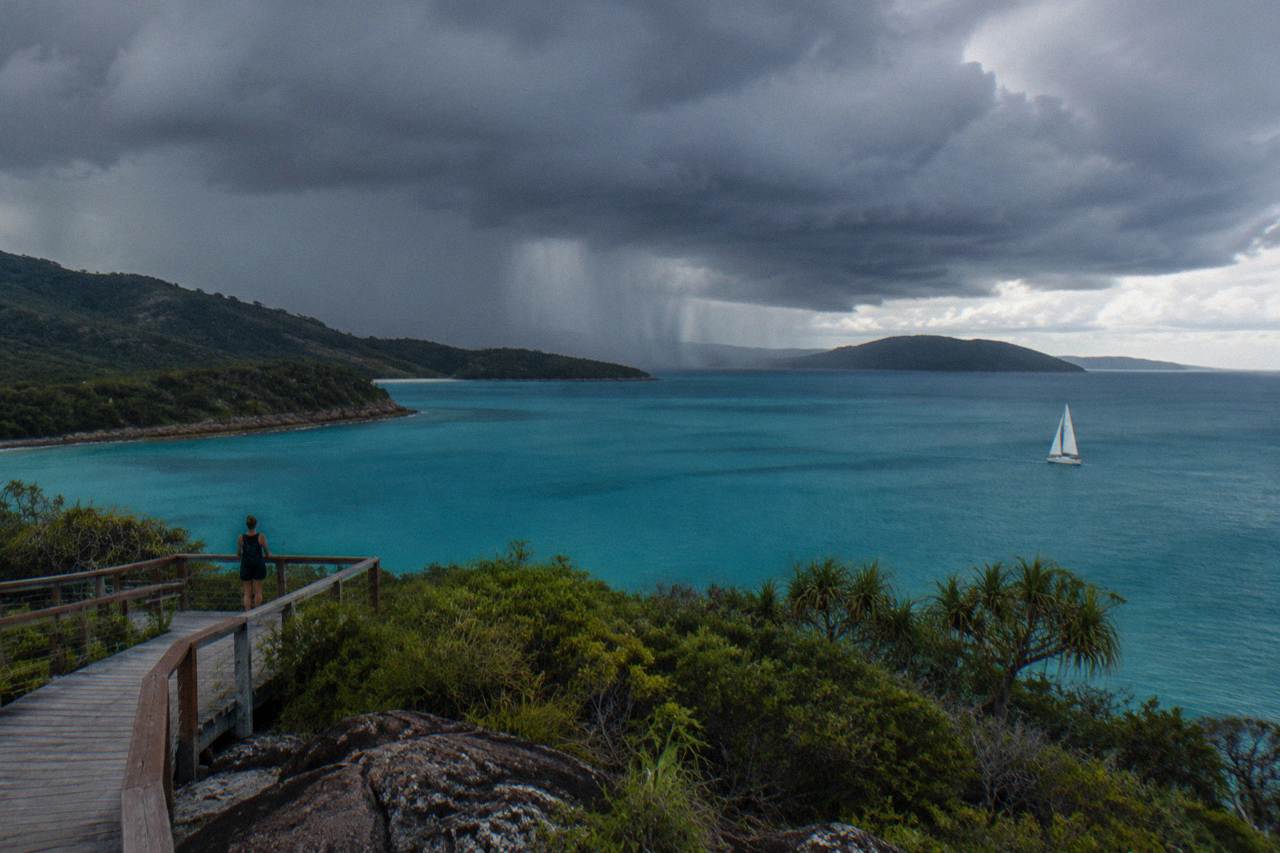
Storm clouds over the Whitsundays rarely mean a cancelled holiday. They usually mean a rearranged one: the Ocean Rafting speedboat pushed to an afternoon departure, the scenic flight held on the ground until the squall passes, the Whitehaven picnic eaten under a shelter instead of on the sand. The question of when to avoid the Whitsundays is really a question about which inconveniences you can live with, because every month on the calendar trades something away.
That said, the trade is not evenly weighted. The Bureau of Meteorology puts the official Australian tropical cyclone season between 1 November and 30 April, and January and February are, on regional tourism figures, the wettest and most humid months of the year. Marine stingers carry a higher risk from November to May. And the peak dry-season months bring their own problem: everyone else books them too. This guide works through each of those in turn, using official climate records and the actual schedules of the boats and flights that run here, so you can decide which season suits you rather than which season a brochure prefers.
When To Avoid Whitsundays?
If comfort is the priority, the hardest months are January and February, when Airlie Beach and the islands average about 14 rain days each, daytime temperatures around 30C and high humidity, inside a cyclone season that runs 1 November to 30 April. If crowds are the thing you want to avoid, the September school holidays and the August race weeks are the busiest stretches of the dry season.
Neither of those is a closed season. The Whitsundays run 12 months a year, and the operators that dominate the roster, Red Cat Adventures, Ocean Rafting, Cruise Whitsundays and the overnight sailing fleets, sail in January just as they do in July. What changes is the texture of the trip: the chance of an afternoon storm, the chance of a rough passage, the price of the bed and the density of people on the beach.
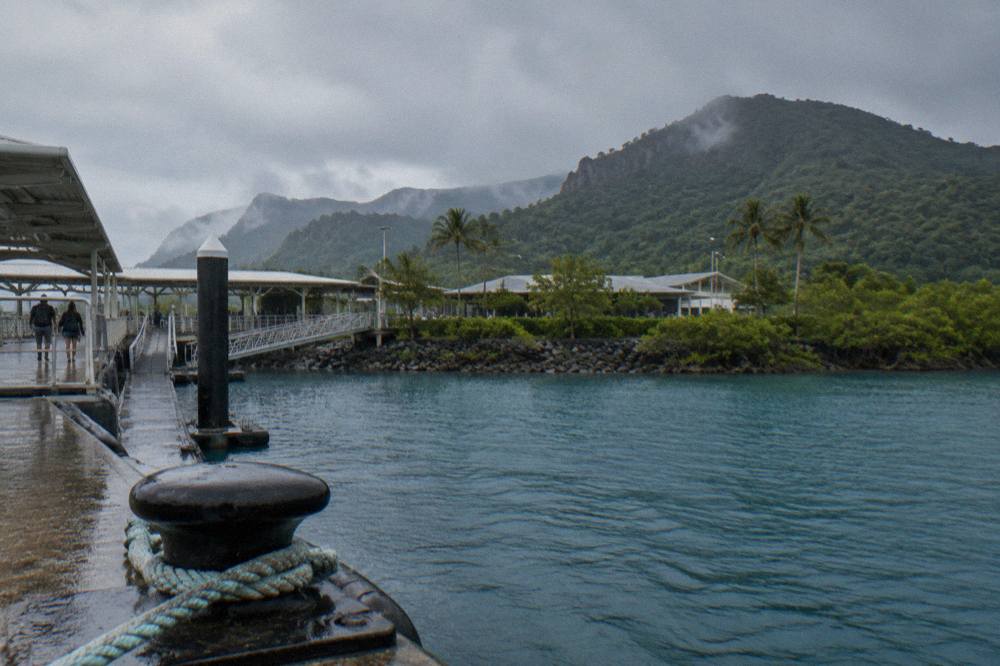
A useful way to frame the year is by what each stretch costs you. The table below is a planning summary drawn from Bureau of Meteorology averages for Hamilton Island that the regional tourism body publishes month by month, plus the seasonal risk windows the Queensland Government and the Bureau state plainly.
| Stretch of year | Weather character | Main drawback | What still runs well |
|---|---|---|---|
| January to February | Wettest, about 14 rain days a month, days near 30C | Humidity, storms, cyclone season in force | Everything, with weather-dependent rescheduling |
| March to May | Humidity eases, rain tapers | Quietest for events, stinger risk until May | Sailing trips, Whitehaven day trips |
| June to August | Dry, mild, days around 23C in August | Peak crowds, peak prices | All tours, plus whales |
| September to October | Dry, warm, light winds | September school holidays, busy boats | Everything, calmest water of the year |
| November to December | Heat and humidity build, stinger season begins | Storm risk returns, marine stingers | Reef pontoon trips, scenic flights between showers |
The honest reading of that table is that there is no disaster month, only months where the trade stings a little more. A reader timing a trip decides which season to book into, and the rest of this article is about making that decision with real numbers rather than folklore.
Is Cyclone Season Really A Reason To Stay Away?
The official season runs 1 November to 30 April, and the Bureau of Meteorology records an average of about ten tropical cyclones per Australian season, but only a fraction affect the Whitsundays in any given year. The real, documented example is Cyclone Koji in January 2026, which crossed the coast near Ayr and Bowen as a tropical low and gusting 117 km/h winds at Hamilton Island.
Koji is worth understanding because it is the recent case study of what a Whitsundays cyclone event actually looks like. The Bureau's history of the storm records the strongest winds of the whole event at the Whitsunday Islands themselves: Hamilton Island gusted to 117 km/h and Hardy Reef recorded the same figure late in the morning. Trees came down, power went out in the Mackay and Whitsunday region, and some boats broke moorings. The regional tourism body later confirmed the cyclone fell squarely inside its visitor reporting period. Storm tides, by contrast, stayed between half a metre and one metre near Bowen and Airlie Beach, well below the highest astronomical tides.
The practical takeaway is not "avoid half the year". It is that a cyclone impact is a days-long disruption, not a season-long one, and the operators here have weather-rescheduling down to a routine. The Red Cat catamaran fleet, the Cruise Whitsundays ferries and the overnight sailing boats all list free cancellation or amendment terms on their booking pages, which is exactly the flexibility you want if you travel between November and April. The Whitsunday Island Tours comparison covers those cancellation terms listing by listing.
The Bureau's own seasonal outlook adds context for the coming summer: its long-range forecast for November to January leans toward above-average temperatures across Australia, and its climate monitoring through spring tracked a very strong El Niño pattern in the tropical Pacific. None of that predicts a Whitsundays cyclone, and no official source issues a numeric cyclone count for the Coral Sea ahead of the season. What it does tell you is that the November-to-April window deserves travel insurance and refundable bookings rather than fear.
Are The Wet Months Actually That Bad?
January and February are genuinely the wettest months, averaging about 14 rain days each with daytime temperatures near 30C and overnight lows near 25C, but the rain mostly arrives as afternoon build-up storms rather than unbroken grey. August, September and October are the driest stretches, averaging around three rain days a month.
The regional tourism body publishes a month-by-month table built on Bureau of Meteorology averages for Hamilton Island Airport, and it is the most useful planning document a first-time visitor can read. It shows January as the wettest month by rainfall and February as the month with the most rain days, with each of those two months averaging more than three days of rain at 25 mm or heavier. The same table shows the winter shoulder from March to May quieting down as humidity drops.
| Month | Typical day / night (C) | Average rain days | Character |
|---|---|---|---|
| January | 30 / 25 | 13 | Wettest month, big afternoon storms |
| February | 30 / 25 | 14 | Most rain days of the year |
| March | 29 / 25 | 14 | Still wet, storms easing |
| August | 23 / 19 | 3 | Dry, mild, peak whale numbers |
| September | 25 / 20 | 3 | Driest, lightest winds |
| October | 27 / 22 | 3 | Warm, dry and quiet |
What the numbers do not capture is how a wet-month day actually unfolds. A January Whitehaven trip on the Red Cat high-speed catamaran often starts under clear sky, collects a squall mid-afternoon and finishes in sunshine, and the same pattern repeats across the fleet. Tours are rarely cancelled outright for rain; they are cancelled or shortened for wind and sea state, which is a different risk and one the skippers judge on the morning. If your only window for the trip is February, book the boat anyway, book it refundable, and hold a spare day.
The wet months also carry an honest upside that the dry-season crowd never sees: green islands, dramatic light for photographers and the cheapest accommodation of the year. Several of the most flexible products in the region, including the Cruise Whitsundays half-day Whitehaven cruise at from A$124 per person with free cancellation listed, cost the same in February as in July, while the bed in Airlie Beach does not.
When Are The Whitsundays Most Crowded?
The busiest stretches are the Queensland school holidays and the August sailing festivals, with the September 2026 state holidays running 19 September to 5 October and both major race weeks held across mid-to-late August. Winter itself, June to August, is peak season for good reasons: dry days, mild temperatures and humpback whales in the protected waters.
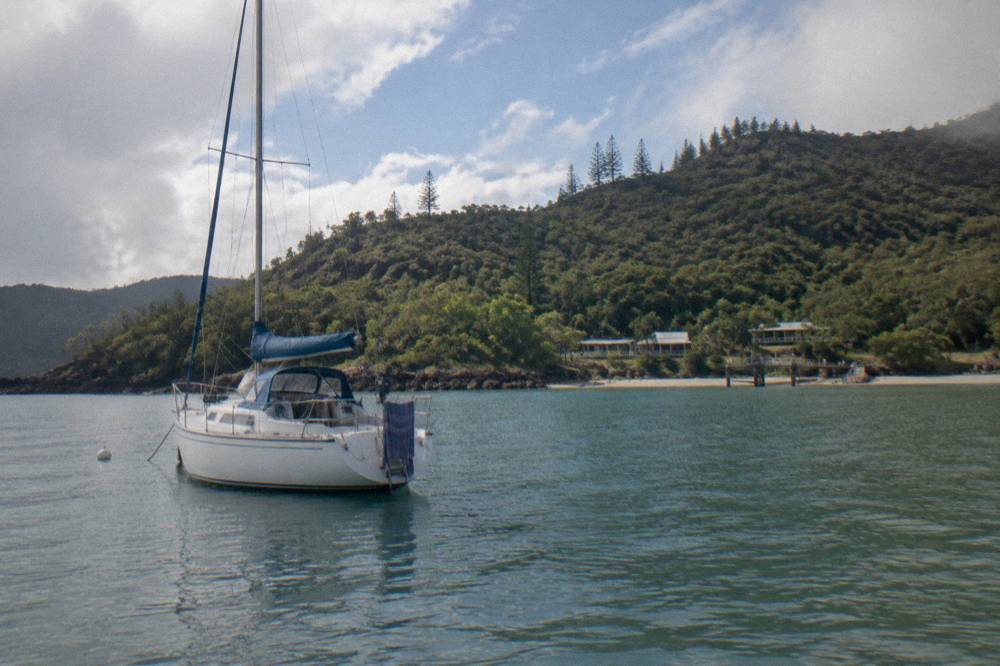
Crowding in the Whitsundays is a different problem from crowding in a city. The pressure point is not the islands, which stay thinly populated, but the boats. A Whitehaven departure in the July holidays fills weeks ahead, while the same Tuesday in February can be booked the night before. The regional tourism body notes that humpback whales move through Whitsunday waters from around June to October with numbers peaking in August, and that most island waters sit inside a Whale Protection Area where vessels keep at least 300 metres clear, which is part of why winter trips feel special even at full capacity.
The events calendar concentrates people further. Airlie Beach Race Week brought 120 entries in its 2026 edition, and Hamilton Island Race Week drew 194 boats and more than 1,200 sailors, both in August. If you want those regattas, book far ahead and enjoy the spectacle from the foreshore. If you do not, the second half of August in Airlie Beach is a wall of accommodation premiums and full restaurants, and that is the crowd to avoid.
There is a quieter argument inside the shoulder months. The regional tourism body describes March to May as the quietest stretch as humidity drops, and October as warm, dry and quiet once the holiday families have gone home. For a traveller whose real goal is an empty Whitehaven Beach photograph, late October or a May weekday beats any date in the July peak.
What About Stinger Season?
Marine stingers can be present in Whitsunday waters all year, but the Queensland Government states the higher-risk season runs November to May, when a full-length lycra stinger suit is advised. Suits are provided free on commercial tour boats and at island resorts during that window, and the Airlie Beach Lagoon is the free, patrolled, stinger-free swimming option.
This is the seasonal risk most first-time visitors misunderstand, because the honest answer contains no safe month at all. Queensland's official dangerous-marine-creatures guidance says plainly that stingers may be present year-round in tropical Queensland, that risk is higher from November to May, and that prevention means swimming in nets where they are provided and wearing a full-body lycra suit. No official source supports calling any month stinger-free in open water, and this site will not invent one.
What the season actually changes is equipment, not itineraries. The regional tourism body confirms stinger suits are provided at no cost on commercial tour boats and at island resorts from November to May, and Red Cat Adventures states it provides suits at no additional cost on all its boat tours and recommends them year-round. Ocean Rafting arranges stinger suit hire at check-in for its Whitehaven speedboat trips. In practice, a February snorkel stop on the Red Cat sail-and-snorkel day happens in a suit, and a July one usually does not, and that is the whole difference for most travellers.
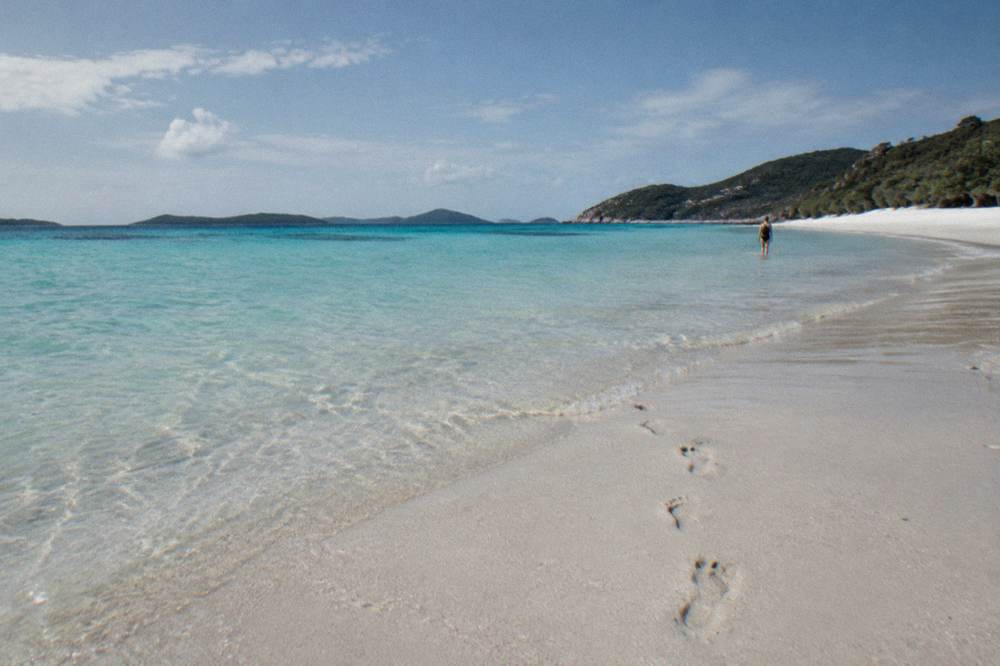
Swimming at Whitehaven Beach itself needs a separate, honest note: the beach is unpatrolled, there is no stinger net enclosure on this national park island, and Queensland Parks says marine stingers, sharks and crocodiles can be in the sea all year. Many visitors swim at the beach's northern end in the tidal shallows, but the official position is caution, suits in season, and no guarantees. The free, patrolled alternative is the Airlie Beach Lagoon, a stinger-free saltwater pool the council keeps open year-round. Our stinger season guide covers suits, nets and first aid in full, and the Airlie Beach Lagoon guide covers the free swim.
Which Tours Run Well Outside The Peak Months?
Every product on the Whitsundays roster runs year-round, including the Ocean Rafting speedboat trips, the Red Cat catamarans, the Reefworld reef pontoon and the scenic flights, with free cancellation listed on most bookings and weather calls made on the day. The trade outside peak season is rougher possible passages and suit-required swims, not closed doors.
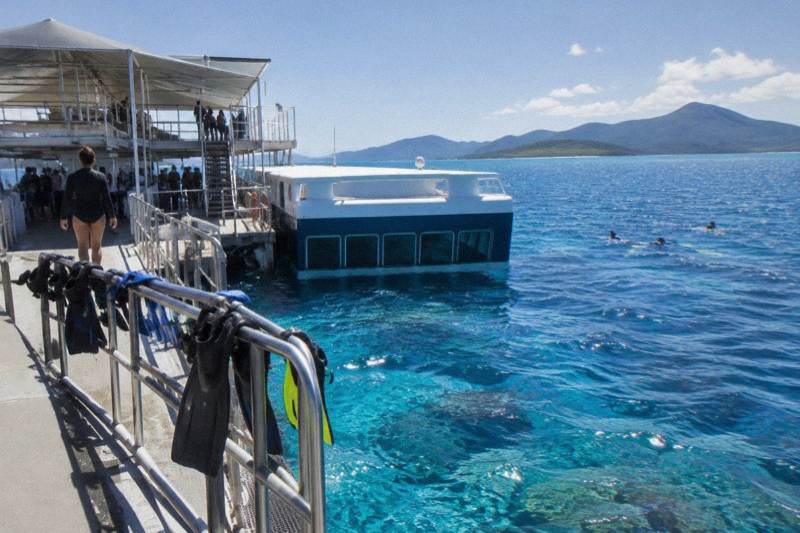
A season-by-season look at the actual products is more useful than general advice. The Ocean Rafting Whitehaven and Hill Inlet speedboat day, 4.9 from 5,008 reviews on its listing at from A$249 per person, runs through the wet months, though its listing excludes pregnant guests and people with back problems, which matters more when seas are lively. The Reefworld pontoon day trip to Hardy Reef, from A$329 per person, is one of the best wet-season choices because the pontoon, underwater observatory and semi-submersible keep the reef experience going regardless of surface showers, and stinger suits are part of the kit.
The scenic flights deserve a mention in any timing discussion, because they are the one product category where weather genuinely decides the day. Heart Reef flights from Whitsunday Airport, such as the 70-minute Whitsundays and Great Barrier Reef scenic flight at from A$299 per person, 4.8 from 2,355 reviews, need cloud base and visibility, and operators rebook freely when a summer morning is too grey. Booking a flight early in your stay, rather than on your last day, is the standard advice for November-to-April travel because it leaves room for a retry.
For the budget end, the Cruise Whitsundays half-day Whitehaven cruise at from A$124 per person is the cheapest listed way onto the beach and a sensible wet-season bet: a shorter exposure to the weather window, free cancellation listed, and a departure from Port of Airlie minutes from town accommodation. The full comparison of every Whitehaven option, including the family-friendly eco-cruise with buffet at from A$250 per person, sits in our best time to visit the Whitsundays guide alongside the month-by-month weather table.
So the honest answer to which season to book is a hierarchy. If you want the highest chance of calm water and dry days, aim for August to October and accept the crowds. If you want low prices and green islands and can wear a stinger suit without complaint, the wet months will serve you, with refundable bookings. What you should genuinely avoid is not a month but a mistake: locking non-refundable arrangements into the November-to-April window, or expecting an empty Whitehaven Beach in the September school holidays.
Common Questions About When To Avoid Whitsundays
When to Avoid Whitsundays?
Avoid January and February if heavy humidity and frequent afternoon storms would ruin the trip for you, and avoid the September school holidays and the August race weeks if crowds are your dealbreaker. There is no closed season: every tour category runs year-round, and the cyclone window, 1 November to 30 April, rewards refundable bookings rather than cancellation.
What Is Cyclone Season In The Whitsundays?
The official Australian tropical cyclone season runs from 1 November to 30 April, and the Bureau of Meteorology averages about ten cyclones per season across the whole Australian region. Only a fraction affect the Whitsundays in any year, but the January 2026 Cyclone Koji event, with 117 km/h gusts at Hamilton Island, shows the disruption is real when one arrives.
Can You Swim In The Whitsundays In Summer?
Yes, with the right protection. Marine stingers carry higher risk from November to May, and stinger suits are provided free on commercial tour boats and at island resorts in that window. The Airlie Beach Lagoon is the free, patrolled, stinger-free swimming option year-round, and open-water beaches like Whitehaven are unpatrolled with no stinger nets.
What Is The Wettest Month In The Whitsundays?
January is the wettest month by rainfall on island weather averages, and February has the most rain days, about 14 in a typical month. The rain usually arrives as afternoon build-up storms rather than all-day grey, and August, September and October are the driest months at around three rain days each.
Is The Whitsundays Worth Visiting In The Wet Season?
For many travellers, yes. The wet months bring green islands, the year's lowest accommodation prices and far smaller crowds, and every major product keeps running, from the Red Cat catamarans to the Reefworld pontoon and the scenic flights. Book refundable fares, keep a spare day for weather rescheduling and expect to wear a stinger suit in the water.
When Is Whale Season In The Whitsundays?
Humpback whales move through Whitsunday waters from around May or June to October, with the regional tourism body recording numbers peaking in August. Sightings are commonly reported from ferries, sailing trips and reef crossings, though no operator or official source guarantees a sighting on any given day.