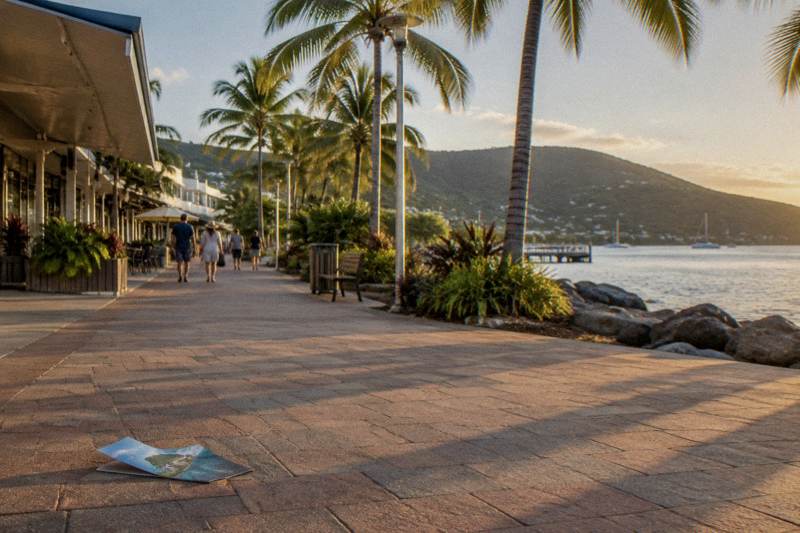
Best Time To Visit The Whitsundays: Month By Month
Choosing when to go matters more here than almost anywhere in Australia: the same stretch of reef can serve up glassy winter sailing days or February afternoon storms. This guide walks through the seasons, month by month, and matches each window to the boats, flights and reef trips that run in it.
Short answer
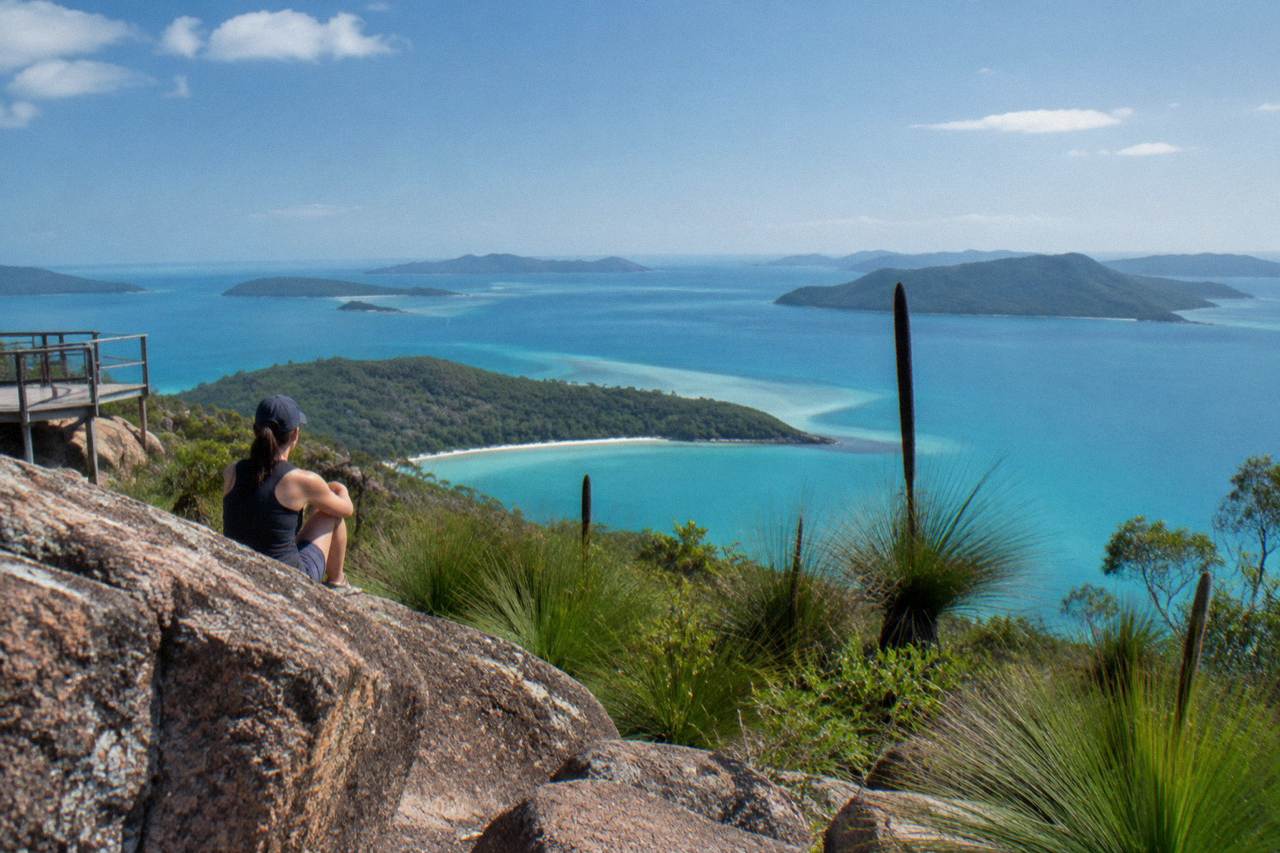
The driest, calmest months are August, September and October, each averaging around three rain days, with humpback whales peaking in August. November to March is warmer, wetter and carries higher marine stinger risk from November to May, and cyclone season runs 1 November to 30 April. Cheapest listed Whitehaven day fare: from A$124 per person.
Picking a month is the single biggest decision in a Whitsundays trip, bigger than the hotel and bigger than the boat. The region runs on two rhythms: a dry, mild winter that Tourism Whitsundays describes as bringing whales, lighter winds and the fullest events calendar, and a warm, wet summer of afternoon storms, green islands and higher stinger risk. Every tour in the region, from the Cruise Whitsundays half day out of Port of Airlie to the Red Cat catamaran and the scenic flights over Heart Reef, runs year round, but the experience of each one shifts with the season. This guide lays out what the official climate data and the regional tourism body actually say, month by month, and then matches those windows to the products you would book in them. Where you want the deeper comparisons, the trip length planning longread and the homepage comparison cover those questions separately.
What Is The Best Month To Visit The Whitsundays?
September is the best month to visit the Whitsundays for most travellers: Tourism Whitsundays calls it the driest month of the year and the calmest for time on the water, averaging around three rain days with days near 25°C. August runs a very close second with about three rain days, milder 23°C days, and peak humpback whale season, while October stays dry and warm near 27°C once school holidays end. All three months sit outside the worst of the heat, the stinger risk is lower than in summer though never zero, and the trade winds ease enough that a day on a boat, a snorkel stop or a ferry crossing is comfortable rather than bouncy.
The trade-off is crowds and price. August and September are peak season, and the strongest listings fill first: the most reviewed Whitehaven day trip on the roster, an Ocean Rafting speedboat tour with 4.9 from 5,008 reviews at from A$249 per person, and the Red Cat snorkel cruise, 4.9 from 3,166 reviews at from A$250 per person, both sell out on dry season weekends. If you want those months, book early.
Outside the peak, the shoulder logic is simple. April and May are quiet as humidity drops, and the islands are at their greenest after the wet. June and July are dry, mild and busy with whale arrivals. November looks tempting on paper, warm and quiet, but it is the first month of both the higher stinger risk window and the official cyclone season.
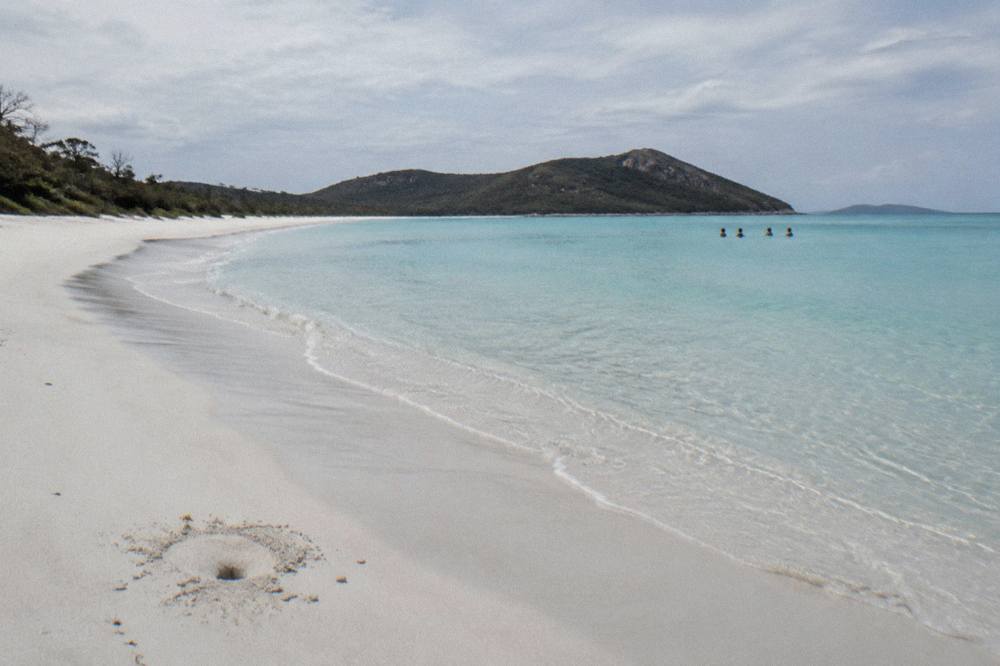
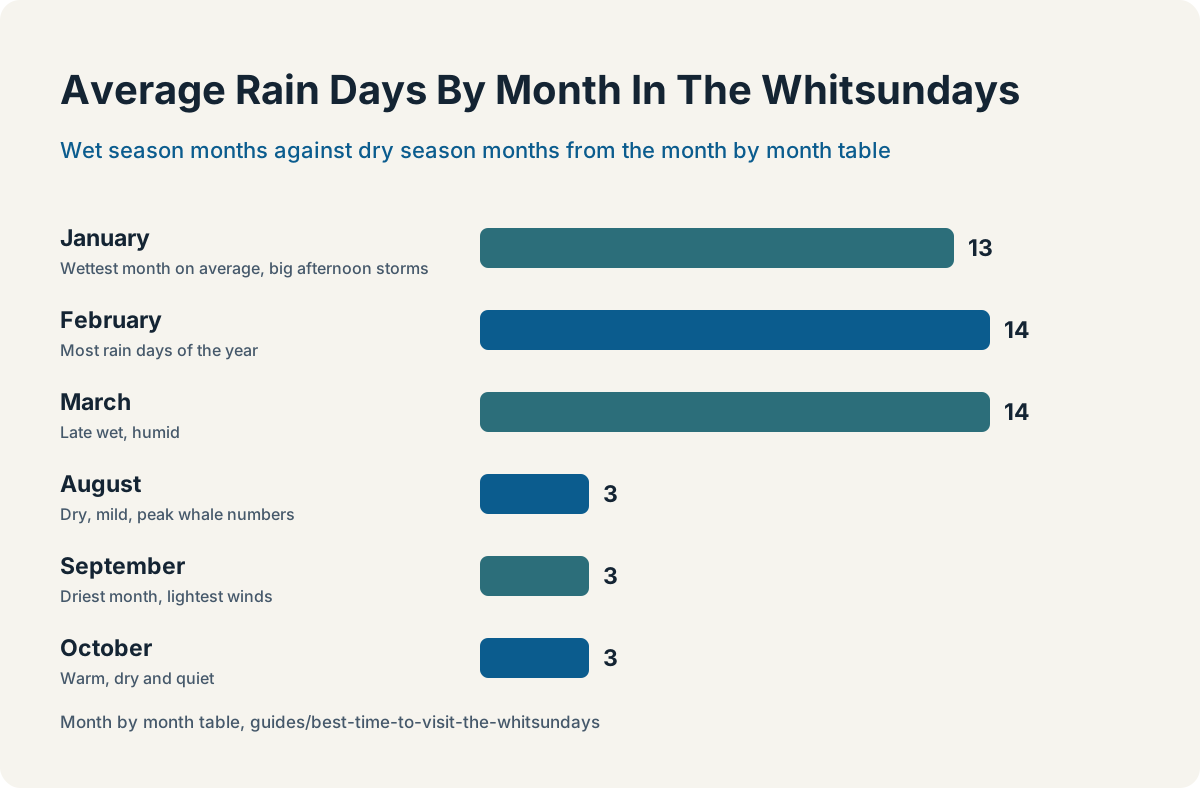
Tourism Whitsundays publishes a month by month table built on Bureau of Meteorology averages from Hamilton Island Airport. Condensed, it looks like this:
| Month | Day / night (°C) | Avg rain days | What the month is known for |
|---|---|---|---|
| January | 30 / 25 | 13 | Wettest month on average, big afternoon storms |
| February | 30 / 25 | 14 | Most rain days of the year |
| March | 29 / 25 | 14 | Late wet, humid |
| August | 23 / 19 | 3 | Dry, mild, peak whale numbers |
| September | 25 / 20 | 3 | Driest month, lightest winds |
| October | 27 / 22 | 3 | Warm, dry and quiet |
January and February each average more than three days of rain at 25 mm or more, but Tourism Whitsundays is careful to note this typically arrives as afternoon build-up rather than all-day grey. A wet season day can still hold a clear morning boat trip.
When Is The Wet Season In The Whitsundays?
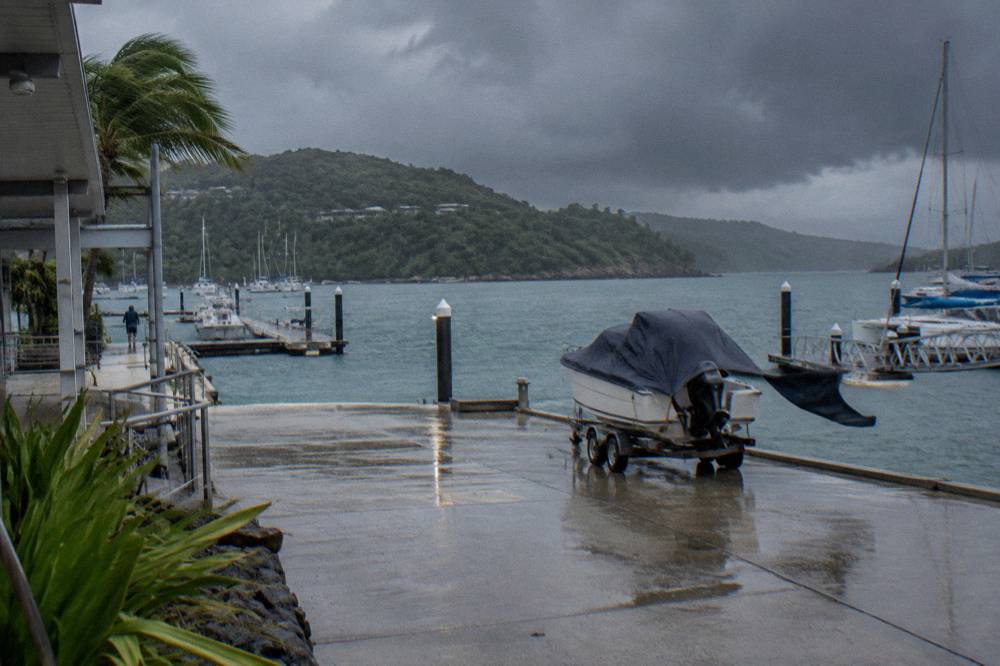
The wet season runs roughly November to March, with Tourism Whitsundays describing those months as warmer and wetter, with tropical showers, and January standing out as the wettest month by rainfall and February as the month with the most rain days, fourteen on average. Days sit around 29 to 30°C with nights near 25°C, humidity is high, and rain tends to arrive in heavy afternoon bursts. The Bureau of Meteorology marks 1 October as the official onset of the northern wet season, with humidity and coastal showers building steadily from there. None of this makes the islands unvisitable: boats run, the reef is open, and the summer light and green islands have a genuine following among repeat visitors.
What the wet season does change is comfort and risk. It sits inside the higher marine stinger risk window, November to May, so a stinger suit is advised on every swim and snorkel, and it overlaps the official cyclone season, which the Bureau of Meteorology places between 1 November and 30 April. The Bureau's climatology averages about ten tropical cyclones per Australian season, and at least one coastal crossing happens every season somewhere on the coast. That is a reason to watch forecasts and book flexible products, not a reason to stay away.
Wet season travellers get real offsets. Prices on our own roster hold steady, but availability is loose: the Cruise Whitsundays half day cruise from Port of Airlie, from A$124 per person and the cheapest Whitehaven day trip listed here, is far easier to grab a seat on in February than in August. Free cancellation is listed on most of the roster, which matters when a storm system is parked off the coast. For anyone weighing the downside honestly, the when to avoid the Whitsundays piece works through the same question from the risk side.
One wet season event worth planning around is the Airlie Beach Festival of Music, confirmed on the official calendar for 6 to 8 November 2026, a ticketed 18+ event with more than 60 acts across 15 venues. Town fills; boats and beds tighten around it.
When Is The Dry Season In Airlie Beach And The Whitsundays?
The dry season proper runs June to August, when Tourism Whitsundays reports dry mild days around 23°C, roughly three rain days a month, whales arriving in force and the fullest events calendar of the year. September and October then stay dry while warming up, which is exactly why so many locals name September as the single best month: the calmest water, the lightest winds and thinning crowds once school goes back. Water temperature across the year ranges from about 22°C in winter to 29°C in summer, so winter snorkelling means a wetsuit or a thicker suit, which operators like Ocean Rafting hire out in the cooler months.
Dry season is when the flagship products earn their reputations. The Whitehaven Beach and Hill Inlet lookout snorkelling cruise run by Red Cat Adventures, 4.9 from 3,166 reviews, from A$250 per person for an 8 hour catamaran day with lunch, pickup and snorkel gear listed, is built exactly for this window: a long, calm day with two reef stops and the Hill Inlet lookout walk. The same operator's full-day eco-cruise with buffet, 4.8 from 3,235 reviews at from A$250 per person, runs the same logic on a bigger boat.
The trio above spans the realistic dry season spread: a budget half day fare, the flagship snorkel cruise, and the outer reef pontoon day. All three run year round, but August and September are the months when their full itineraries, Hill Inlet lookouts, long snorkel stops, reef time, actually land as advertised on the tin. Book those two months several weeks ahead.
Winds are the quiet variable. The trade-wind months blow hardest through winter, which surprises visitors expecting flat calm. September is described by the regional body as the lightest-wind month of the year, which is why photographers and sailors favour it, and why the sailing fleet reports its most comfortable passages then. For more on which hull suits which conditions, the Whitsundays sailing trips compared guide breaks the fleet down boat by boat.
What Is The Best Time Of Year To Sail The Whitsundays?
September is widely regarded as the best sailing month, combining the lightest winds of the year with around three rain days, warm 25°C days and thinner post-holiday crowds; July and August suit sailors who want the biggest whale presence in exchange for stronger trades and fuller marinas. The Whitsundays is a sailing destination first, and the season shapes both the day sails and the multi-day trips. An overnight maxi yacht trip, such as the 2 day 2 night Prosail adventure at from A$699 per person, is a different experience in glassy September water versus a 20 knot July tradewind run.
The sailing fleet runs every month. On the day-sail side, the classic Providence tall ship day with snorkelling, 4.3 from 812 reviews at from A$220 per person, and the Lady Enid classic yacht trip, 4.7 from 213 reviews at from A$295 per person, both give 9 or more hours on the water, which makes wind strength the difference between a glide and a grind. Overnight, the roster runs from the Matador 2 day 1 night trip at from A$495 per person through to the 2 night OzSail shared yacht trip with meals at from A$600 per person.
Overnight sailing also carries one cost that day trippers never see: the Great Barrier Reef Marine Park Environmental Management Charge, currently A$8.50 per full-day passenger and A$4.25 per part-day passenger, rising to A$9.00 and A$4.50 from 1 April 2027. The Reef Authority's charges page explains what the levy funds; most listings do not state whether it is included in the fare, so check the booking page before you pay.
Two sailing regattas anchor the calendar and squeeze berths. Airlie Beach Race Week 2026 drew 120 entries in August, and Hamilton Island Race Week 2026 ran 194 boats with more than 1,200 sailors. Both return in August 2027, so marina-side accommodation in that fortnight books out far ahead.
When Can You See Whales In The Whitsundays?
Humpback whales can be seen in the Whitsundays from around June to October, with numbers peaking in August according to Tourism Whitsundays. Sightings are commonly reported from ferries, sailing trips, and reef crossings, so no special whale-watching ticket is required at all. This is one of the region's quiet advantages: the whales come to the Whitsundays to calve and rest inside the protected Whale Protection Area, where vessels must stay at least 300 metres clear, triple the limit elsewhere in the Marine Park. Any boat heading to Whitehaven or the outer reef in August is, in effect, a whale boat.
No operator here sells a dedicated whale-watching product, and none is needed. The practical play is simply to travel in the July to September window and take the longest water day you can afford. The Ocean Rafting fly and raft combo, a scenic flight plus speedboat snorkel day at from A$565 per person with 4.9 from 945 reviews, stacks the odds from both altitudes, though note its listing excludes pregnant guests and people with back problems. A slower option is the SeaLink 8 hour Hill Inlet cruise, 4.8 from 1,081 reviews at from A$265 per person, which crosses open water the whales frequent.
The regional body is explicit that sightings are common rather than certain, and no 2026 sighting counts or operator success rates have been published on official pages, so treat any whale encounter as a genuine bonus rather than a promise. What is verifiable is the window: whales were reported in local waters from June 2026 and stayed into October, with late September sitting in the season's final weeks.
What About Stinger Season And Cyclone Season?
Marine stingers can be present in Whitsundays waters all year, with risk higher from November to May; a full-body lycra stinger suit is advised in that window, and stinger suits are provided free on commercial tour boats and at island resorts from November to May. Cyclone season runs 1 November to 30 April, the Bureau of Meteorology's official Australian season, averaging about ten cyclones per season across the whole Australian region. Neither season closes the islands: they change what you wear in the water and how carefully you book.
The stinger advice comes straight from the Queensland Government's dangerous marine creatures guidance: swim in nets where provided, consider a full-body lycra suit, and know that vinegar and calling triple zero are the first aid response. Red Cat Adventures states it provides suits at no additional cost on all its boat tours and recommends them year round, since jellyfish can be present on any day. Ocean Rafting arranges stinger suit hire at check-in for its late October to April/May high risk window. The Whitsundays stinger season guide covers suits, nets and first aid in full detail.
On the mainland, the Airlie Beach Lagoon is the free, patrolled, stinger-free swimming option, a saltwater public pool open year round. There is no stinger net at Whitehaven Beach itself; protection there is the operator-supplied suit. No stinger-free month exists anywhere in tropical Queensland waters, official advice is clear on that point.
Cyclones are rarer than the season's existence suggests, but the January 2026 season delivered a live reminder: ex-Tropical Cyclone Koji crossed the coast between Ayr and Bowen on 11 January 2026, with the Bureau recording 117 km/h gusts at both Hamilton Island and Hardy Reef, downed trees, power outages and boats broken from moorings across the Mackay and Whitsunday region. Tours resumed quickly, but the episode is the argument for booking refundable fares and travel insurance in the wet half of the year.
| Season window | What it means for swimming | What it means for bookings |
|---|---|---|
| November to May, higher stinger risk | Stinger suit advised, free on most commercial boats | Check the listing states suits and gear are included |
| June to October, lower stinger risk | Suits still sensible, wetsuit hire common in winter | Peak whale and dry season demand, book ahead |
| 1 November to 30 April, cyclone season | Follow operator and skipper advice on the day | Prefer free-cancellation fares, watch BOM forecasts |
| August to September, dry and calm | Comfortable long water days | The tightest availability of the year |
How Does The Weather Affect Tours From Airlie Beach?
Weather decides which tours deliver their full itinerary: Hill Inlet lookout walk, outer reef pontoon and Whitehaven Beach all remain open in ordinary conditions, but strong winds, swell and storm systems can shorten water time, close the lookout track or cancel departures entirely, and every operator's terms rest on safety calls made on the day. Queensland Parks lists park alerts for tracks and lookouts, and the standing rule is to check alerts before walking anywhere in Whitsunday Islands National Park. Whitehaven's day-use area is open 24 hours, but the beach is unpatrolled and the Hill Inlet water is tidal with currents that can be strong and a level that rises fast.
Product by product, the season shifts value in predictable ways. Speedboat products like the Ocean Rafting Whitehaven trips, the most reviewed being 4.9 from 5,008 reviews at from A$249 per person, are the most wind-sensitive rides, thrilling in a swell, punishing for anyone with a bad back, and their listings exclude pregnant guests and guests with back problems. Big catamarans like the Red Cat eco-cruise absorb weather best. The outer reef pontoon days, the Reefworld full day adventure at from A$329 per person, are 10 hour commitments that justify themselves best in the calm months, and the reef's condition has been stable recently: the Australian Institute of Marine Science reported Central Great Barrier Reef hard coral cover rising from 28.6 percent to 31.6 percent, a change within the margin of error but above the long term average of 20 percent.
| Product type | Best weather window | Weather downside to weigh |
|---|---|---|
| Speedboat day trips, from A$240 per person | Calm September to October days | Bumpy in winter trades, excluded for back problems and pregnancy |
| Large catamaran cruises, from A$250 per person | All dry season, handles chop | Slower, less thrill in flat water |
| Day and overnight sailing, from A$220 per person | Light-wind September | Wet and slow against strong trades |
| Outer reef pontoon days, from A$329 per person | August to October calm | 10 hour day feels long in swell |
| Scenic flights, from A$299 per person | Any flyable-visibility day | Fog and storm cells ground flights |
Scenic flights are the great weather hedge. A fixed-wing flight over Heart Reef, such as the 70 minute Whitsunday Air Tours reef scenic at from A$299 per person with 4.8 from 2,355 reviews, or the one hour Ocean Rafting Heart Reef flight at from A$355 per person, 4.9 from 1,751 reviews, needs only flyable visibility, and operators state guaranteed window seats on high-wing aircraft. In a wet week when boats are bouncing, flights often still go.
Budget planning across the roster is straightforward because the price spread is wide and stable: from A$85 per person for the two hour sunset sail up to A$699 per person for the 2 day 2 night maxi sailing trips. The month you choose rarely changes the fare; it changes availability and how much of the itinerary you actually get.
For readers who want one shortcut: if whales and calm water matter most, go August or September and book the snorkel flagship now. If budget and quiet matter most, go February to April, take the cheap half day fare and a stinger suit, and keep plans flexible. The budget Whitehaven cruise itself runs from Port of Airlie at from A$124 per person with free cancellation listed, and you can Check availability alongside the internal Whitehaven half day cruise page once your month is settled. That choice of month, more than any single booking, is what Whitsunday Island Tours exists to help you get right.
Common Questions About The Best Time To Visit The Whitsundays
What is the best month to visit the Whitsundays?
September for most travellers: the driest and calmest month of the year, around three rain days, days near 25°C, light winds and thinning crowds. August adds peak humpback whale numbers at slightly cooler temperatures, and October stays warm, dry and quiet.
What is the best time of year to sail the Whitsundays?
September, when winds are at their lightest and rain days average around three. July and August also work well for experienced sailors who accept stronger trade winds in exchange for peak whale activity.
What is the best month to go to the whitsundays?
For a first visit combining Whitehaven Beach, snorkelling and a chance of whales, August or September. For lower crowds and easier availability, late April, May or October, accepting warmer water in October and higher stinger risk late in spring.
When is stinger season in the Whitsundays?
Marine stingers can be present all year, with higher risk from November to May. A full-body stinger suit is advised in that window and is provided free on most commercial tour boats and at island resorts.
Is cyclone season a reason to avoid the Whitsundays?
Cyclone season runs 1 November to 30 April, but direct impacts on any given week are uncommon. Book refundable fares, watch Bureau of Meteorology forecasts, and the risk is manageable. August through October carries no cyclone season exposure at all.
Which month is the cheapest for Whitsundays tours?
Tour fares on this roster hold steady year round, from A$85 per person for a sunset sail to A$699 for multi-day sailing. The savings in the wet season come from accommodation discounts and loose availability, not cheaper tickets.