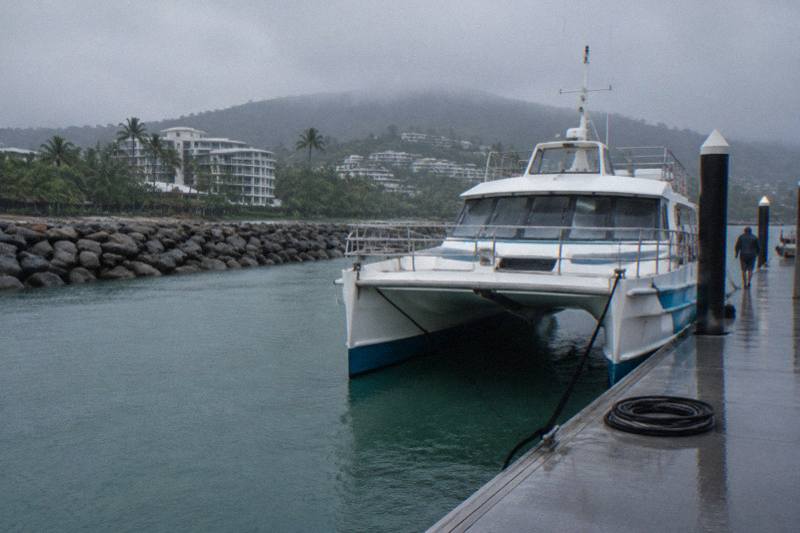
Great Barrier Reef Trips From Airlie Beach: Hardy Reef And Reefworld
Airlie Beach is not on the outer reef, so every reef trip from the town is a boat or flight journey out to Hardy Reef and the surrounding platforms. Here is how the pontoon days, sailing trips and combo tours actually compare.
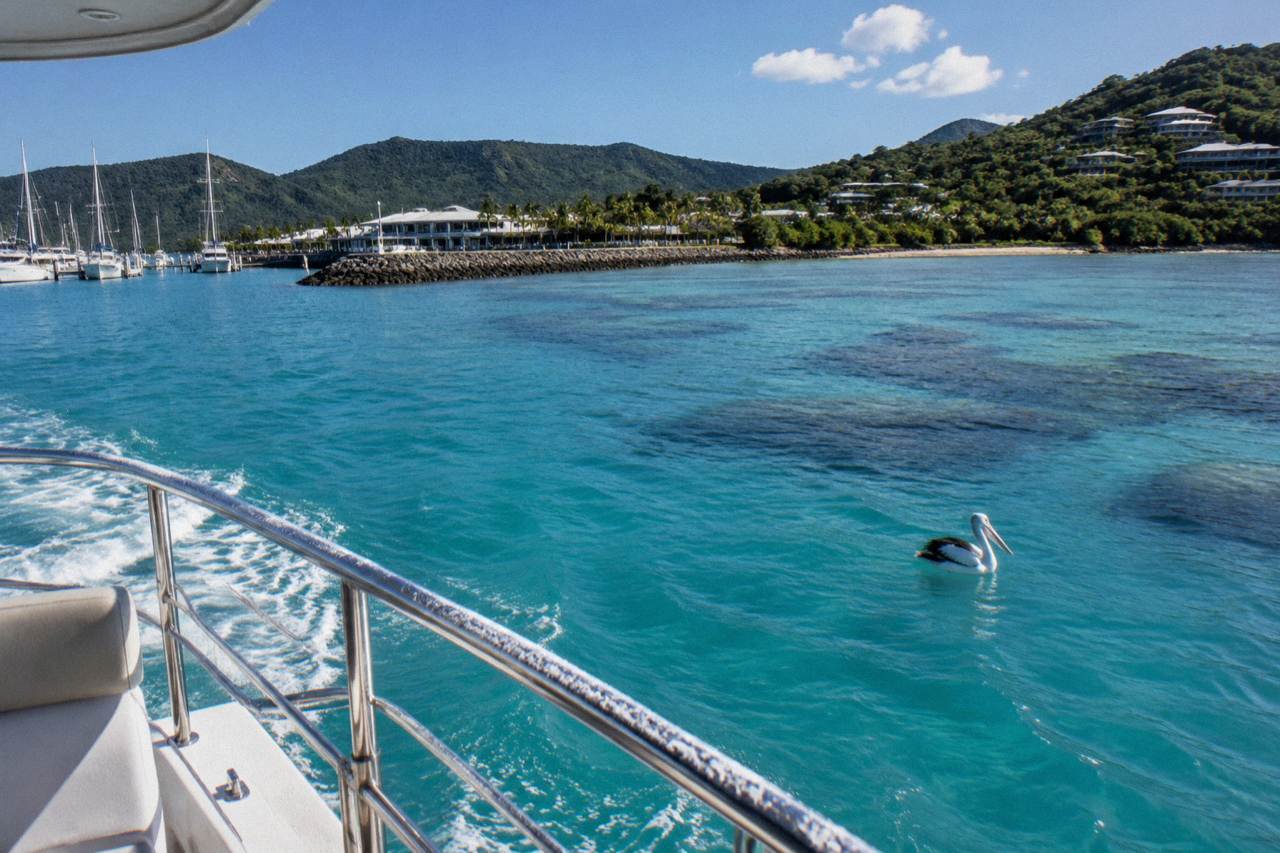
Short answer
Airlie Beach reef trips run to Hardy Reef, 39 nautical miles offshore, on a pontoon day trip from A$329 per person, a reef-and-Whitehaven combo from A$333 per person, or an overnight Reef Sleep from A$698 per person. The pontoon day gives about four hours on the reef; combos split the day between reef snorkelling and Whitehaven Beach.
What Reef Trips Actually Leave From Airlie Beach?
Airlie Beach sits on the Whitsunday mainland, not on the outer reef, so every reef trip is a transfer out to Hardy Reef, roughly 39 nautical miles from the mainland according to the operator Cruise Whitsundays. The practical choices are a high-speed catamaran to a permanently moored pontoon, a sailing or fast-boat day that snorkels island fringing reefs, or a scenic flight that shows the reef from above, and each format suits a different traveller.
The town's two working departure points matter more than most visitors expect. Coral Sea Marina at Shingley Drive hosts most of the sailing and fast-boat fleet, including the Red Cat Adventures catamarans and the Ocean Rafting speedboats. Port of Airlie at The Cove Road is the terminal for Cruise Whitsundays, whose reef products carry day visitors to the Hardy Reef pontoon and overnight guests to the Reefworld platform.
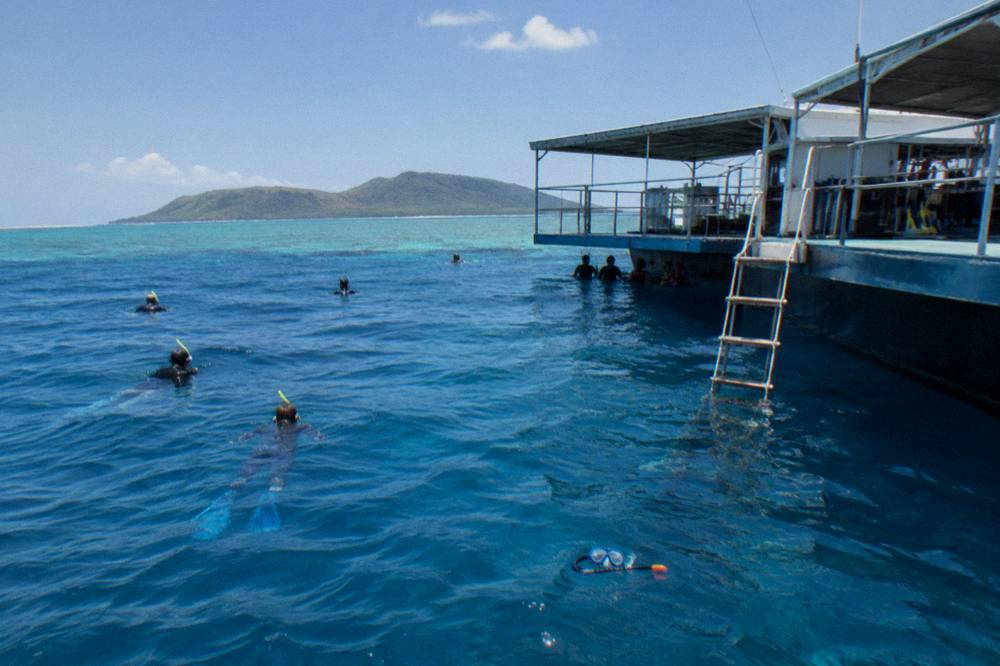
On a pontoon day, the operator states guests get around four hours on site at Hardy Reef, with snorkel gear, stinger suits, an underwater observatory and a semi-submersible included in the day. The reef-only format is the fastest way to log genuine outer-reef water time from Airlie Beach without an overnight commitment. Our overview of Whitsundays day trips compared places the reef days alongside the Whitehaven trips if you are still deciding which island day matters more.
Three reef-focused formats dominate the search results, and we compared the listings directly:
| Format | Best fit | Time on the water | Typical listing |
|---|---|---|---|
| Pontoon day trip | First-time snorkellers, families, fixed schedule | 10 hours door to door, about 4 hours at the reef | Cruise Whitsundays Reefworld day, from A$329 per person |
| Reef and Whitehaven combo | Visitors with one day only | 8 hours split between reef snorkel and beach | Viper fast boat combo, from A$333 per person |
| Overnight on the reef | Travellers who want reef time without crowds | 2 days, sleeping at the platform | Reef Sleep, from A$698 per person |
A scenic flight is the fourth option, and it deserves a mention even though it never touches the water. The Heart Reef scenic flights from Whitsunday Airport at Flametree show the reef system's scale in a way no boat day can; the fly-and-raft packages combine both in a single booking.
Pontoon Or Sailing: Which Hardy Reef Trip Suits You?
The pontoon day trip is the reliable choice: fixed infrastructure, gear on site, about four hours of reef time and a 4.6 rating from 375 reviews on the Reefworld Adventure listing at from A$329 per person. A sailing reef day costs less, from A$219 per person, but snorkels island fringing reefs rather than the outer reef, so pick the pontoon for coral and the sail for the experience of the boat itself.
The distinction trips up a lot of first-time visitors. Not every "reef trip" from Airlie Beach reaches the outer Great Barrier Reef. The sailing days, including the Red Cat Adventures sail and snorkel at from A$219 per person with a 4.8 rating from 755 reviews, spend their day among the Whitsunday Islands and snorkel fringing reefs off those islands. The pontoon products run past the islands to Hardy Reef on the outer reef. Both are genuine reef experiences; only one is the outer reef.
There are also two separate Cruise Whitsundays pontoon listings on the roster, and they are not duplicates. The Reefworld Adventure cruise (from A$329 per person, 4.6 from 375 reviews) lists free cancellation, while the Great Barrier Reef Full Day Adventure listing (also from A$329 per person, 4.2 from 601 reviews) does not state free cancellation on its listing. Same operator, same pontoon, different booking conditions, so read the cancellation line before choosing between them.
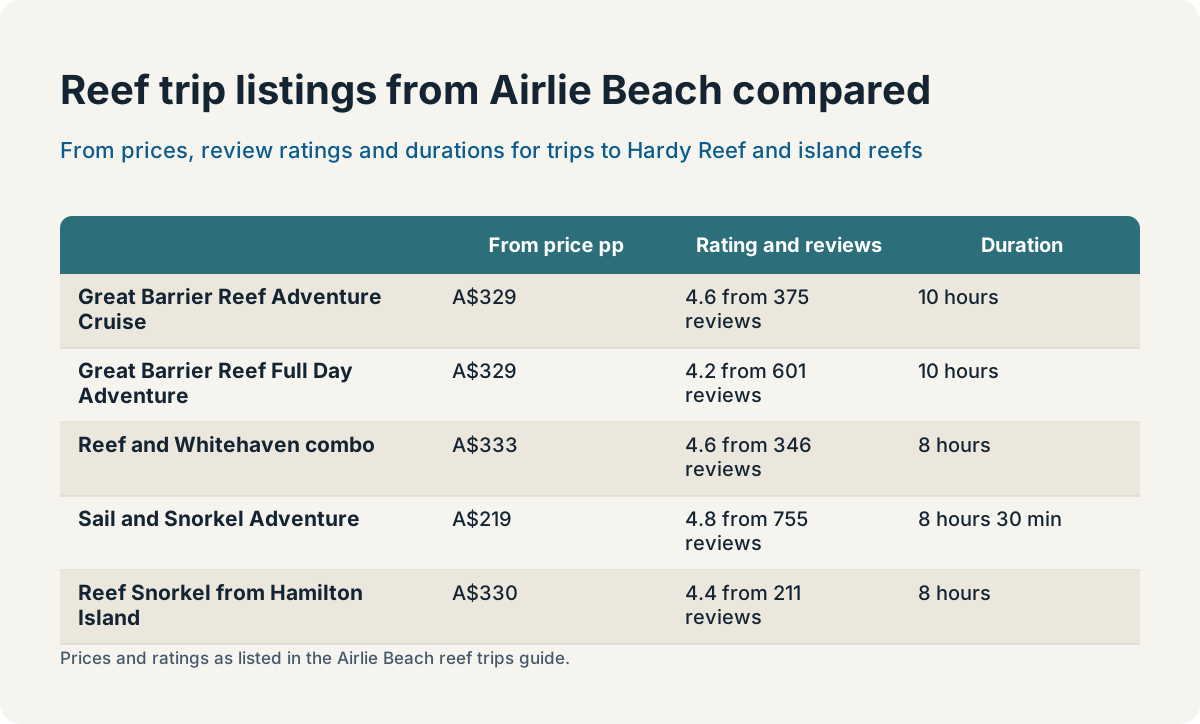
Here is how the roster's reef-capable day trips stack up:
| Listing | Operator and vessel | From price pp | Rating and reviews | Duration |
|---|---|---|---|---|
| Great Barrier Reef Adventure Cruise | Cruise Whitsundays, reef pontoon | A$329 | 4.6 from 375 reviews | 10 hours |
| Great Barrier Reef Full Day Adventure | Cruise Whitsundays, reef pontoon | A$329 | 4.2 from 601 reviews | 10 hours |
| Reef and Whitehaven combo | Iconic Whitsunday Adventures, fast boat | A$333 | 4.6 from 346 reviews | 8 hours |
| Sail and Snorkel Adventure | Red Cat Adventures, sailing | A$219 | 4.8 from 755 reviews | 8 hours 30 min |
| Reef Snorkel from Hamilton Island | Explore Group | A$330 | 4.4 from 211 reviews | 8 hours |
The fringing-reef snorkelling around the islands should not be dismissed. Our Whitsundays snorkelling guide covers what lives in those sheltered waters, and the blog post on which Whitsunday island is best for snorkelling digs into specific bays. If coral diversity is the goal, though, Hardy Reef is the stronger day.
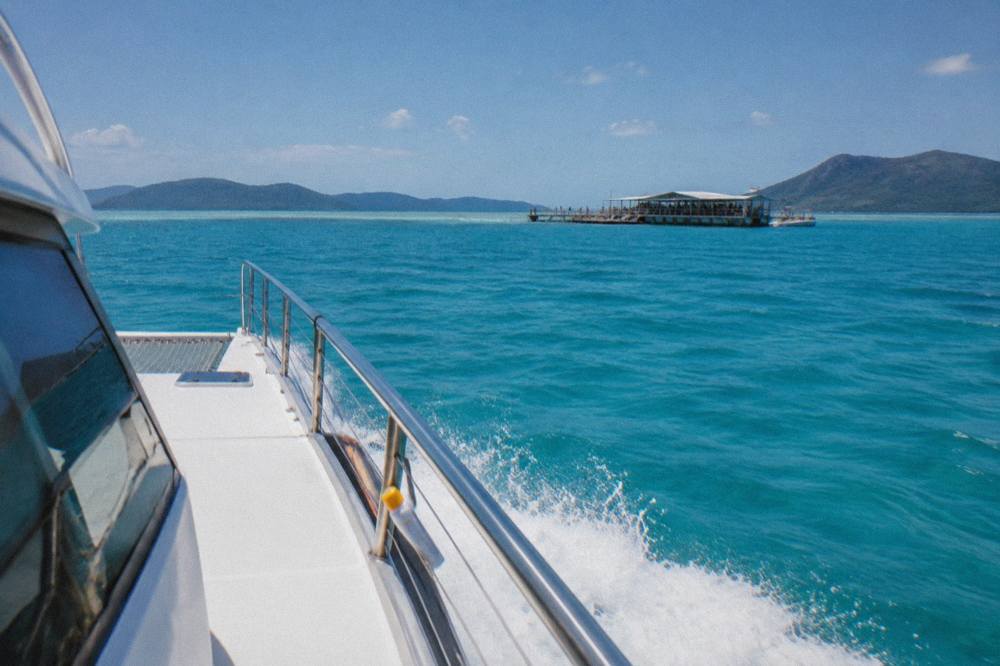
What Does A Reefworld Pontoon Day Include?
The listing for the Reefworld pontoon day includes snorkel gear, a buffet lunch, stinger suits, an underwater observatory and a semi-submersible ride, with about four hours on the platform at Hardy Reef, all from A$329 per person and rated 4.6 from 375 reviews. Hotel pickup is not stated on the listing, so plan your own transfer to Port of Airlie.
The pontoon changes what a reef day feels like. Instead of gearing up on a moving deck, you step from the platform straight into sheltered reef water, and the observatory and semi-sub give non-swimmers two dry ways to see the coral. The operator's own published fare for the same day is from A$295 per person on its site, below the listing's from price, which is worth knowing when you compare booking channels.
One charge to budget separately: the Great Barrier Reef Marine Park Authority collects an Environmental Management Charge from tour operators, currently A$8.50 for a full-day passenger and A$4.25 for part-day, and it rises to A$9.00 and A$4.50 from 1 April 2027. Whether it is bundled into your fare or collected separately is not stated on the reef listings, so check the booking page before you pay. The charge is set out on the GBRMPA charges page.
Can You Combine The Reef With Whitehaven Beach In One Day From Airlie Beach?
Yes, one roster listing does both in a single day: the Viper fast-boat Great Barrier Reef and Whitehaven Beach tour runs 8 hours from Coral Sea Marina, snorkels reef water and lands at Whitehaven, from A$333 per person with a 4.6 rating from 346 reviews. The trade is simple, you get less time at each stop than a dedicated day trip to either.
That single combo listing is the honest answer to the one-day question. The alternative is the fly-and-raft format: Ocean Rafting's fly and raft package pairs a scenic flight over the reef, including Heart Reef, with a speedboat day at Whitehaven and snorkelling, from A$565 per person, rated 4.9 from 945 reviews. It is the premium way to cover both the outer reef and the beach in a day, and the flight does the reef portion from the air rather than the water. Note that Ocean Rafting's listing excludes pregnant guests and people with back problems, so check suitability before booking the speedboat products.
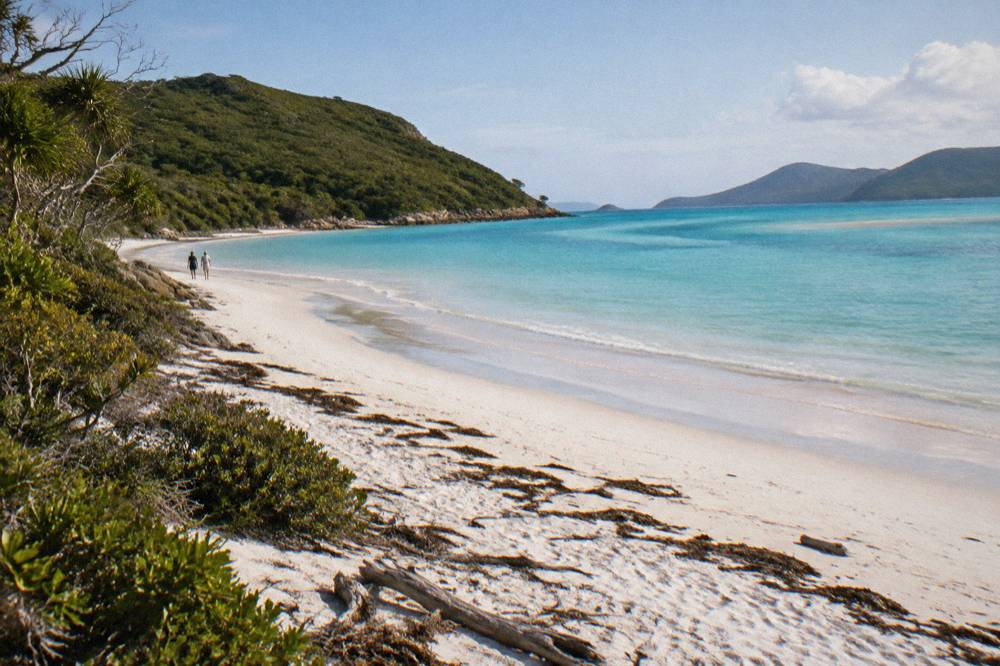
Budget-wise, the combo sits at the top of the day-trip range rather than the middle. The cheapest Whitehaven day on the roster is A$124 per person, and the cheapest reef-format day is the A$219 sailing trip, so a family doing both separately spends more than one Viper booking. For visitors with two full days, two dedicated trips beat any combo on time at each place; our Airlie Beach to Whitehaven Beach guide covers the beach half of that plan.
| Approach | Listings needed | Combined from price pp | Time at reef | Time at Whitehaven |
|---|---|---|---|---|
| Combo day trip | One, Viper | A$333 | Snorkel stop within 8 hours | Beach stop within the same day |
| Fly and raft package | One, Ocean Rafting | A$565 | Scenic flight, from the air | Speedboat beach time |
| Two dedicated days | Pontoon day plus a Whitehaven trip | A$329 plus A$124 | About 4 hours | Half day or more |
Is Whitehaven Beach The Great Barrier Reef?
No, and the difference matters when you book. Whitehaven Beach is on Whitsunday Island, inside the Whitsunday Islands National Park and the Great Barrier Reef World Heritage Area, but the beach itself is national park, not coral reef. The Great Barrier Reef Marine Park's outer reef, including Hardy Reef, lies roughly 39 nautical miles beyond the islands, which is why reef trips take hours longer than Whitehaven trips.
The confusion is understandable. Everything here sits inside the World Heritage Area, the words "Great Barrier Reef" appear in half the marketing copy on the coast, and the beach is stunning enough to assume it is the main event. Queensland Parks describes Whitehaven as roughly 7 km of white silica sand, and that sand, not coral, is what people travel for. The Hill Inlet lookout guide explains the inlet's famous swirling colours, which are tidal water over sand, not reef.
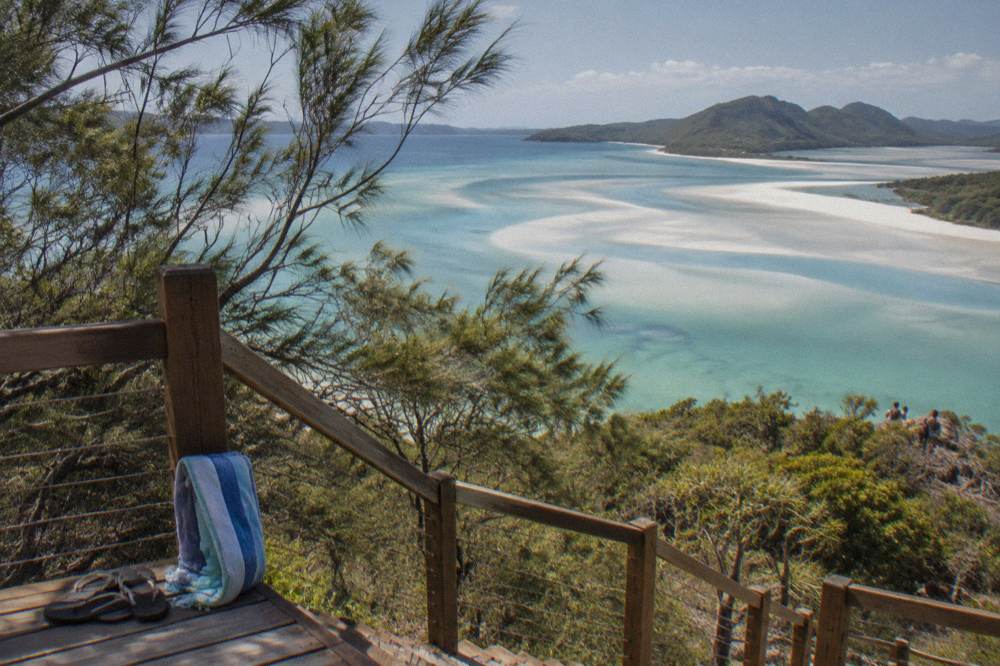
So if your heart is set on swimming over coral gardens with fish, book a Hardy Reef day or a sailing snorkel day. If your heart is set on the beach photographs, book a Whitehaven trip. If it is both, the combo section above is your section. The one thing not to do is book a beach day expecting outer-reef snorkelling, or a reef day expecting long lazy hours on silica sand.
What Is The Biggest Killer Of The Great Barrier Reef?
The Australian Institute of Marine Science identifies coral bleaching from marine heatwaves as the reef's biggest threat, alongside cyclones, crown-of-thorns starfish outbreaks and flood plumes. Its 2025-26 monitoring report recorded Central region hard coral cover rising from 28.6 percent to 31.6 percent, a change within the margin of error but above the long-term average of 20 percent.
That Central region, in the report's framing, runs from Cooktown to Proserpine and includes the Whitsundays. The same report notes that a late-summer monsoon limited bleaching severity in early 2026 and that Cyclone Koji, a category 1 system that crossed the Central reef in January 2026, caused only minor coral losses on several Central reefs. The full detail is on the AIMS condition summary.
For a traveller, this context is worth carrying onto the boat. The reef you snorkel at Hardy Reef is a real, living, recovering ecosystem, not a museum piece, and conditions vary between bays and from month to month. No operator can promise coral colour or fish numbers on any given day, and any that tries should be read with caution.
What Is The Best Month To See The Great Barrier Reef From Airlie Beach?
The driest, calmest months are August through October, when Tourism Whitsundays data shows the Whitsundays averaging around three rain days each and September is described as the calmest month of the year for time on the water. June through October is also humpback whale season, while November to March brings heat, humidity, storms and higher marine stinger risk.
Month choice changes a reef trip less than it changes a sailing trip, because the pontoon runs in most conditions and the reef is worth seeing in every season. But water-based comfort still matters. Tourism Whitsundays' month-by-month figures, drawn from Bureau of Meteorology averages at Hamilton Island Airport, put January at around 13 rain days and February at 14, typically as afternoon storms rather than all-day rain, while August and September sit near 3.
| Period | Conditions around the Whitsundays | What it means for a reef day |
|---|---|---|
| June to August | Dry, mild, around 3 rain days in August | Peak whale season, busiest boats |
| September to October | Dry and warm, September the calmest month | Calm water for pontoon transfers |
| November to January | Heat, humidity, afternoon storms, stinger season | Fewer crowds, suits provided |
| February to March | Most rain days of the year | Cheaper accommodation, flexible plans wise |
| April to May | Humidity drops, quietest visitor period | Good value shoulder season |
The cyclone season runs officially from 1 November to 30 April, which is a reason for travel insurance and flexible bookings rather than a reason to avoid the region; the Bureau of Meteorology publishes the seasonal outlook. Our best time to visit the Whitsundays guide works through the trade-offs in more depth.
Do You Need To Worry About Stingers On A Reef Trip From Airlie Beach?
Marine stingers can be present in tropical Queensland water all year, with the higher-risk season running November to May, and Queensland Government advice is to swim in nets where provided and wear a full-body lycra suit. On commercial reef tours, stinger suits are provided free during that season, and Cruise Whitsundays states suits are supplied year-round at Hardy Reef, so a reef trip is not a reason to stay ashore.
This is one topic where the official guidance deserves precision. The Queensland Government's dangerous marine creatures page is direct: stingers may be present year-round, the risk climbs from November to May, vinegar is the first-aid standard and 000 is the call. Tourism Whitsundays adds that suits are provided on commercial tour boats and at island resorts in the higher-risk window. You can read the standing advice on the Queensland Government marine safety page.
None of the reef listings promise wildlife or water conditions, and no honest guide should either. What the listings do state is gear: snorkel equipment and stinger suits appear in the inclusions of the pontoon days and the combo. If swimming in the open sea is not for you at all, the pontoon's underwater observatory and semi-submersible are the dry-coral alternatives, and the free, patrolled, stinger-free swimming option back on the mainland is the Airlie Beach Lagoon, covered in detail in our Airlie Beach lagoon guide.
Is Sleeping On The Reef Worth It From Airlie Beach?
The Reef Sleep two-day product from Cruise Whitsundays sleeps you on the Reefworld platform at Hardy Reef, from A$698 per person with meals, snorkel gear and a guided snorkel safari included, rated 4.6 from 52 reviews. It is the only roster listing where the reef does not empty of day visitors around you at mid-afternoon, which is the entire point of the price.
The operator describes Reefworld as an overnight-only pontoon: day guests are moved to the day platform, and the overnight guests keep the reef to themselves into the evening and early morning. The operator's own published fare for Reefsleep on its site is from A$895 per person for a double Reefbed, so, as with the day trips, the listing's from price and the operator site's from price differ; check both. The small review pool, 52 reviews, means this is a niche product with limited feedback rather than a proven crowd favourite, and it should be judged on that basis.
For a similar budget there is another way to sleep on the water entirely: the overnight sailing trips, from A$495 per person for the Matador one-night trip, covered in our overnight sailing Whitsundays guide. The sailing trips sleep among the islands; Reef Sleep sleeps on the outer reef. Only one of them wakes you to open ocean.
What About Reef Trips From Hamilton Island?
Hamilton Island has its own reef departure: a full-day snorkelling trip from the island marina, from A$330 per person, rated 4.4 from 211 reviews over 8 hours. If you are staying on Hamilton Island rather than Airlie Beach, booking from the island saves you the ferry connection to the mainland terminal, which costs A$74.50 adult one way.
The arithmetic is the thing. A Hamilton Island guest who books an Airlie Beach reef departure pays the ferry to Port of Airlie and back on top of the tour fare, and adds transfer time to an already long day. The island-based listing removes both. The Cruise Whitsundays Resort Connections ferry fares, adult A$74.50 and child A$63 one way, are set out in our Whitsundays ferries and transfers guide, which also covers the Daydream Island connections at A$49.50 adult one way.
Flights are the other island consideration. The scenic flight operators depart from Whitsunday Airport at Flametree on the mainland, and the fixed-wing reef flights from there start at from A$299 per person for a 70-minute Whitsundays and reef circuit with Whitsunday Air Tours, rated 4.8 from 2,355 reviews. From Hamilton Island itself, helicopter reef products exist on operator sites at higher price points than anything in this site's roster.
Where you sleep therefore shapes which reef day makes sense, a trade-off our Hamilton Island or Whitsundays stay comparison works through in full.
Booking A Reef Trip: What To Check Before You Pay
Before paying, check three lines on the live listing: whether free cancellation is stated, whether the Environmental Management Charge is included in the fare, and what the departure terminal actually is, because Port of Airlie and Coral Sea Marina are a drive apart. Prices on the roster run from A$219 to A$698 per person across reef-capable listings, and the cheapest is not always the cheapest once extras are counted.
The cancellation line is the quiet differentiator between the two pontoon listings, as noted earlier, and it recurs across the roster: the sailing days, the combo and the Reef Sleep all list free cancellation, while some base-fare products do not state it. The EMC, A$8.50 full day, is stated by GBRMPA as collected through operators, and no roster listing states whether it is included, so the booking page is the only source. And the terminal matters on the morning of departure, when a wrong assumption about the marina costs you the boat.
Timing rules of thumb from the roster data: pontoon days are 10 hours, the combo is 8, the sailing days run 8 to 9 hours, and Reef Sleep is 2 days. If your Airlie Beach stop is short, our how many days are enough for the Whitsundays longread helps you fit the reef day around Whitehaven and the islands. The site's homepage comparison on Whitsunday Island Tours lays out the trip picker if you want a three-question shortcut instead.
Common Questions About Great Barrier Reef Trips From Airlie Beach
Is Whitehaven Beach the Great Barrier Reef?
No. Whitehaven Beach is on Whitsunday Island inside the Whitsunday Islands National Park, which sits within the Great Barrier Reef World Heritage Area, but the beach itself is sand and national park, not coral reef. The outer reef, including Hardy Reef, lies about 39 nautical miles beyond the islands, which is why reef trips take hours longer than Whitehaven trips.
What is the biggest killer of the Great Barrier Reef?
Coral bleaching driven by marine heatwaves is identified by the Australian Institute of Marine Science as the reef's biggest threat, alongside cyclones, crown-of-thorns starfish and flood plumes. Its 2025-26 report recorded Central region coral cover at 31.6 percent, above the long-term average of 20 percent.
what is the best month to see the great barrier reef?
September and October are the standout months: dry, warm and calm, with September described by Tourism Whitsundays as the calmest month of the year for time on the water. June to October is also humpback whale season. November to March brings heat, storms and higher stinger risk, balanced by fewer crowds.
How long does it take to get to the reef from Airlie Beach?
Hardy Reef is about 39 nautical miles from the mainland, and the pontoon day trips are scheduled at 10 hours in total, with around 4 hours spent on site at the reef. The reef-and-Whitehaven combo runs 8 hours and snorkels closer in, while scenic flights cover the outer reef in 60 to 70 minutes.
Do you have to be a strong swimmer to do a reef trip?
No. The pontoon day includes an underwater observatory and a semi-submersible, so non-swimmers can still see the reef, and snorkelling at the platform is in sheltered water with gear provided. Sailing and fast-boat days involve more swimming from the vessel, so check the listing's suitability notes before booking.
Is the Environmental Management Charge included in the ticket price?
No roster reef listing states whether the A$8.50 full-day charge is included in the fare, so check the operator's booking page before paying. The charge is set by the Great Barrier Reef Marine Park Authority and rises to A$9.00 for full-day passengers from 1 April 2027.