Diving The Whitsundays: Intro Dives And Certified Trips
The Whitsundays are chiefly a snorkelling and sailing destination, but diving exists, and most of it happens one of two ways: an intro or certified dive added to a Hardy Reef pontoon day, or a dive off an island fringing reef. This guide reports what is actually on offer, what it costs as the operators publish it, and what the closest bookable listings are on this site.
Short answer
The Whitsundays support both intro dives (no certification needed) and certified dives, mainly at Hardy Reef, where Cruise Whitsundays publishes intro scuba add-ons from A$175 and certified dives from A$135 on its pontoon day trip. No dedicated dive-only booking exists in this site's roster; the Reefworld pontoon day trip, from A$329 per person, is the nearest fitting listing.
The honest starting point for Whitsundays diving is that the region sells itself as a sailing and snorkelling destination first. The islands sit on the inner shelf of the Great Barrier Reef, their fringing reefs are shallow, and the headline outer-reef experience, Hardy Reef with its permanently moored pontoon, lies 39 nautical miles from the mainland. Diving here is real, but it is mostly sold as an add-on to a snorkelling day rather than as a stand-alone dive charter. To dive, book a boat day out of Airlie Beach and add the dive on board. No dedicated dive-only product appears anywhere in the thirty listings this site carries. What exists instead is a pontoon day where the operator runs optional scuba, plus island trips where the snorkelling over coral gardens is close enough to a dive experience for many travellers.
That matters for how you plan. If certified diving is the whole point of your trip, the Whitsundays can serve you, but you will book a boat day and add the dive, not the reverse. If you have never dived and want to breathe underwater once under supervision, the intro dive at the pontoon is built exactly for that. This guide walks through both paths, what the operators themselves publish about prices and conditions, the stinger-suit reality that shapes every month of the year, and the reef-health picture from the official monitoring bodies. Along the way it names the nearest fitting bookable listings, starting with the Cruise Whitsundays Reefworld pontoon trip, because that is where the diving actually attaches to a ticket you can buy.
Can You Dive The Whitsundays From Airlie Beach?
Yes, you can dive from Airlie Beach, but almost all of it is either an optional scuba add-on to a Hardy Reef pontoon day trip or an occasional dive offered from island-based operators, because no dive-only charter appears in this site's listing roster at all. The town is the mainland staging point: boats leave from Port of Airlie and Coral Sea Marina, and the pontoon operator states its outer-reef site sits 39 nautical miles offshore. A traveller who wants guaranteed scuba on a day trip books the pontoon day and adds the dive through the operator. Everything else is research and phone calls.
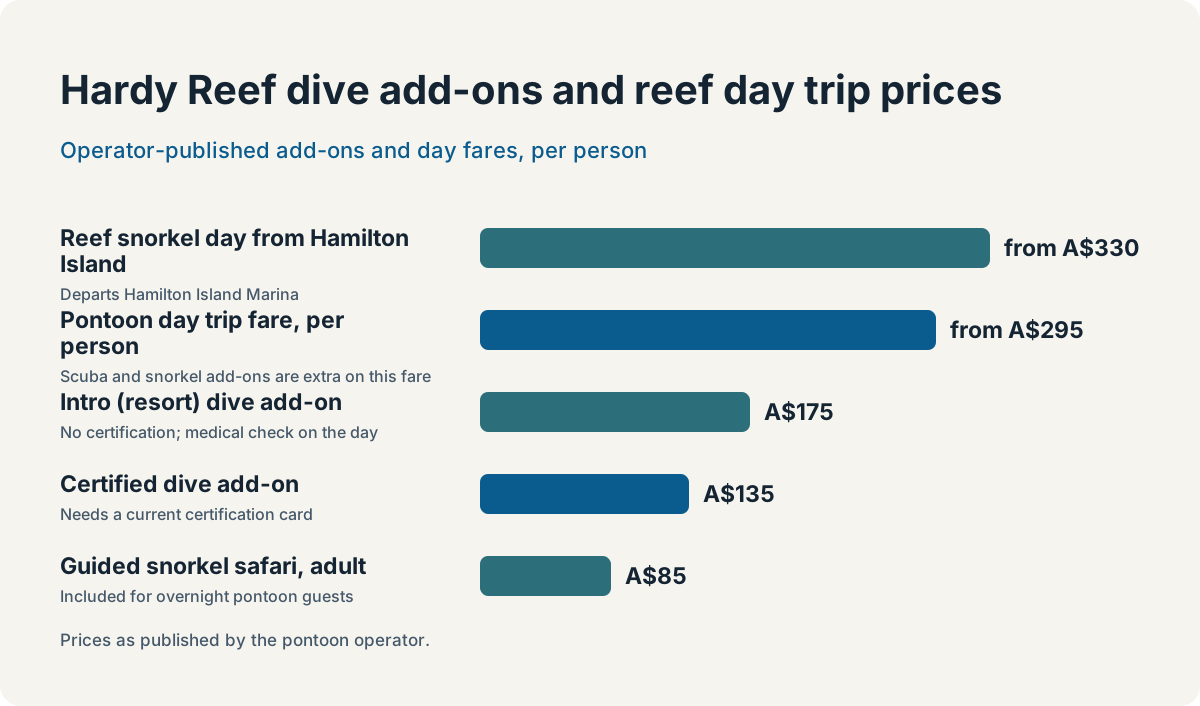
The structural fact is worth repeating because the internet is full of vague "dive the Whitsundays" promises. Cruise Whitsundays, the confirmed outer-reef pontoon operator, publishes intro scuba at A$175 and certified scuba at A$135 as add-ons to its Great Barrier Reef Full Day Adventure, with the operator's own day fare published from A$295 per person. Those are the operator's published add-on prices, not figures from this site's listings, and they are paid on the day or through the operator directly. The dive is a component of a bigger product. For readers who prefer to book through this site, the nearest fitting listing is the Reefworld pontoon day trip from Airlie Beach, from A$329 per person, rated 4.6 from 375 reviews, which is the same underlying Hardy Reef experience with the add-ons arranged separately.
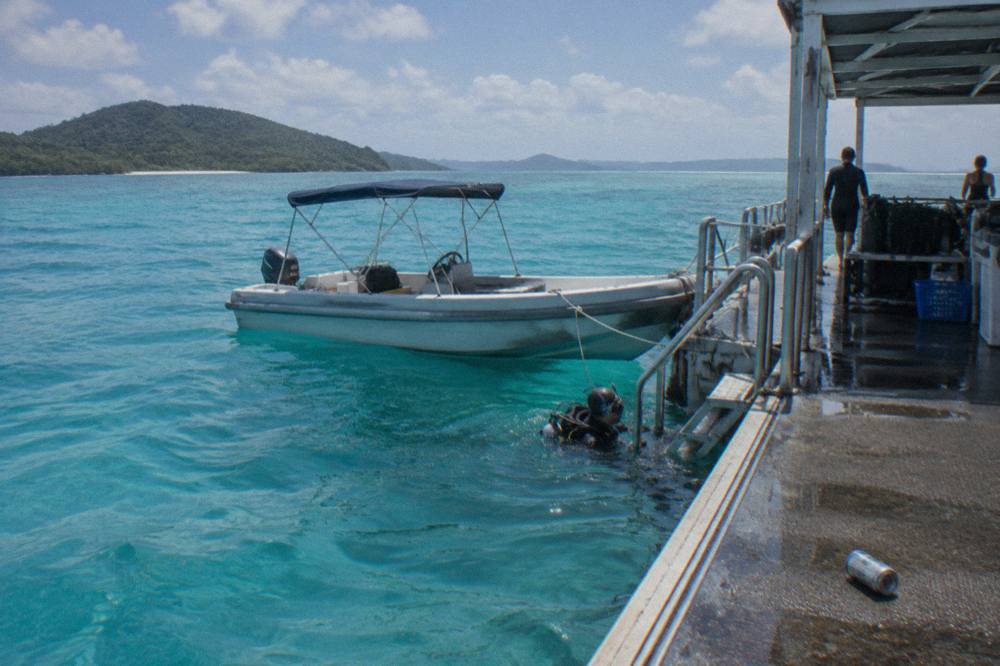
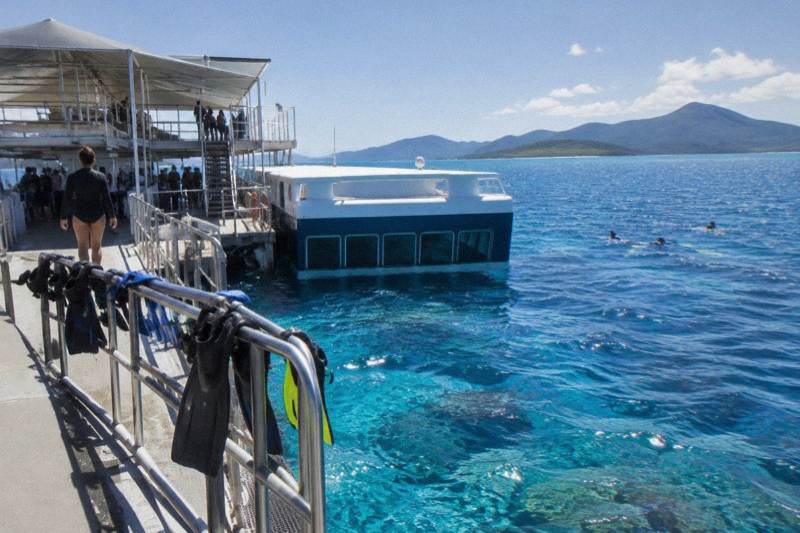
What that looks like in practice: a fast catamaran or vessel run out from the mainland, roughly four hours on station at the pontoon per the operator's page, snorkel gear and stinger suits included in the base fare, an underwater observatory and semi-submersible for non-swimmers, and a dive desk where certified divers and first-timers sign up. The fringing reefs around the islands themselves, Hook, Hayman and Whitsunday islands especially, are snorkel territory on the sailing and speedboat trips this roster carries, such as the Ocean Rafting Whitehaven day or the Red Cat catamaran cruises. Some island operators historically offered shore or boat dives off those reefs; nothing in the verified research for this site confirms a bookable dive product of that kind right now, so we state it as unconfirmed rather than promised.
The practical advice follows from the structure. Book the boat that gets you to deep, clear water, which in practice means the pontoon day, and treat the dive as an on-the-day decision. Our broader Whitsundays snorkelling guide covers the fringing-reef side in detail for anyone happy to stay on the surface, and the Great Barrier Reef trips from Airlie Beach guide compares every outer-reef option including overnight ones. If diving is genuinely the trip's purpose, read the certification section below before you commit to anything.
| Question | The short answer | Where it happens |
|---|---|---|
| Can a non-swimmer or non-diver dive? | Yes, as a supervised intro dive, subject to the operator's on-the-day medical checks | Hardy Reef pontoon dive desk |
| Can a certified diver dive? | Yes, certified scuba is published as an add-on by the pontoon operator | Hardy Reef, guided |
| Is there a dive-only charter from Airlie Beach? | Not in this site's roster; no verified dive-only product found | n/a |
| Can you dive the island fringing reefs? | Snorkelling is the confirmed offering on island day trips | Hook, Hayman, Whitsunday islands |
| Where is the water most like "the Reef"? | Hardy Reef, 39 nautical miles offshore on the outer reef | Cruise Whitsundays pontoon |
Where Are The Main Dive And Snorkel Sites Around The Whitsundays?
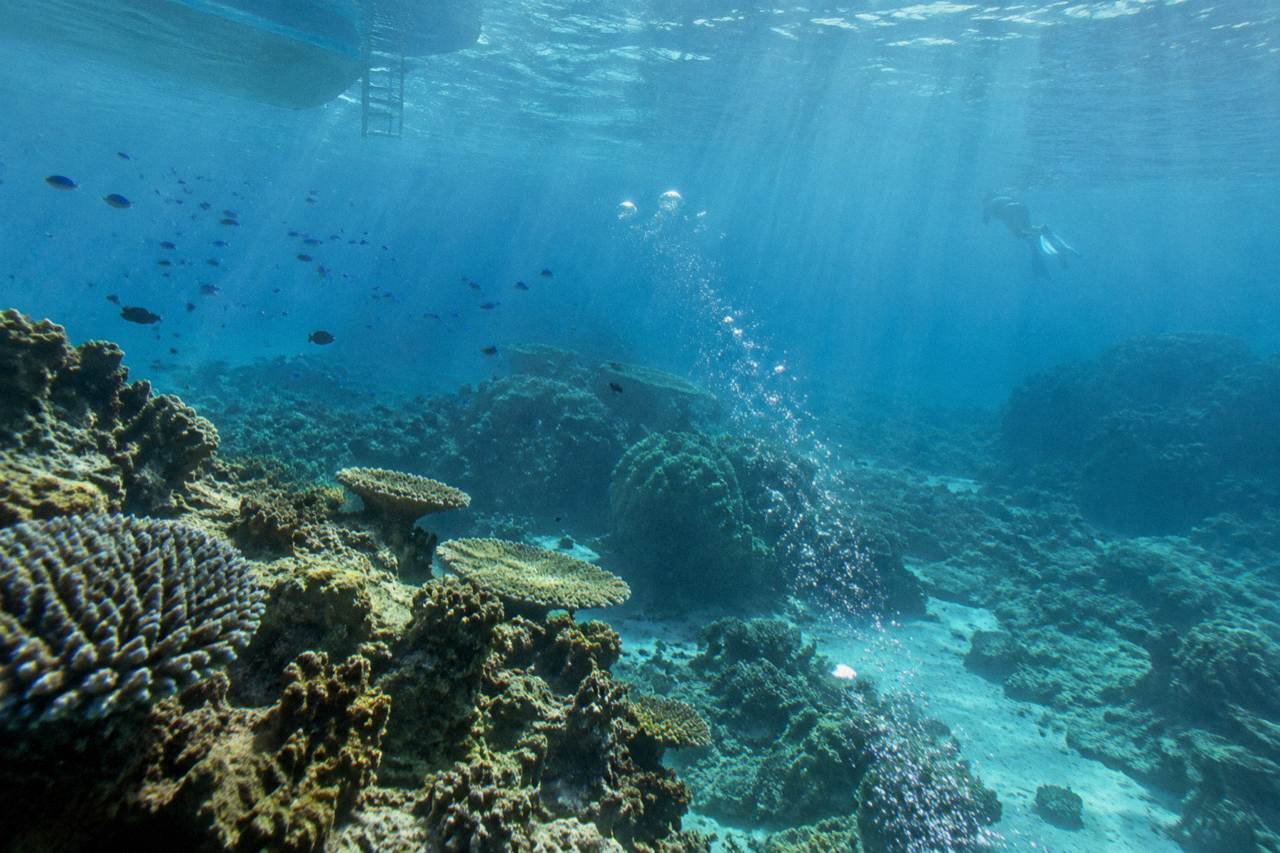
The two dive-relevant zones are Hardy Reef on the outer Great Barrier Reef, reached by pontoon day trip from Airlie Beach or Hamilton Island, and the fringing coral reefs directly off the Whitsunday islands, especially Hook Island, which the region's day sails and speedboat trips visit for snorkelling rather than diving. Hardy Reef is the deep-water site with published scuba. The fringing reefs are shallow, sheltered and better suited to snorkelling, which is exactly how every island day trip in this roster sells them. Understanding that split explains nearly every price and product difference in the region.
Hardy Reef is where the Cruise Whitsundays pontoon operation sits, permanently moored, with the operator stating four hours of on-water time for day guests, an included guided snorkel safari for overnight guests, and optional intro scuba, certified scuba and heli-scenic flights. The reef lies far enough offshore that water clarity and coral structure are what people picture when they hear "Great Barrier Reef". It is also the site of the Reefsleep and Reefsuites overnight products, where guests sleep on or beside the pontoon. The dive add-ons listed earlier, intro at A$175 and certified at A$135 as the operator publishes them, attach to the day trip.
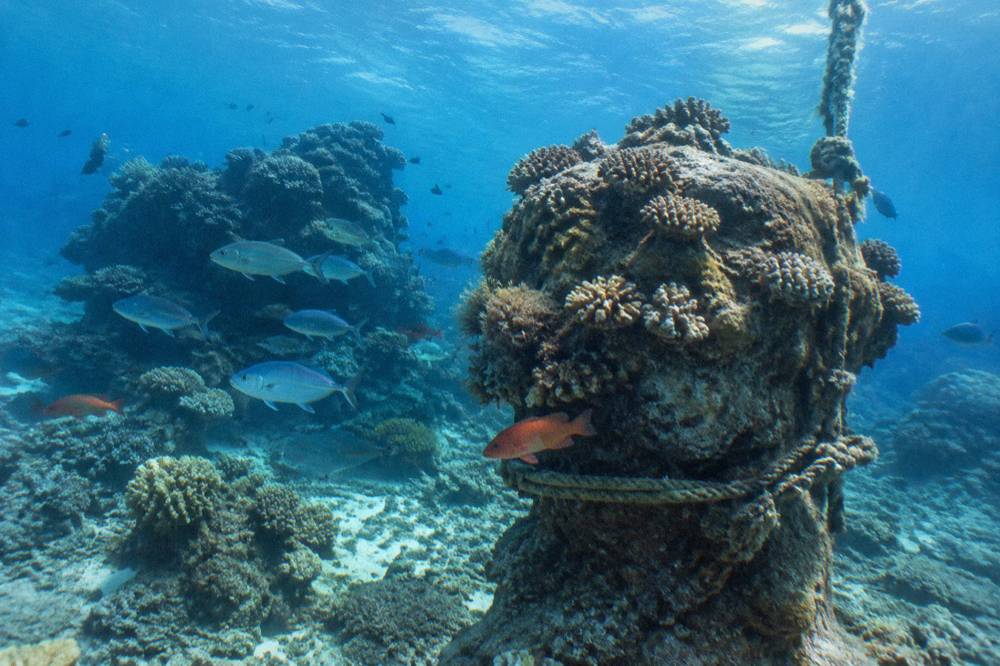
The island fringing reefs are a different animal. Hook Island's bays, the Nara Inlet area and the reefs off Hayman and Whitsunday islands hold coral gardens in shallow, protected water. Island day trips visit these reefs for snorkelling; no bookable island dive product is currently offered, and the official parks material describes them in snorkelling and walking terms.. The tours this site carries reflect that: the Red Cat Adventures catamaran days include snorkel gear and a reef stop, the Ocean Rafting speedboat days include snorkelling at island reefs, and none of them sells scuba. For a reader weighing surface versus scuba, the honest framing is that the islands reward snorkellers, while the outer reef is where the tanks are.
Between the two zones sits a useful third option for Hamilton Island visitors: the reef snorkel day departing Hamilton Island Marina, from A$330 per person, rated 4.4 from 211 reviews, which reaches outer-reef water without the mainland transfer. And for travellers who want the region's full spread in one comparison, the homepage trip picker on Whitsunday Island Tours sorts the thirty listings by format and price, which is quicker than reading them all. Neither of those changes the site geography: outer reef for diving, islands for snorkelling.
| Site | Zone | Reached by | Confirmed activity |
|---|---|---|---|
| Hardy Reef | Outer Great Barrier Reef, 39 nautical miles out | Pontoon day trip from Port of Airlie, or Hamilton Island connections | Snorkelling, intro scuba, certified scuba, semi-sub, observatory |
| Reefworld pontoon at Hardy Reef | Same outer-reef site | Same day trip; overnight for Reefsleep | Snorkel safari included overnight, optional scuba |
| Hook Island fringing reefs | Inner shelf, island bays | Day sails and speedboat trips from Airlie Beach | Snorkelling |
| Whitsunday and Hayman island fringes | Inner shelf | Day trips and overnight sails | Snorkelling |
| Heart Reef area | Outer reef, air access only | Scenic flights from Whitsunday Airport | Viewing from the air, no water access |
One more note on Heart Reef, because divers ask. Heart Reef is a fly-over site, described by flight operators as a few kilometres from the Hardy Reef pontoon, and there is no landing or dive access. The scenic flight products, covered in our Heart Reef scenic flights guide, are the only way to see it, sometimes combined with the pontoon day as a fly-and-raft package.
What Is An Intro Dive In The Whitsundays?
An intro dive, sometimes called a resort dive or discover scuba dive, is a supervised first dive requiring no certification: you get a briefing, gear and a close one-on-one or small-group descent with a dive professional, and at Hardy Reef the pontoon operator publishes it as an A$175 add-on to the day trip, subject to on-the-day medical and safety checks. It is the single easiest way to breathe underwater in the Whitsundays, and it is the product most first-time visitors are actually sold when they ask about "diving".
The mechanics matter more than the marketing. No prior experience or licence is needed, but operators run through a medical questionnaire, and conditions such as asthma, some medications and recent surgery can exclude a participant; the operator decides on the day, which is why no honest page will promise you a dive slot in advance. The dive itself is shallow and short by design, in sheltered water near the pontoon, with the instructor controlling depth and timing. Cruise Whitsundays lists its intro scuba at A$175 adult as an add-on to its Hardy Reef full-day product, whose operator-published base fare is from A$295 per person. Those are the operator's own published figures and can change; treat them as planning numbers and confirm on the booking page.
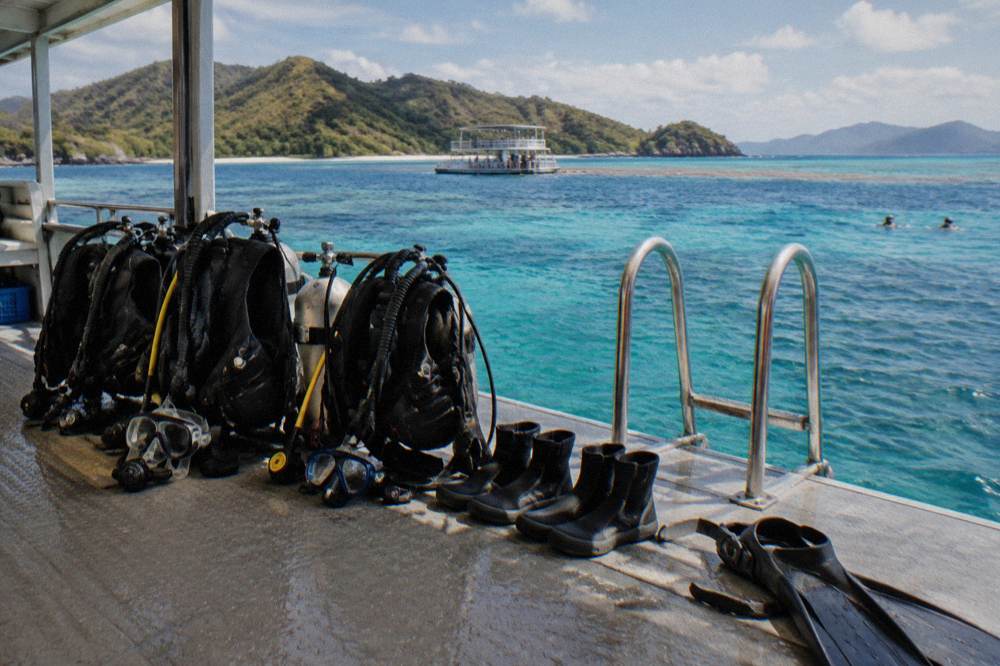
Certified divers use the same desk. The operator publishes certified scuba at A$135, cheaper than the intro dive because less instruction is involved, and a guided snorkel safari at A$85 for anyone who wants structure without tanks. Stinger suits at Hardy Reef are provided year-round on the day product, which matters for the seasonality section below. None of these add-ons appear as separate bookable listings on this site, so the path is: book a pontoon day, add the dive through the operator. The two nearest fitting listings carried here are the Reefworld pontoon trip, from A$329 per person, and the base-fare Reefworld day cruise listing, from A$329 per person, rated 4.2 from 601 reviews; same reef, different listing terms, and the roster states the differences plainly: the first lists free cancellation, the second does not state it.
| Experience level | What you can do | Certification needed | Published cost at Hardy Reef |
|---|---|---|---|
| Never dived | Intro (resort) dive, supervised | None, medical check on the day | A$175 add-on, operator-published |
| Open Water or above | Certified guided dive | Current certification card | A$135 add-on, operator-published |
| Any level, surface only | Guided snorkel safari | None | A$85 adult, operator-published |
| Want to qualify | Full certification courses exist in the region but are not carried on this site | Course completion | Not verified, ask operators directly |
A word on certification courses: dive schools in the Airlie Beach area have long offered Open Water courses, so contact the schools directly for current course prices before you book. If a course is your goal, contact operators directly and treat this guide's pontoon pathway as the diving-adjacent day out in the meantime.
What Does A Whitsundays Dive Or Reef Day Cost?
Budget a dive day as three separate layers rather than one number: the boat fare, which on this site starts at A$329 per person for the pontoon day, the dive add-on, published by the operator at A$175 for an intro dive or A$135 certified, and the Environmental Management Charge of A$8.50 per full-day passenger, which rises to A$9.00 only from 1 April 2027. Nothing in the roster states whether EMC is included in a listing price, so check the booking page rather than assuming.
Budgeting honestly means separating those three layers. Layer one is the boat fare, which on this site runs from A$329 per person for either Reefworld day listing up to A$698 per person for the two-day Reefsleep overnight, rated 4.6 from 52 reviews. Layer two is the optional dive or snorkel add-on, published by the operator at A$175 intro, A$135 certified, A$85 snorkel safari. Layer three is the statutory charge: the Great Barrier Reef Marine Park Authority sets the Environmental Management Charge at A$8.50 for full-day passengers and A$4.25 for part-day, per its official charges page, with the increase to A$9.00 and A$4.50 taking effect 1 April 2027 and never before. The operator's Hardy Reef day page separately lists an EMC line of A$13 adult and A$7 child for that product; the difference between the statutory rate and the collected line is an operator matter, so read the product page rather than assuming.
Cheaper reef-adjacent days exist if the dive is negotiable. The Cruise Whitsundays half-day Whitehaven cruise, from A$124 per person, rated 4.2 from 1,765 reviews, gets you on the water cheaply but is a beach trip, not a reef one. The Red Cat sail-and-snorkel day, from A$219 per person, rated 4.8 from 755 reviews, includes lunch and snorkel gear on a sailing format. And the reef-and-Whitehaven combo from Coral Sea Marina, from A$333 per person, rated 4.6 from 346 reviews, splits a single day between the outer reef and the beach, a genuine fit for travellers who want one ticket to cover both. We compared these across the roster and the pattern holds: you pay for offshore distance, and diving attaches only to the furthest-out product.
For the full spread of reef-format prices, the day trips compared guide tabulates every listing; for whether the region overall justifies its costs, the is Whitsundays expensive longread is the honest companion piece.
| Listing on this site | Format | From (per person) | Rating and reviews | Dive fit |
|---|---|---|---|---|
| Reefworld pontoon day trip | 10-hour outer-reef pontoon, Port of Airlie | A$329 | 4.6 from 375 reviews | Nearest fitting listing, dive added via operator |
| Reefworld day cruise, base fare | 10-hour outer-reef pontoon | A$329 | 4.2 from 601 reviews | Same reef, fewer stated inclusions |
| Reefsleep 2-day overnight | Overnight on the reef, meals listed | A$698 | 4.6 from 52 reviews | Snorkel safari included, optional scuba |
| Reef and Whitehaven combo | 8-hour reef plus beach day | A$333 | 4.6 from 346 reviews | Reef snorkelling, no scuba stated |
| Sail and snorkel day | 8.5-hour sailing day, lunch listed | A$219 | 4.8 from 755 reviews | Snorkelling only |
Do You Need A Stinger Suit For Diving In The Whitsundays?
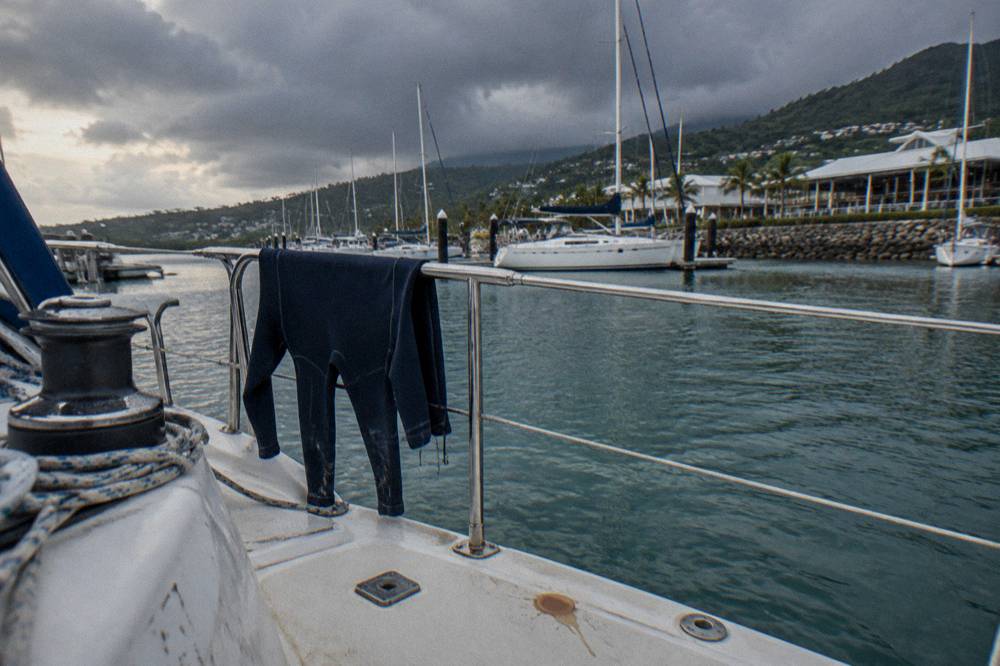
Marine stingers can be present in Whitsundays water all year, risk is higher from November to May, and a full-length lycra stinger suit is the standing advice for that window; commercial tour boats provide suits free in season, and at Hardy Reef the operator states suits are provided year-round, so for a pontoon dive the suit is supplied rather than bought. Queensland's official dangerous-marine-animals guidance, on qld.gov.au, is blunt: stingers may be present year-round, swim in nets where provided, and consider a full-body suit in the higher-risk season.
The operator detail is where diving differs from independent swimming. Tourism Whitsundays, the regional tourism body, states that full-length lycra stinger suits are provided free on all commercial tour boats and at island resorts from November to May. Red Cat Adventures goes further on its own page: suits at no additional cost on all its boat tours, provided and recommended year-round because jellyfish can be present any day. Ocean Rafting, which runs the speedboat days, describes stinger season as usually late October to April or May and highly recommends suit hire at check-in in that window, with wetsuits for hire in winter. At the Hardy Reef pontoon, the day product includes stinger suits year-round, which effectively settles the question for divers: you will be suited, the operator supplies it, and the suit doubles as thermal protection.
For anyone swimming outside a tour, the picture changes. There is no public stinger-net enclosure at Whitehaven Beach; nets, where they exist on the mainland, go in at some beaches for the November-to-May window and block larger box jellyfish but not the tiny Irukandji. The free, patrolled, stinger-free option year-round is the Airlie Beach Lagoon, covered fully in our Airlie Beach Lagoon guide, and the seasonal detail lives in the Whitsundays stinger season guide. The verified research found no jellyfish or Irukandji incident reports in the recent official record, and this site prints none, because absence of reports is not a safety promise.
What this means for a dive specifically is simple. The operator suits you, briefs you and runs the dive inside its own risk framework. What it does not mean is that any month is stinger-free, and any page telling you otherwise is guessing. Plan around the season, wear what the boat hands you, and treat first-aid advice, vinegar and 000 for suspected stings, as background knowledge rather than something you expect to use.
Is Diving Better From Hamilton Island Or Airlie Beach?
Neither base changes the diving itself, because both funnel into the same outer-reef water, but Airlie Beach holds the pontoon day trips that carry the dive option while Hamilton Island shortens the transfer and offers its own reef snorkel day from A$330 per person, so the choice is about access and accommodation style, not underwater quality. Hardy Reef does not move. What moves is how long you sit on a boat to reach it.
From Airlie Beach, the Reefworld day trips depart Port of Airlie on a roughly 10-hour itinerary with four hours on the pontoon, and the full planning detail sits in the Airlie Beach to Whitehaven and reef trips coverage. From Hamilton Island, the reef snorkel day departs the island's own marina on an 8-hour format, from A$330 per person, rated 4.4 from 211 reviews, with snorkel gear listed and meals not stated; the fresh research confirms Cruise Whitsundays runs mainland ferry connections seven days a week and that Hamilton Island airport takes direct jets from Sydney, Melbourne and Brisbane, which is how many divers' luggage actually arrives. The Resort Connections ferry from Port of Airlie costs A$74.50 adult one way, A$63 child, per the operator's published fares.
The deciding factors are practical. Staying on Hamilton Island puts you closer to the reef and removes a mainland leg, at resort prices, and the island's pre-arrival information currently lists some daytime hotel maintenance noise windows, worth checking when you book accommodation. Staying in Airlie Beach keeps you beside the widest choice of boats, the budget end of accommodation and the lagoon, at the cost of longer sail-outs. Divers with tanks and gear should also weigh that most day trips in this roster are snorkel products where scuba tanks are neither carried nor welcome clutter; the pontoon pathway is the exception. Our Hamilton Island or Whitsundays base longread compares the two bases across cost, ferries and weather exposure in more depth than a diving page should.
One caution applies to both bases in the warmer half of the year: the official tropical cyclone season runs 1 November to 30 April, and operators cancel or reschedule when systems approach. Bookings with free cancellation listed, which the Reefworld pontoon trip and most roster listings carry, are the pragmatic hedge. The when to avoid the Whitsundays post covers the timing question without promising any month risk-free.
How Healthy Is The Reef Around The Whitsundays?
The central Great Barrier Reef region, which includes the Whitsundays, recorded average hard coral cover rising from 28.6 percent to 31.6 percent in the 2025-26 monitoring year, a change the Australian Institute of Marine Science describes as within its margin of error but above the long-term average of 20 percent, and the most recent monthly surveys found only low-to-medium bleaching and damage levels on central reefs. In plain terms: the reef you dive on is not pristine, nor is it written off, and the official monitoring says so with careful numbers rather than slogans.
The 2025-26 AIMS Long-Term Monitoring summary, on aims.gov.au, surveyed 121 reefs and found hard coral cover increased slightly or stayed similar across most of the park, with a late-summer monsoon credited with easing heat stress after the mass bleaching of 2024 and 2025 did not repeat. Tropical Cyclone Koji, a category 1 system that crossed the central coast in January 2026, caused minor coral losses on several central reefs, and Hamilton Island and Hardy Reef both recorded 117 km/h gusts on the day. Reef-wide, 16 percent of surveyed reefs declined, 56 percent showed no net change and 28 percent increased. GBRMPA's own August 2026 health update surveyed 42 reefs including 10 in the central region, finding one with medium bleaching and three with low coral damage, with August sea temperatures near long-term averages.
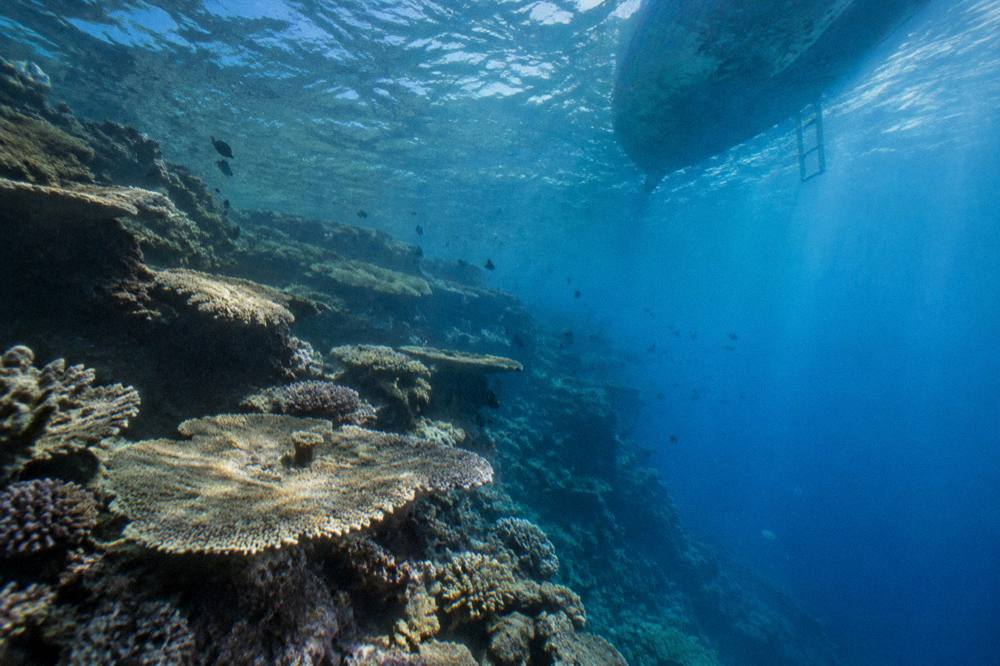
No Whitsundays-specific site score exists for Hardy Reef or the island fringing reefs in the current reporting, and this site will not invent one. What a diver or snorkeller can take from the official record is direction: central-region cover is above its long-term average, recent heat stress eased, and cyclone and crown-of-thorns pressures continue. Individual sites vary, visibility varies with wind and tide, and coral colour varies with depth and season. Any operator or page promising guaranteed visibility figures or sighting rates is selling certainty the monitoring bodies themselves do not claim.
For travellers deciding between diving here and further north, the honest framing is that the Whitsundays' underwater appeal rests on warm, sheltered water, fringing-reef gardens and easy access, with the outer reef as the showpiece day. The monitoring record supports going, with eyes open. Treat the dive or snorkel as one part of a region that also does Whitehaven Beach, Hill Inlet and island walks exceptionally well, and see the what is so special about the Whitsundays longread for the fuller argument.
One last planning thought before the wrap-up. Because the dive is an add-on and the boat is the booking, the resilience of your plan depends on the boat's cancellation terms rather than the dive desk. The pontoon listings on this site carry free cancellation, the reef-and-Whitehaven combo from A$333 per person carries it too, and the Reefsleep overnight includes it with meals listed. The sail-and-snorkel alternatives, from A$219 per person aboard a Red Cat sailing day or from A$239 on the ZigZag eco-cruise, are the surface-only fallbacks if the dive medical check or the weather closes the scuba option on the day.
Common Questions About Whitsunday Diving
Can you dive the Whitsundays without certification?
Yes. An intro dive, also called a resort or discover scuba dive, needs no certification: you brief, gear up and descend under close supervision. At Hardy Reef the pontoon operator publishes intro scuba as an A$175 add-on to the day trip, subject to a medical check on the day.
How much does diving in the Whitsundays cost?
The operator's published figures are A$175 for an intro dive and A$135 for a certified dive as add-ons to the Hardy Reef day product, whose own base fare is published from A$295 per person. This site's nearest fitting listing starts at A$329 per person for the pontoon day, with the dive arranged through the operator.
Where do divers actually go in the Whitsundays?
Almost all confirmed diving happens at Hardy Reef on the outer Great Barrier Reef, 39 nautical miles from the mainland, reached by the pontoon day trip. The island fringing reefs around Hook, Hayman and Whitsunday islands are sold and run as snorkelling.
Do I need a stinger suit to dive in the Whitsundays?
Stingers can be present all year and risk is higher from November to May, so a full-length lycra suit is the standing advice for that window. Commercial boats provide suits free in season, and at Hardy Reef the operator states suits are provided year-round.
Is diving better from Airlie Beach or Hamilton Island?
The diving is the same outer-reef water either way. Airlie Beach carries the pontoon day trips with the dive option; Hamilton Island shortens the transfer and runs its own reef snorkel day from A$330 per person. Choose on access and accommodation, not underwater quality.
Is the reef around the Whitsundays still worth diving?
Official monitoring puts central-region hard coral cover at 31.6 percent in 2025-26, above the 20 percent long-term average, with no repeat of the 2024-25 mass bleaching. Conditions vary by site and day, and no credible source guarantees visibility or sightings.