Heart Reef Scenic Flights: Price, Duration And What You See
Heart Reef is a small coral formation near Hardy Reef that you cannot walk to and cannot swim to, so nearly everyone who sees it does so from a plane or helicopter. This guide compares the bookable flights from Airlie Beach with the operator options on Hamilton Island, with verified prices, durations and honest notes on weather, weights and window seats.
Short answer
Heart Reef scenic flights from Airlie Beach start at from A$299 per person for a 70-minute fixed-wing flight, with one-hour flights from from A$339 to A$355. Helicopter options from Hamilton Island run higher, from A$415 for a fixed-wing express to A$840 for a one-hour helicopter scenic. All flights are weather dependent and most guarantee a window seat.
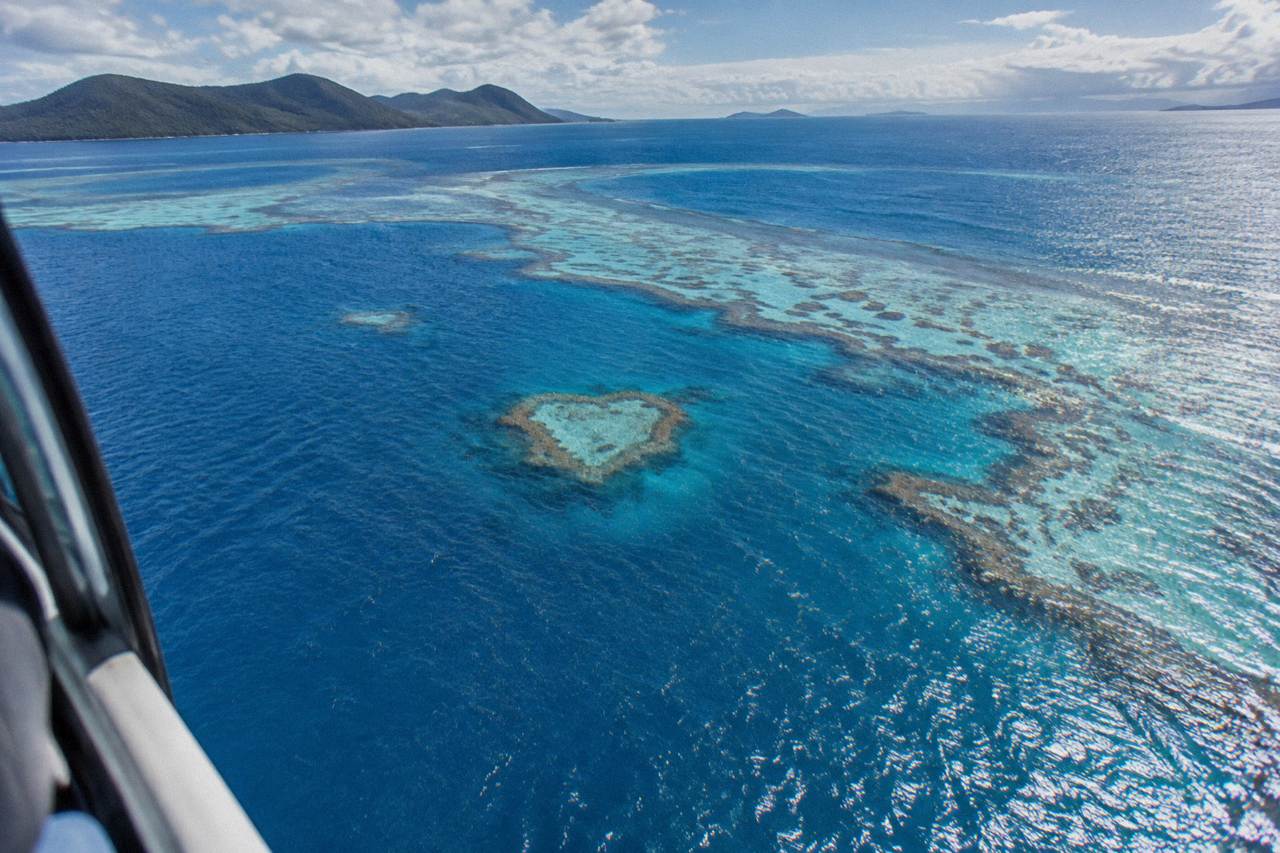
Heart Reef sits in the Hardy Reef section of the Great Barrier Reef, roughly 78 kilometres from Airlie Beach by air, and it is one of the few famous Australian landmarks that almost nobody will ever stand on. The coral formation is about 17 metres wide, and the reef around it is protected, so the only practical way to see the heart shape is from the air. That single fact explains the whole market: a reader searching for Heart Reef is almost always weighing a scenic flight booking, not a beach or a boat.
This guide compares the flights you can book from Airlie Beach and the operator options that run from Hamilton Island. The prices below are the operators' own fares, exactly as published. Reef and weather conditions decide whether your flight actually goes, so keep your plans flexible for the day. Where something is not stated on a listing, we say so rather than guessing.
What Is Heart Reef And Where Is It In The Whitsundays?
Heart Reef is a naturally heart-shaped coral formation in the Hardy Reef area of the Great Barrier Reef, around 78 kilometres from Airlie Beach and a few kilometres from the Hardy Reef pontoon used by Cruise Whitsundays. It is about 17 metres wide, it sits inside protected reef zone, and there is no walking track, no jetty and no swimming access, so a scenic flight is the only realistic way to see the shape.
The heart sits within the Great Barrier Reef Marine Park, and the Reef Authority manages access to the whole area. Tourism operations in the Marine Park pay an Environmental Management Charge of A$8.50 per full-day passenger and A$4.25 per part-day passenger, a charge that rises to A$9.00 and A$4.50 from 1 April 2027. None of the flight listings on our roster state whether the charge is included in the fare, so check the booking page before you assume either way. The charge is small next to the fare, but it is the kind of line item that surprises people at check-in.
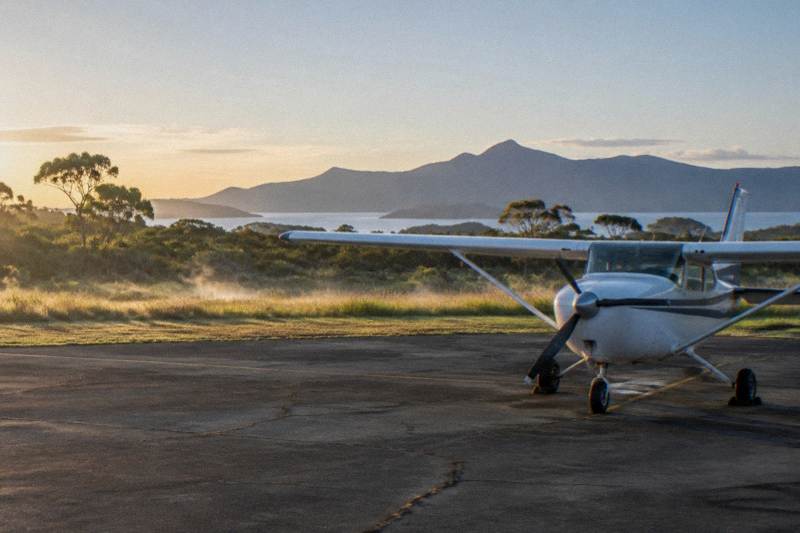
What surprises people more is how small the formation is. At roughly 17 metres across, Heart Reef is not a vast pink Valentine cut into the seafloor; it is a delicate arrangement of live and dead coral that reads as a heart from directly overhead, in good light, from a few hundred feet up. Pilots typically make two passes so both sides of the aircraft get a clean look, and the high-wing aircraft most operators fly, Cessna Caravans and Gippsaero GA8s among them, are chosen precisely because the wing sits above the window rather than across it.
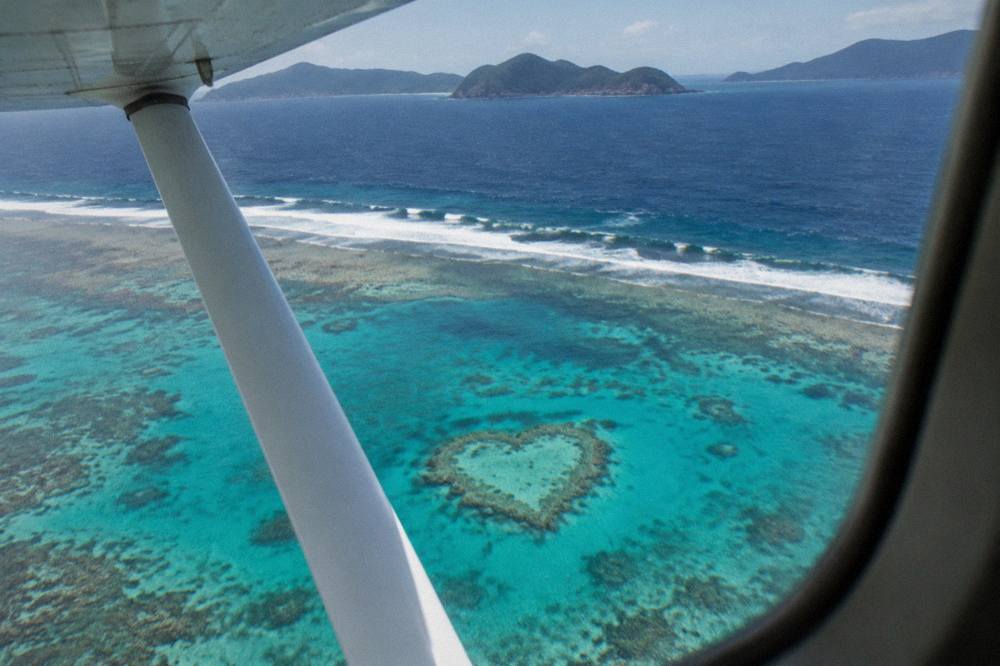
The broader view is the real product. A Heart Reef flight from Airlie Beach crosses the Whitsunday islands, Whitehaven Beach and Hill Inlet before reaching the outer reef, so you get the whole archipelago plus the reef in a single loop (see Worth Whitehaven?). That is why the flight is often the one booking visitors regret skipping, and it is also why our guide to Whitsundays scenic flights and helicopter tours treats the Heart Reef route as the flagship version of a bigger category.
How Much Do Heart Reef Scenic Flights From Airlie Beach Cost?
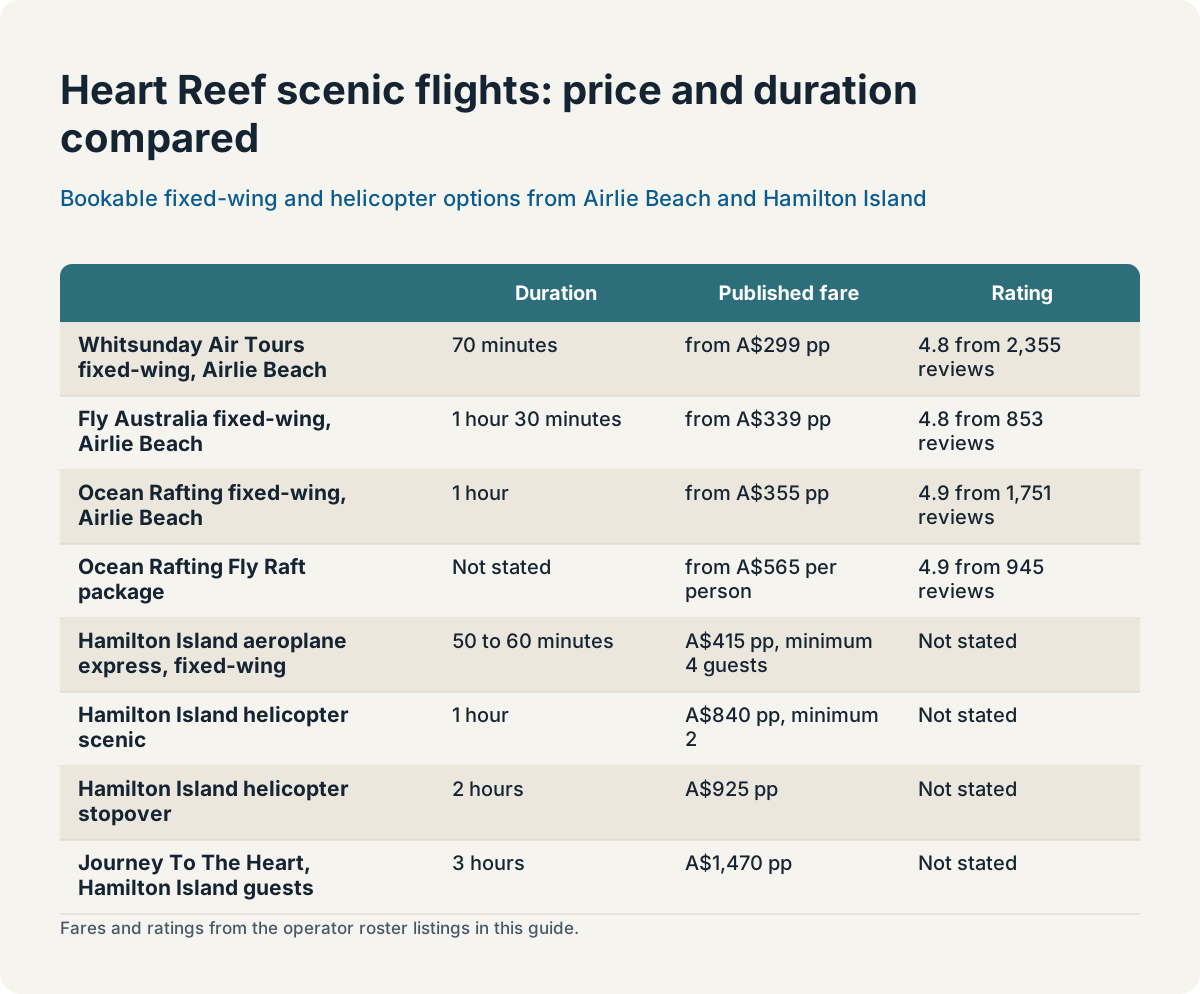
Bookable Heart Reef flights from Airlie Beach run from A$299 to A$355 per person for fixed-wing aircraft, with the 70-minute Whitsunday Air Tours flight at from A$299, the Fly Australia one-hour flight at from A$339 and the Ocean Rafting one-hour flight at from A$355. A combined flight and boat day starts at from A$565. Helicopter flights from Hamilton Island cost more.
The Airlie Beach fixed-wing market is genuinely competitive, and the differences between the three bookable listings are smaller than the price gap suggests. All three depart from Whitsunday Airport at Shute Harbour, all three list complimentary pickup, all three list free cancellation, and all three fly high-wing aircraft with window seats. The table below sets out what the roster actually says, including review counts, because a rating without its pool tells you nothing.
| Flight (roster listing) | Operator | Duration | From price | Rating | Reviews |
|---|---|---|---|---|---|
| Whitsundays and Great Barrier Reef Scenic Flight | Whistunday Air Tours | 70 minutes | from A$299 pp | 4.8 | 2,355 |
| 1-Hour Whitsunday Islands and Heart Reef Scenic Flight | Fly Australia Charter | 1 hour 30 minutes | from A$339 pp | 4.8 | 853 |
| Whitsundays and Heart Reef Scenic Flight | Ocean Rafting | 1 hour | from A$355 pp | 4.9 | 1,751 |
Two things are worth noticing. First, the longest listing is not the most expensive: the Fly Australia flight is listed at 1 hour 30 minutes, which suggests a longer island loop around the shorter reef run, though exact routing is set on the day. Second, the Ocean Rafting flight carries 4.9 from 1,751 reviews, a genuinely strong pool, but the same operator's name also appears on speedboat day trips, and those boat products exclude pregnant guests and people with back problems; the flight itself is a separate product, so read the listing you are actually booking.
Because the headline fares look so similar, the practical differences live in the fine print: what each listing includes, what it states plainly and what it leaves unsaid. The next table compares the three Airlie Beach flights on exactly those booking-relevant details, straight from the roster lines.
| Booking detail | Whitsunday Air Tours 70 min | Fly Australia 1 hr 30 min | Ocean Rafting 1 hr |
|---|---|---|---|
| Departure point | Whitsunday Airport, Shute Harbour | Whitsunday Airport, Shute Harbour | Whitsunday Airport, Shute Harbour |
| Pickup | Listed | Listed | Listed |
| Free cancellation | Listed | Listed | Listed |
| Meal | Not stated | Not stated | Not stated |
| Aircraft type | High-wing, window seats | High-wing, window seats, two passes over the heart | High-wing, window seats |
| Daily departures | Not stated | Up to six | Not stated |
The combined fly and raft package deserves a separate word. The Ocean Rafting Fly Raft package, from A$565 per person and rated 4.9 from 945 reviews, pairs the scenic flight with a speedboat day that includes snorkelling and a meal. It is the most complete single-day Heart Reef product on the roster, and it is also the one where the boat-side restrictions apply: the rafting component excludes pregnant guests and people with back problems, and the listing states this. If you want the reef from above and the reef from below in one day and none of your party falls into those groups, it is the strongest value on the board.
Fixed-Wing Or Helicopter: Which Heart Reef Flight Should You Book?
Fixed-wing flights from Airlie Beach cost from A$299 to A$355 per person, seat more passengers, guarantee window seats on high-wing aircraft and suit most travellers. Helicopter flights from Hamilton Island cost from A$840 per person for a one-hour Heart Reef and Whitehaven scenic, seat as few as two, and add the option of a Whitehaven landing at A$925 per person. The aircraft choice matters less than the departure point that suits your trip.
The honest answer is that both aircraft types fly the same airspace and both give you the heart. What actually differs is price, party size and where you are staying. If you are based in Airlie Beach, the fixed-wing flights leave from Whitsunday Airport at Shute Harbour, ten minutes from town, and the operators list complimentary pickup from central points. If you are staying on Hamilton Island, the in-house operator Hamilton Island Air runs its own menu, and its published fares are a different market entirely.
| Hamilton Island Air product (operator fares) | Type | Duration | Published fare |
|---|---|---|---|
| Aeroplane Heart Reef and Whitehaven Beach Express | Fixed-wing | 50 to 60 minutes | A$415 pp, minimum 4 guests |
| Helicopter Heart Reef and Whitehaven Scenic | Helicopter | 1 hour | A$840 pp, minimum 2 |
| Heart Reef and Whitehaven Stopover | Helicopter | 2 hours | A$925 pp, about 50 minutes on Whitehaven |
| Journey To The Heart (pontoon and glass-bottom boat) | Helicopter | 3 hours | A$1,470 pp, Hamilton Island guests |
| Whitsunday Islands Scenic (no outer reef) | Helicopter | shorter | A$695 pp |
Those Hamilton Island Air fares are the operator's own published prices, not our listings, and they can change without notice; the minimum guest counts also mean a solo traveller can be matched with others or wait for a departure to fill. Note the last row carefully: the cheaper Whitsunday Islands Scenic helicopter does not fly the outer reef, so it does not include Heart Reef at all. That is the single most common booking mistake in this category, and no listing on our roster makes it, but the Hamilton Island menu does.
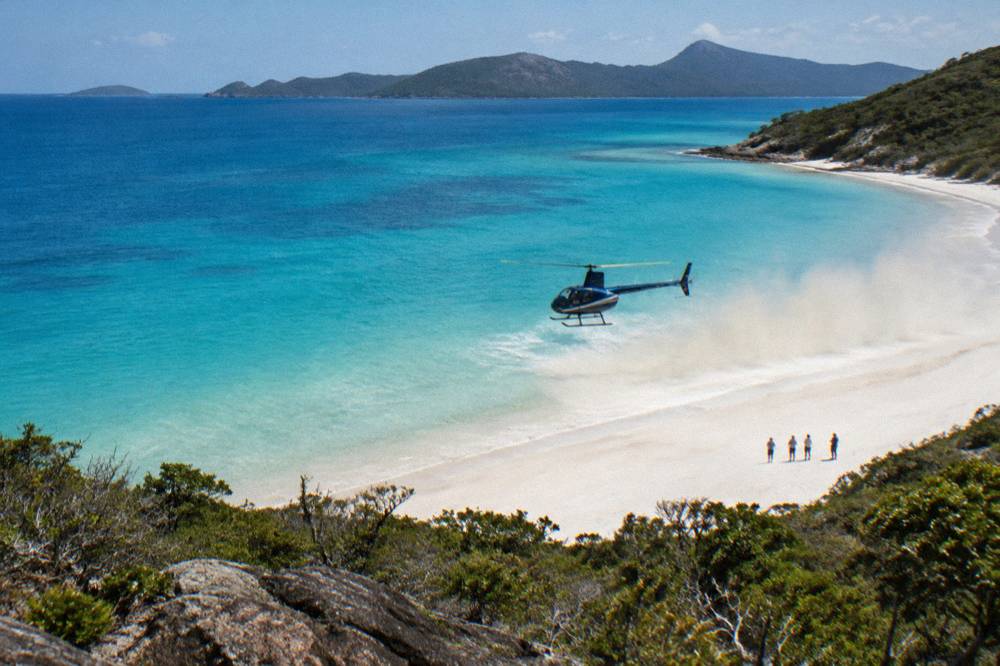
For most readers the fixed-wing flight is the rational pick. The high-wing layout means every seat is a window seat, the aircraft are roomy enough to move your camera, and the price difference against a helicopter buys you most of a second tour. Helicopters win on two things: the doors-off photography feel, and the landing options, because a fixed-wing flight cannot put you on the sand at Whitehaven. If the landing is the point, the helicopter stopover is the product; if the heart is the point, save the money.
The 70-minute Whitsunday Air Tours flight is the one we point most readers at, and it is the most reviewed fixed-wing option on the roster at 4.8 from 2,355 reviews. It lists complimentary pickup and free cancellation, and the longer duration relative to the one-hour flights gives the pilot room to extend the island leg. You can compare it directly on the tour page, and check availability alongside the details above before the date you want fills.
How Long Do Heart Reef Flights Take And What Do You Actually See?
The bookable Airlie Beach flights run 70 minutes to 1 hour 30 minutes, and the standard route crosses the Whitsunday islands, Whitehaven Beach and Hill Inlet before flying the outer reef at Hardy Reef, where the pilot typically makes two passes over Heart Reef. You see island coastlines, the swirling silica sands of Hill Inlet and the reef structure of the Great Barrier Reef, in that order, all from a guaranteed window seat.
The routing is not a straight line out and back. Departing Whitsunday Airport at Shute Harbour, the aircraft first cross the island chain, which is where the postcard material lives: the white swirl of Hill Inlet where the tide stirs silica sand into the clear inlet water, the long arc of Whitehaven Beach, and the green humpbacks of the national park islands. Only then does the flight track east or north-east to the outer reef, where the water changes from island turquoise to the deeper blue of the Coral Sea and the coral bommies become visible from above.
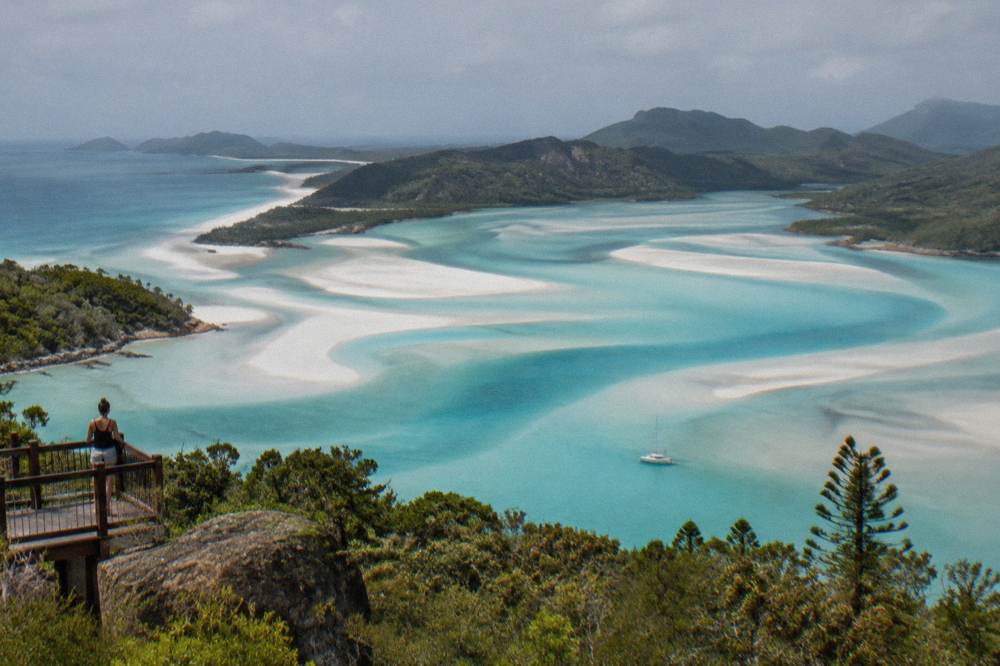
What you see of the reef itself depends on conditions, and we will not pretend otherwise. Coral colour varies, bleaching events come and go, and no honest guide promises a postcard. The reef science is genuinely encouraging at the regional level, though: the Australian Institute of Marine Science reports that average hard coral cover in the Central Great Barrier Reef, the region that includes the Whitsundays, rose from 28.6 percent to 31.6 percent in the most recent monitoring year, a change within the margin of error but above the long-term average of 20 percent. From the air you are looking at structure, not coral health, and the structure is what makes the heart readable.
The Fly Australia one-hour flight, from A$339 per person and rated 4.8 from 853 reviews, is the longest of the three at 1 hour 30 minutes as listed, and the operator's own page describes two passes over Heart Reef with guaranteed window seats. The listing also states up to six daily departures, which matters more than it sounds: a flight with several departure times gives you a same-day retry if the morning is cloudy, and in the Whitsundays the morning is often the cloudier half of the day. Check the Fly Australia Heart Reef flight page for live times before you plan your day around it.
Can You Land At Heart Reef From The Whitsundays?
No. Heart Reef itself is protected reef with no landing, no pontoon and no swimming access, and the only water-level experiences nearby are the Hardy Reef pontoon reached by boat from Airlie Beach, or the private Heart Island pontoon reached by helicopter from Hamilton Island at A$1,470 per person. Everyone else sees the heart from the air, full stop.
The distinction matters because marketing copy blurs it. The Cruise Whitsundays reef day trip reaches a permanently moored pontoon at Hardy Reef, about 39 nautical miles from the mainland, with four hours on site, snorkelling, an underwater observatory and a semi-submersible; the operator states that Reefworld is now an overnight-only pontoon and day guests use the day adventure product. That is a genuine reef day out, and our Great Barrier Reef trips from Airlie Beach guide covers it properly, but you will not see the heart shape from a pontoon a few kilometres away at water level.
The one exception is the Journey To The Heart helicopter product from Hamilton Island, which lands guests on a private pontoon near the reef with a glass-bottom boat and optional snorkelling, at the operator's published fare of A$1,470 per person with a two-guest minimum, restricted to Hamilton Island in-house guests and not suitable for non-swimmers or children under 16. It is a premium product for a specific traveller, and the operator states its conditions plainly, which we respect.
For everyone else, the honest framing is this: the flight is the destination. If you want to touch the reef water, book the boat day or the pontoon; if you want the photograph that made the Whitsundays famous, book the aircraft. Some travellers do both across two days, and the fly and raft package we described earlier is simply those two bookings fused into one.
When Is The Best Weather For A Heart Reef Flight?
September and October are the driest, calmest months in the Whitsundays, averaging around three rain days each, with light winds and good visibility, and that is when flight cancellation rates are lowest. June to August is dry and mild with the added draw of humpback whales below you. The cyclone season runs officially from 1 November to 30 April, and stinger risk is higher from November to May, though neither affects an aircraft the way it affects a boat day.
Every scenic flight in the Whitsundays is weather dependent, and the operators say so on their own pages. The practical planning question is which months give you the best odds of actually flying on your booked day, and the official climate picture is clear: the Bureau of Meteorology's cyclone season for the Australian region runs 1 November to 30 April, and the regional tourism body's month-by-month averages, drawn from Bureau data for Hamilton Island, put August, September and October at around three rain days each, against thirteen to fourteen in January and February. September is described as the driest month with the lightest winds of the year.
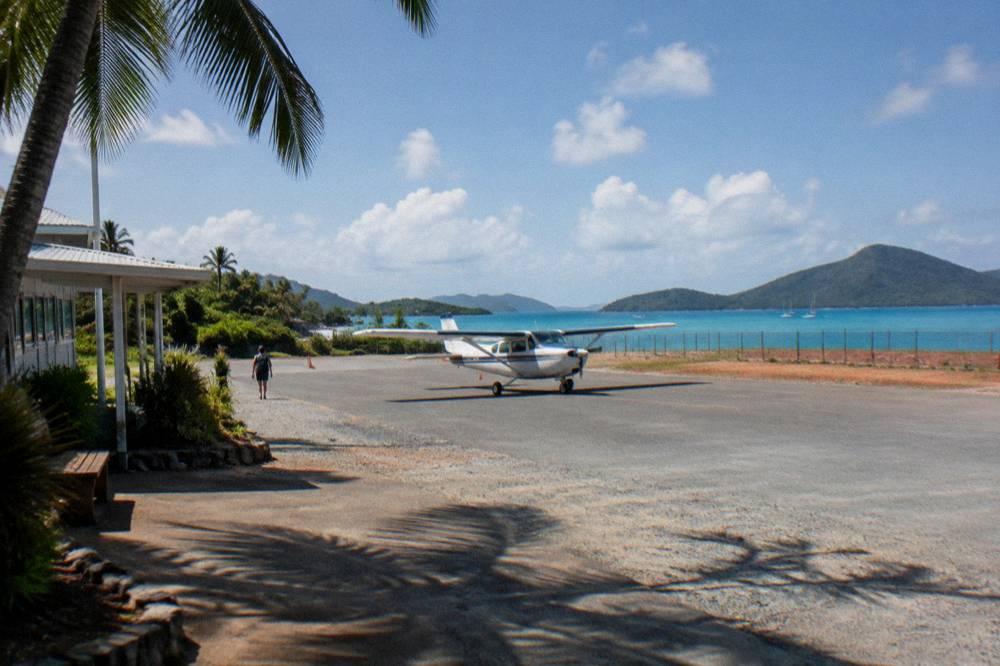
The winter months bring a second, less advertised bonus. Humpback whales move through Whitsunday waters between June and October, with numbers generally peaking in August, and most of those waters sit inside the Whitsunday Whale Protection Area where vessels must keep at least 300 metres clear. An aircraft at scenic-flight altitude is not a vessel in that sense, but the whales are still below you, and passengers regularly report sightings from the window on the island leg of the flight. No operator guarantees a sighting and neither do we; the whales do not read the itinerary.
The stinger season question is worth one line because it confuses people: marine stingers can be present in Whitsunday waters all year, with higher risk from November to May, and stinger suits are provided on commercial tour boats in that window. None of that touches a scenic flight, but it does touch the boat day you might pair with it, and our best time to visit the Whitsundays guide works through the whole calendar in detail.
What Should You Know Before Booking A Heart Reef Flight?
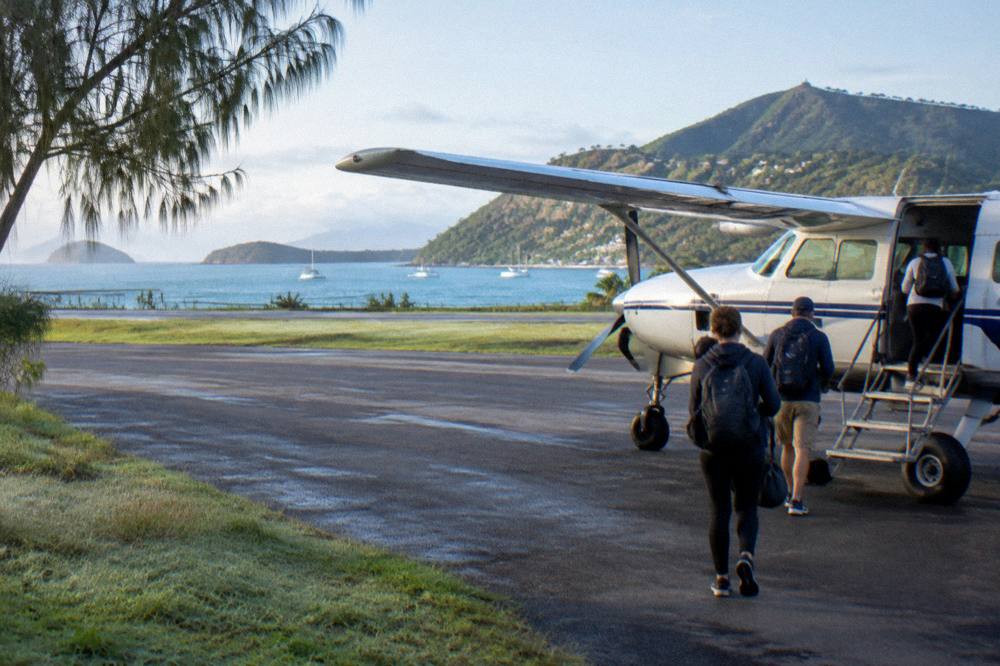
Four practical things decide whether your flight goes well: passenger weights are collected at booking for aircraft balance, so state them honestly; free cancellation is listed on all three Airlie Beach roster flights, which matters in a weather-dependent category; check-in is at Whistunday Airport, Shute Harbour, with pickup listed from Airlie Beach points; and morning cloud often burns off, so an early problem does not always cancel the day.
Aircraft weight and balance is the detail that catches people out. Scenic flight operators ask for passenger weights at booking, not to embarrass anyone but because a light aircraft's centre of gravity is a safety calculation, and a misstated weight can force a reshuffle at the airport or, rarely, a bumped passenger. The aviation regulator, the Civil Aviation Safety Authority, sets the rules for scenic and joy flights, including pilot licensing and safety briefing requirements, and every operator on this page holds the air operator certificate those rules require. If your group is larger than the aircraft seats, say so early; the high-wing types on these routes seat between seven and fourteen.
Cancellation is the other big one. All three Airlie Beach listings on our roster state free cancellation, and in a category where the operator can call off a departure for weather, that policy is the difference between a reschedule and a lost fare. Read the terms on the live listing for the window, because free cancellation almost always means before a stated cutoff, not after check-in. The Hamilton Island Air products publish their own conditions, and the minimum guest counts mean a product can be held until enough seats sell.
Finally, think about the light. The heart reads best from mid-morning to mid-afternoon when the sun is high enough to penetrate the water and light the coral, which is why the middle departures of the day are often the ones seasoned travellers ask for, despite the morning's calmer air. The Ocean Rafting one-hour flight, from A$355 per person and rated 4.9 from 1,751 reviews, lists multiple daily departures and complimentary pickup, and its sister listing carries the strongest review pool of any product family on this site; the flight itself, again, is separate from the rafting boats and their medical restrictions. You can check availability on the tour page.
Whichever way you book, the piece of advice that holds for every reader of Whitsunday Island Tours is the same: book the flight early in your stay, not on your last day. If weather cancels you, an early booking leaves room to retry, and the heart has been in that reef for a very long time. It will wait an extra day for you.
Common Questions About Heart Reef Scenic Flights
why is heart reef famous?
Heart Reef is famous because it is a coral formation that naturally reads as a human heart, about 17 metres wide, in the Hardy Reef section of the Great Barrier Reef. It cannot be reached on foot or by swimming, so it became a photographic icon seen almost exclusively from the air, and images of it now front much of the Whitsundays' tourism imagery.
How much does a Heart Reef scenic flight cost?
From Airlie Beach, fixed-wing flights run from A$299 to A$355 per person for 70 minutes to 1 hour 30 minutes in the air. From Hamilton Island, the operator's published fares run from A$415 per person for a fixed-wing express to A$840 per person for a one-hour helicopter scenic, with landing products up to A$1,470.
Can you land on Heart Reef?
No. Heart Reef is protected coral with no landing, pontoon or swimming access. The nearest water-level experiences are the Hardy Reef pontoon reached by boat from Airlie Beach, and a private Heart Island pontoon reached by helicopter from Hamilton Island at the operator's published fare of A$1,470 per person.
Do Heart Reef flights guarantee a window seat?
The three Airlie Beach fixed-wing listings on our roster fly high-wing aircraft, where the wing sits above the cabin, and the operators state guaranteed window seats. Pilots also typically make two passes over the heart so passengers on both sides get a clear view.
What happens if the weather cancels my flight?
All three Airlie Beach roster listings state free cancellation, and weather cancellations are normally refunded or rescheduled rather than charged. Book early in your trip rather than on your last day so a cancelled departure leaves room to retry on another day.
Is a helicopter flight better than a fixed-wing flight for Heart Reef?
Both fly the same airspace and both show you the heart. Fixed-wing flights cost from A$299 to A$355 from Airlie Beach and seat more passengers; helicopters from Hamilton Island cost from A$840 per person but add landing options, including a Whitehaven Beach stopover at the operator's published fare of A$925 per person. Choose on departure point and budget, not aircraft type.